
From breezy beach towns to chilly mountain overlooks, the right layers help you enjoy every mile. Choose your state and season for an easy outfit, practical shoes, and a packing list that leaves room for souvenirs.
These are general seasonal packing suggestions. Check the forecast for your actual destinations, travel dates, and elevations before leaving, and adjust for your planned activities.
Browse by season
Pick the season you are travelling in and see what every state asks for. Opening a state takes you to its full guide.
Temperatures are spring averages for 1991–2020, not a forecast.
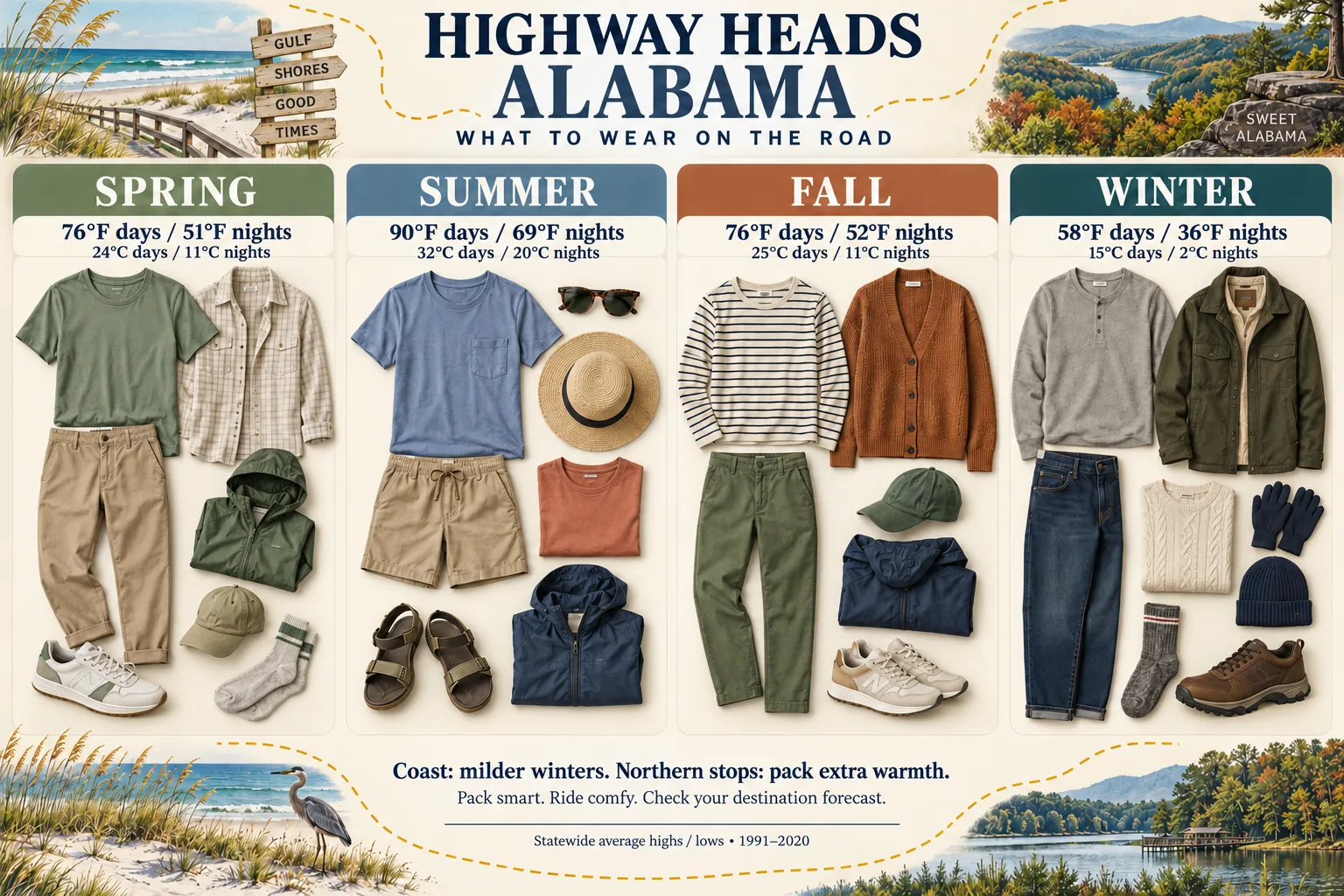
Alabama 76°/51°F (24°/11°C)
Spring brings warming days, rain, and occasional chilly mornings.
Wear Pair a breathable tee or relaxed shirt with lightweight chinos, joggers, or an easy midi skirt. Add an open overshirt for cool stops.
Shoes Broken-in walking sneakers; water-resistant shoes when rain is forecast.
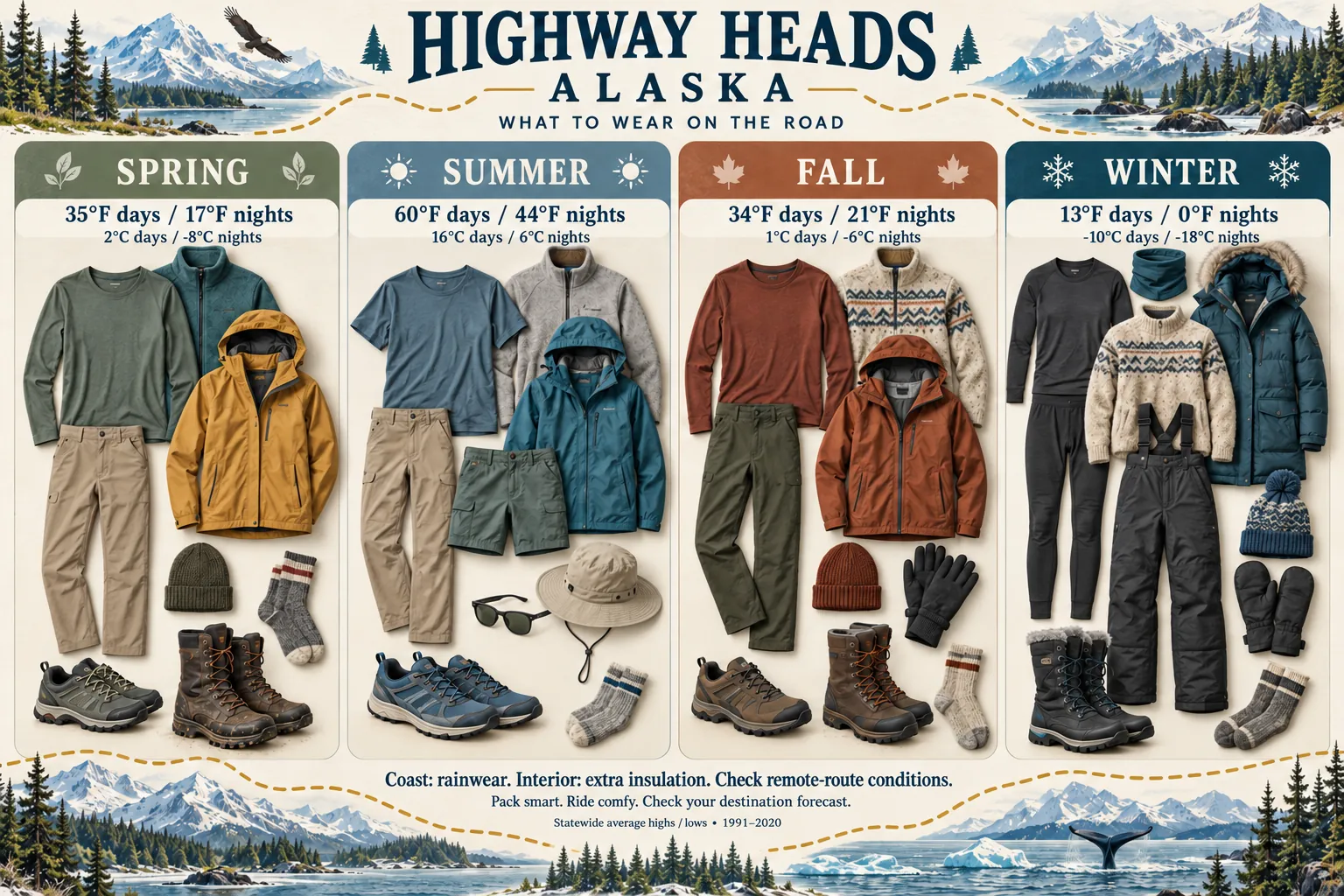
Alaska 35°/17°F (2°/-8°C)
Spring can feel like winter early on, with snowmelt and muddy stops later.
Wear Start with a long-sleeve tee, stretch pants, and a fleece or sweater. Add a rain shell when the wind or showers pick up.
Shoes Water-resistant walking shoes with grip; boots for muddy stops.
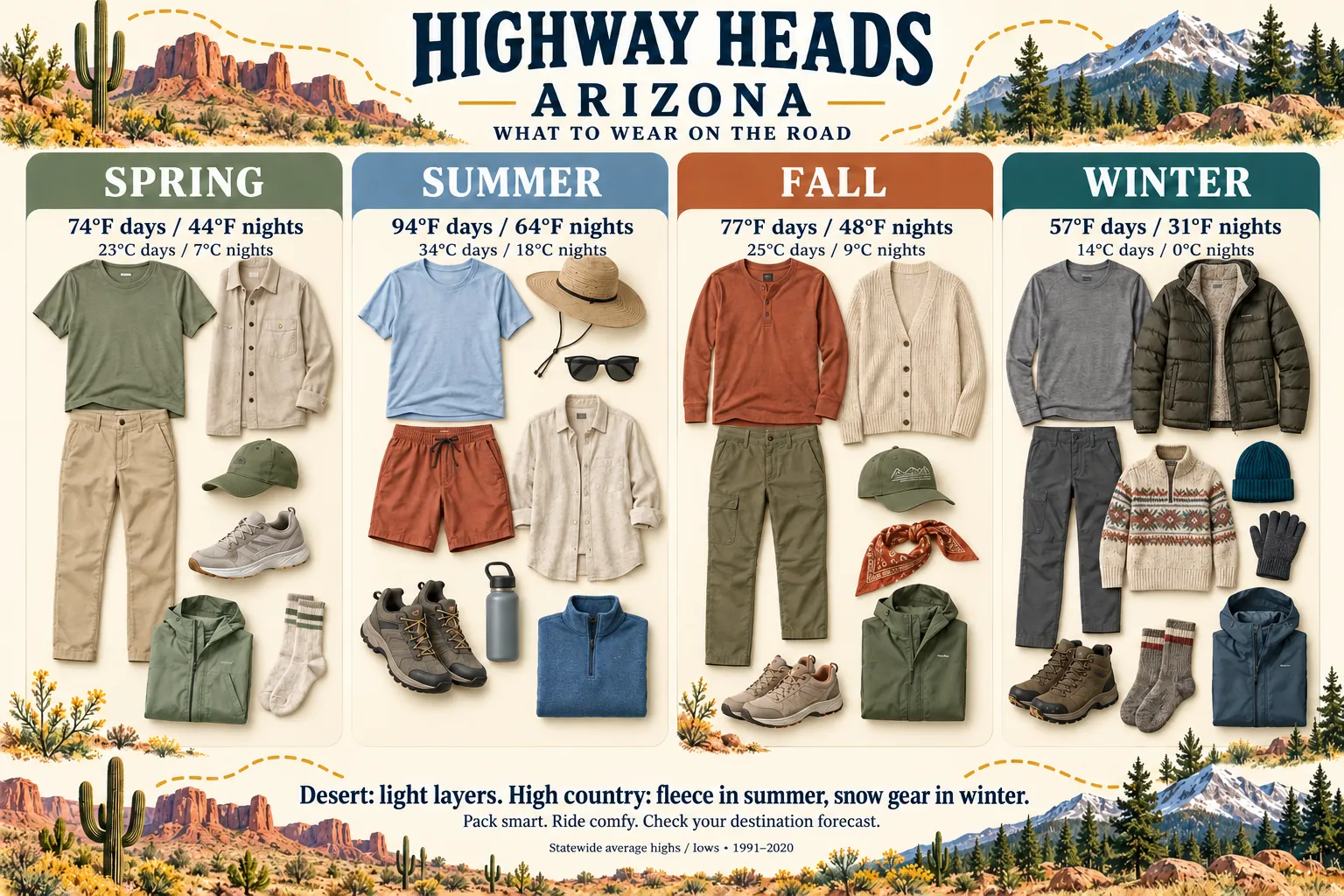
Arizona 74°/44°F (23°/7°C)
Spring is warm in the southern desert and cooler in high country.
Wear Pair a breathable tee or relaxed shirt with lightweight chinos, joggers, or an easy midi skirt. Add an open overshirt for cool stops.
Shoes Broken-in walking sneakers; water-resistant shoes when rain is forecast.
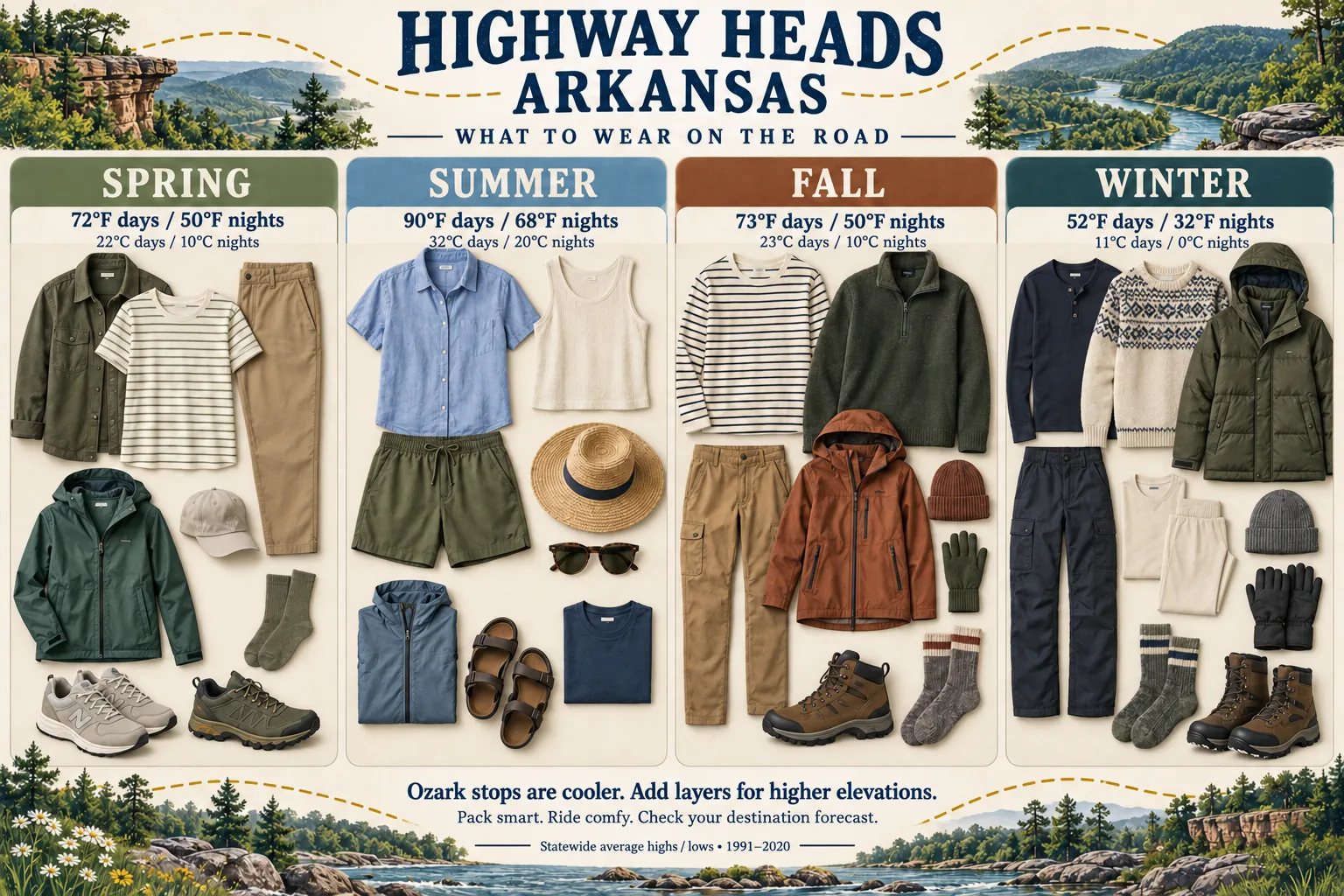
Arkansas 72°/50°F (22°/10°C)
Spring has warming days and frequent wet-weather possibilities.
Wear Pair a breathable tee or relaxed shirt with lightweight chinos, joggers, or an easy midi skirt. Add an open overshirt for cool stops.
Shoes Broken-in walking sneakers; water-resistant shoes when rain is forecast.
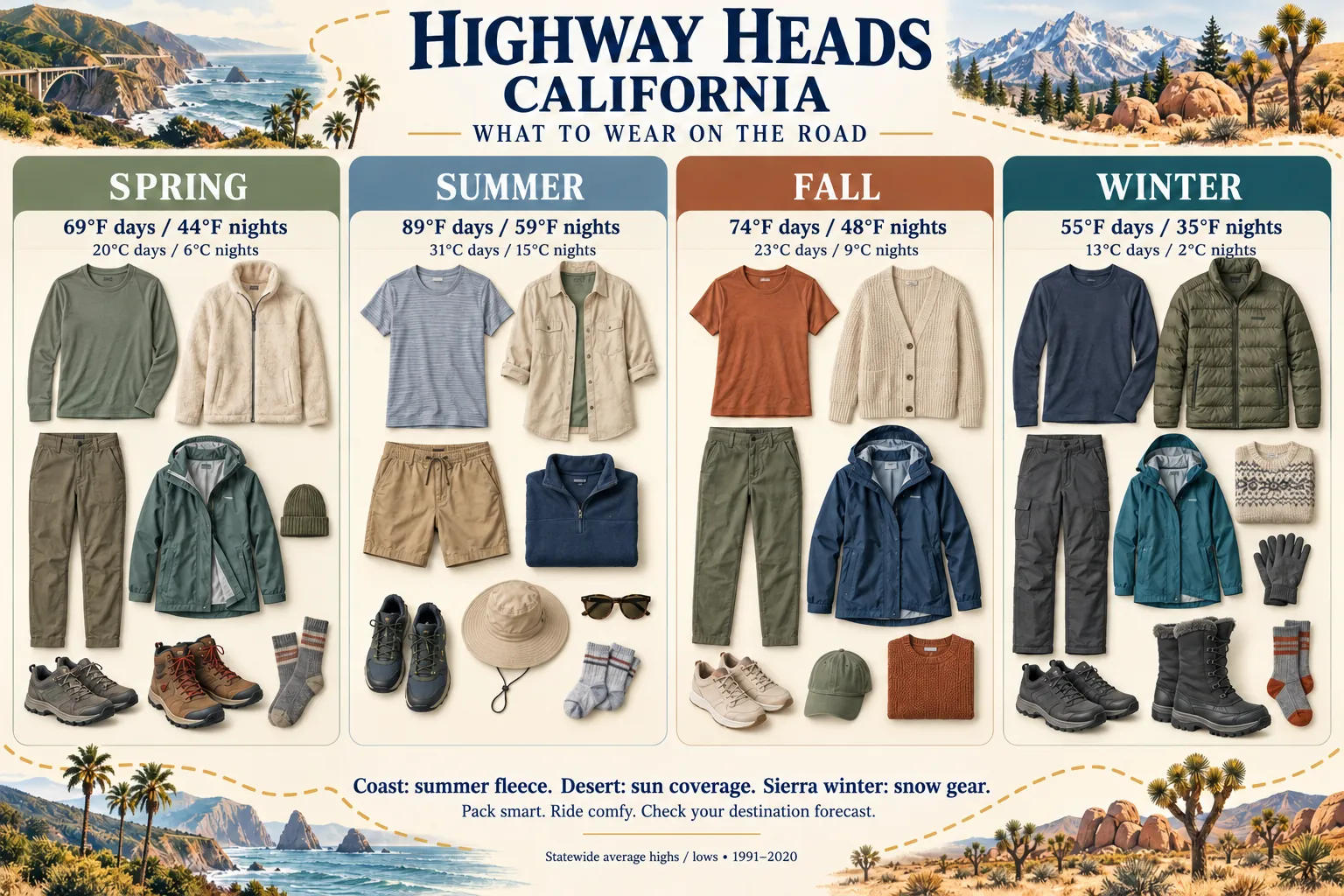
California 69°/44°F (20°/6°C)
Spring varies from cool coastal days to warm inland afternoons, with mountain snow possible.
Wear Start with a long-sleeve tee, stretch pants, and a fleece or sweater. Add a rain shell when the wind or showers pick up.
Shoes Water-resistant walking shoes with grip; boots for muddy stops.
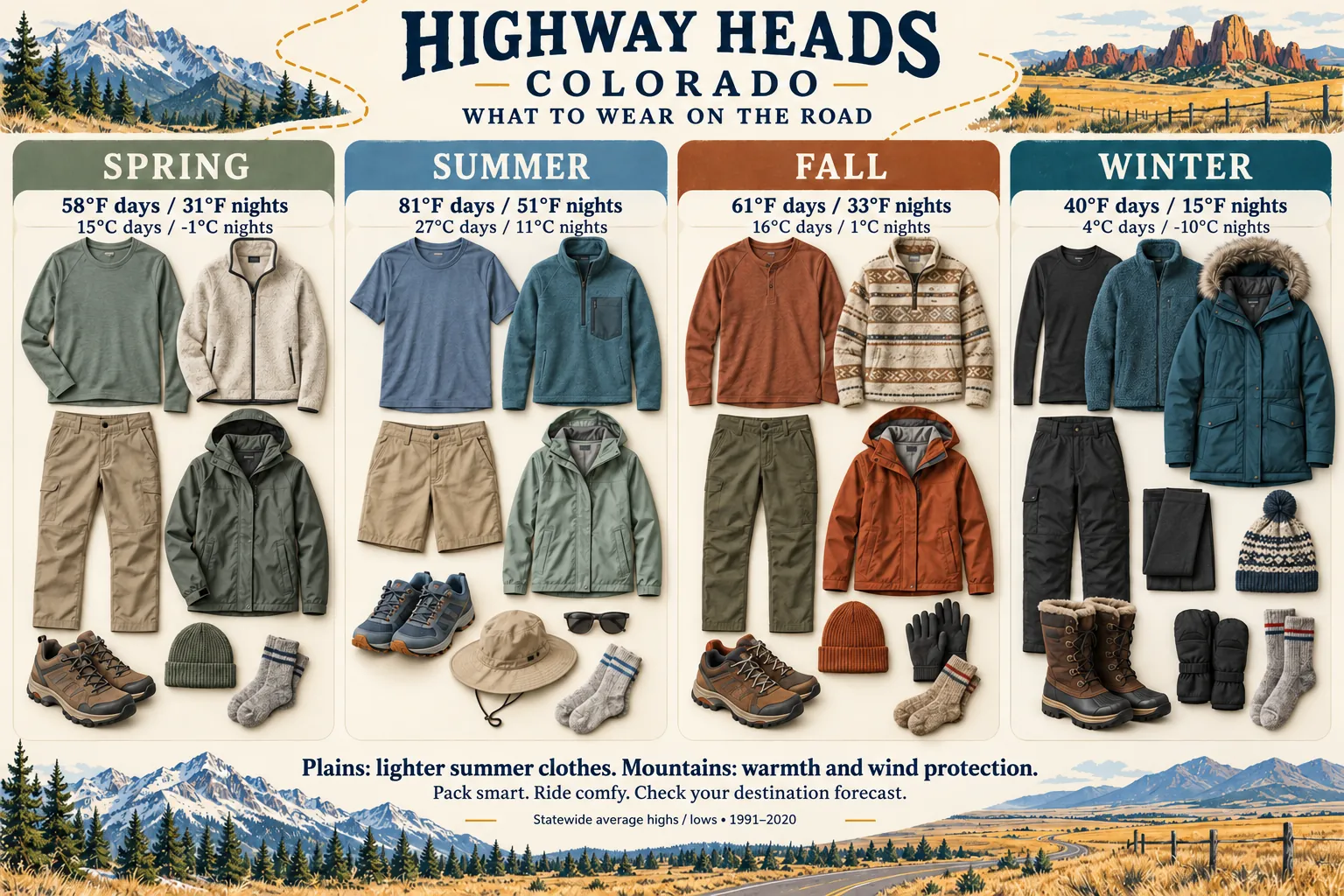
Colorado 58°/31°F (15°/-1°C)
Spring can swing between mild sunshine and snow, especially at elevation.
Wear Start with a long-sleeve tee, stretch pants, and a fleece or sweater. Add a rain shell when the wind or showers pick up.
Shoes Water-resistant walking shoes with grip; boots for muddy stops.
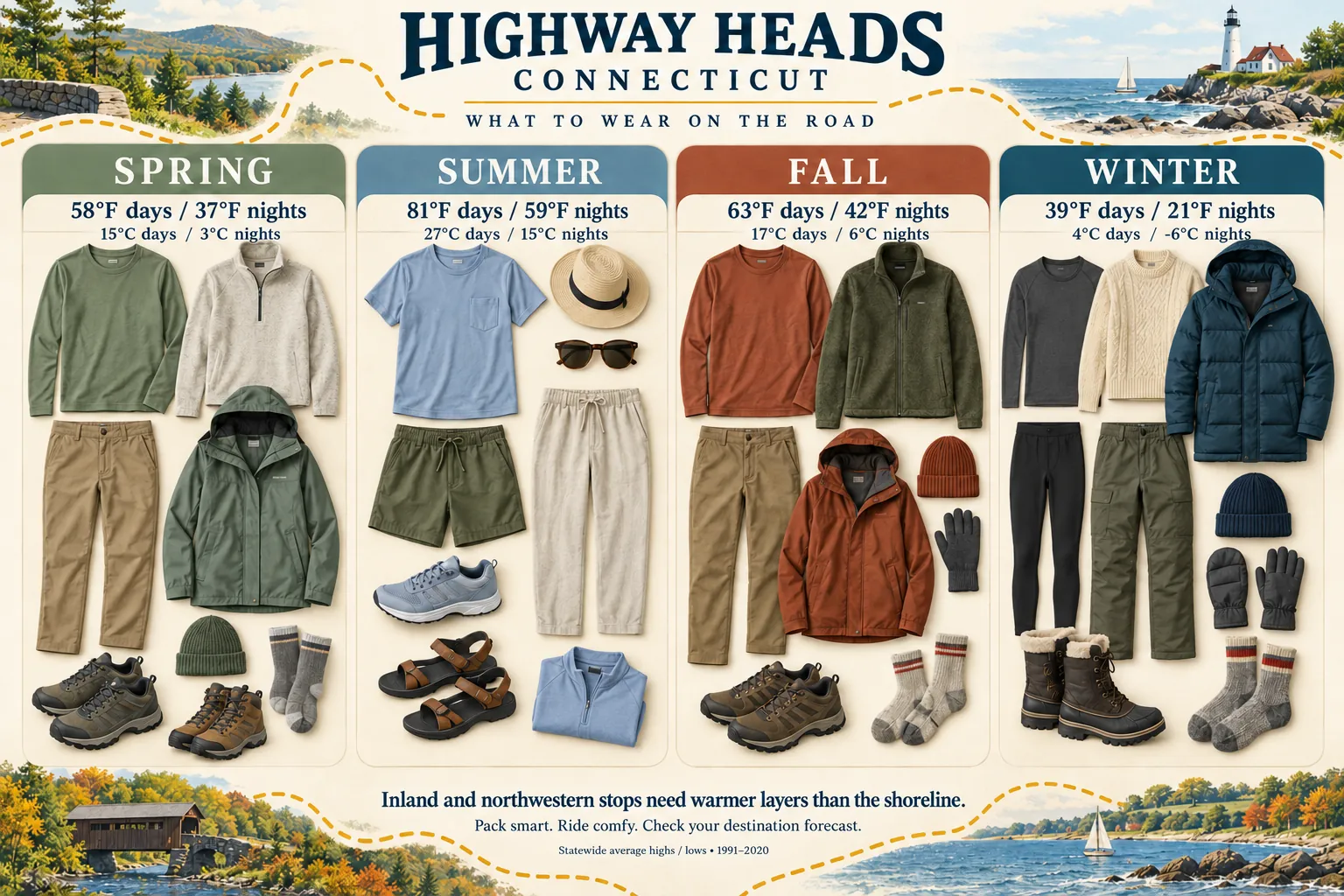
Connecticut 58°/37°F (15°/3°C)
Spring gradually warms, with rain and cool mornings.
Wear Start with a long-sleeve tee, stretch pants, and a fleece or sweater. Add a rain shell when the wind or showers pick up.
Shoes Water-resistant walking shoes with grip; boots for muddy stops.
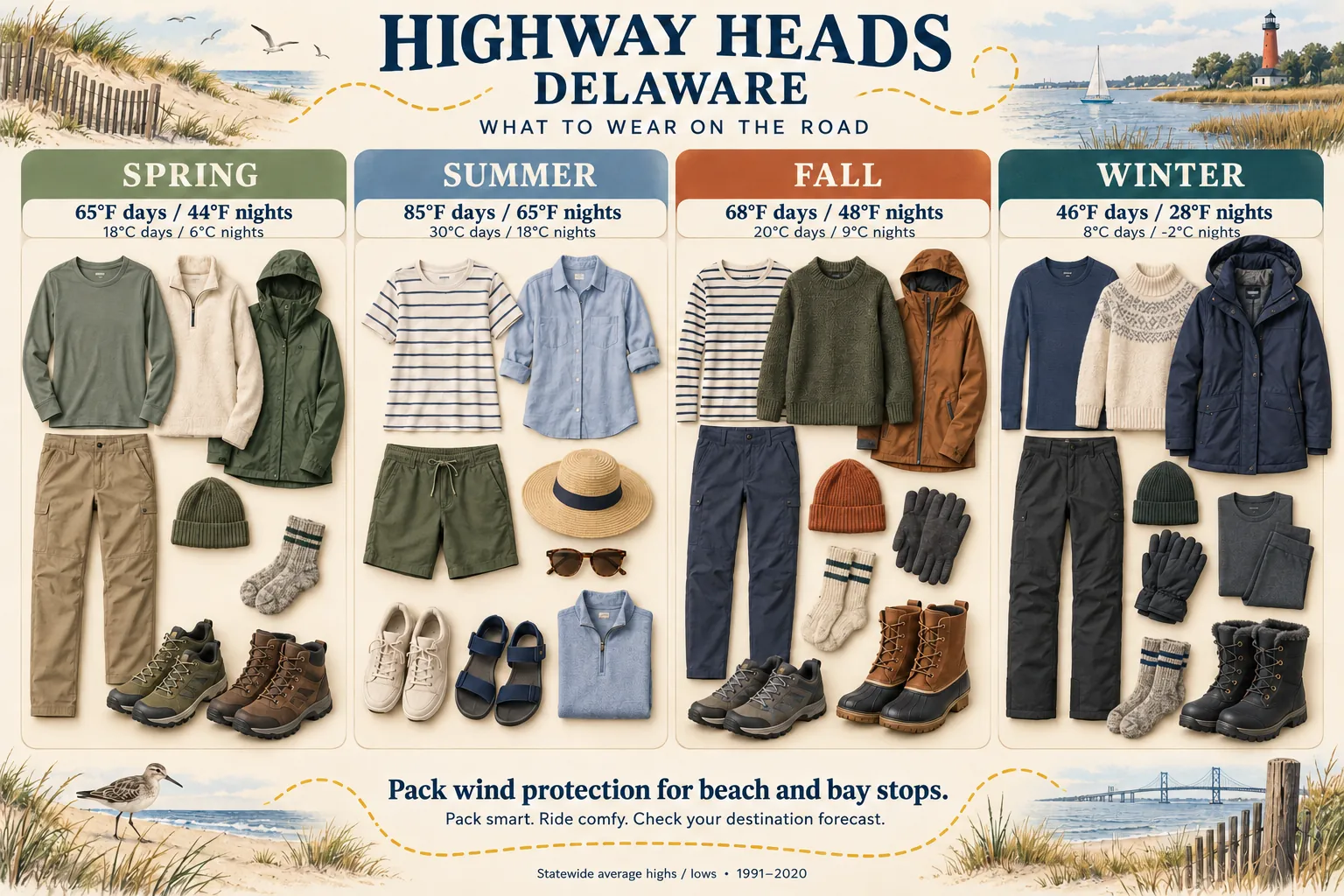
Delaware 65°/44°F (18°/6°C)
Spring has changing temperatures and frequent chances for rain.
Wear Start with a long-sleeve tee, stretch pants, and a fleece or sweater. Add a rain shell when the wind or showers pick up.
Shoes Water-resistant walking shoes with grip; boots for muddy stops.
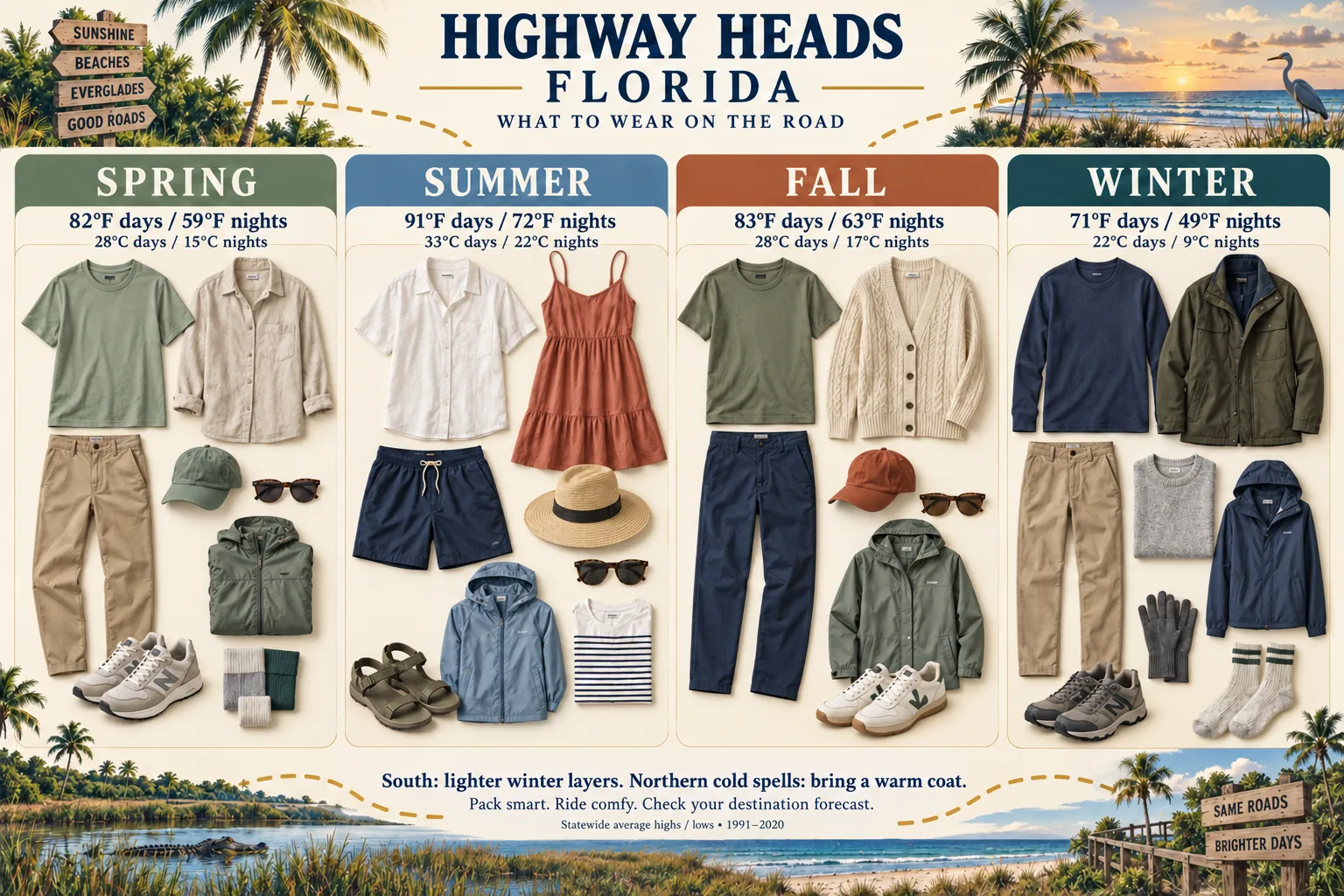
Florida 82°/59°F (28°/15°C)
Spring is generally warm, with cooler starts more likely in the north.
Wear Pair a breathable tee or relaxed shirt with lightweight chinos, joggers, or an easy midi skirt. Add an open overshirt for cool stops.
Shoes Broken-in walking sneakers; water-resistant shoes when rain is forecast.
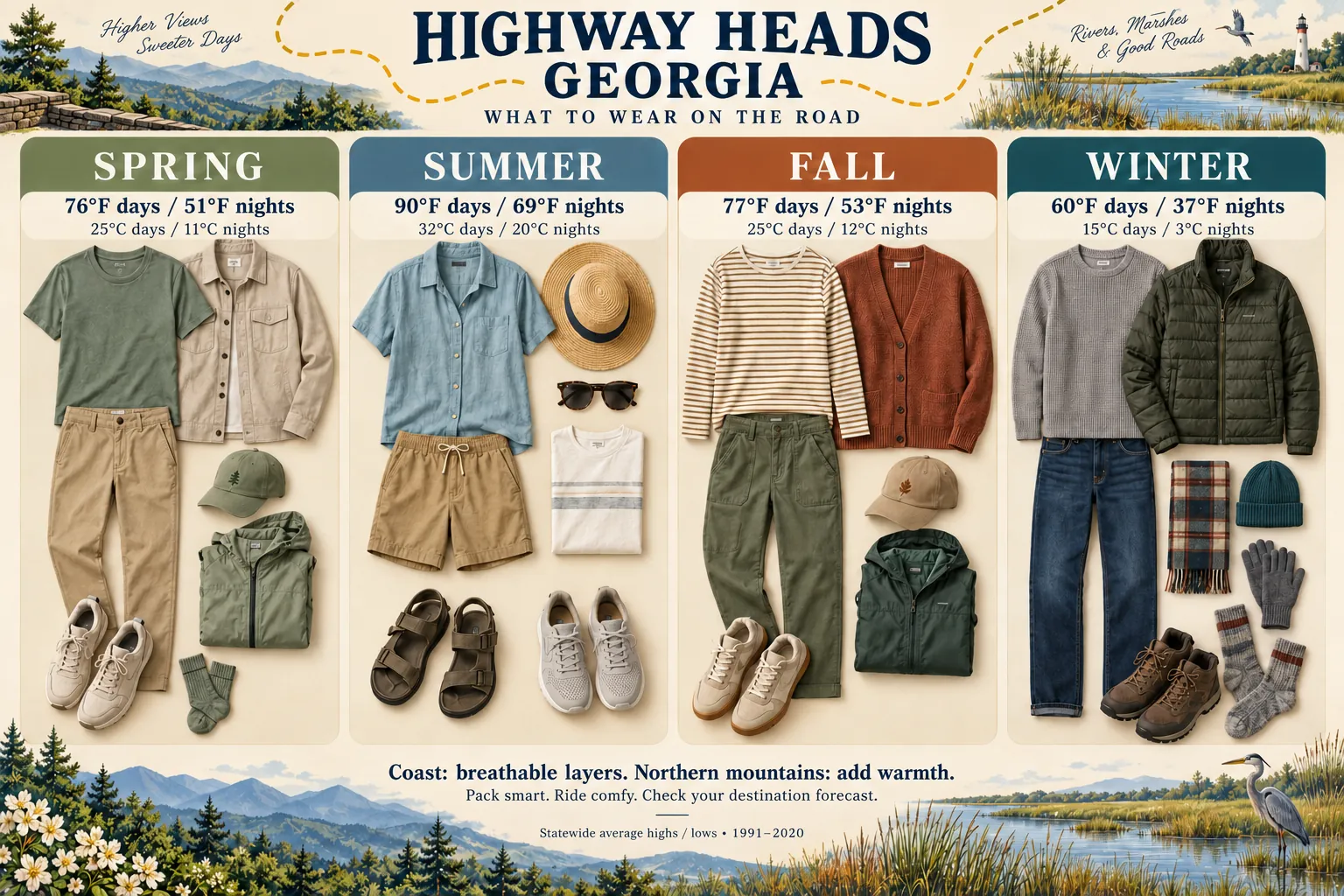
Georgia 76°/51°F (25°/11°C)
Spring has warming afternoons, rain, and cooler mountain mornings.
Wear Pair a breathable tee or relaxed shirt with lightweight chinos, joggers, or an easy midi skirt. Add an open overshirt for cool stops.
Shoes Broken-in walking sneakers; water-resistant shoes when rain is forecast.
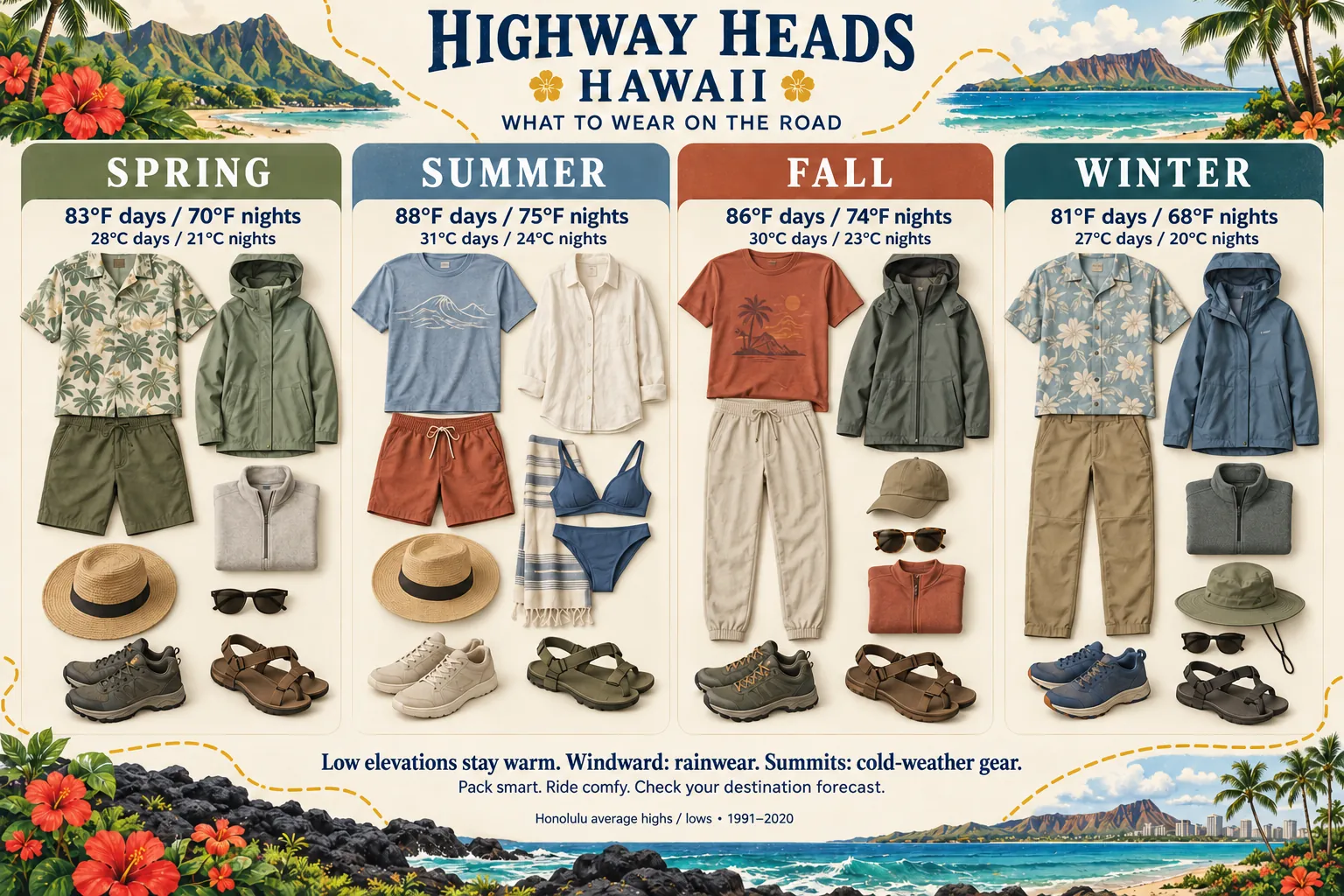
Hawaii 83°/70°F (28°/21°C)
Spring is warm at low elevations, with showers varying by location.
Wear Choose a breathable tee or aloha-style shirt with lightweight shorts, pants, or an easy dress. Carry a light rain shell and an evening layer.
Shoes Walking sneakers or secure sandals for paved stops; grippy trail shoes for muddy paths.
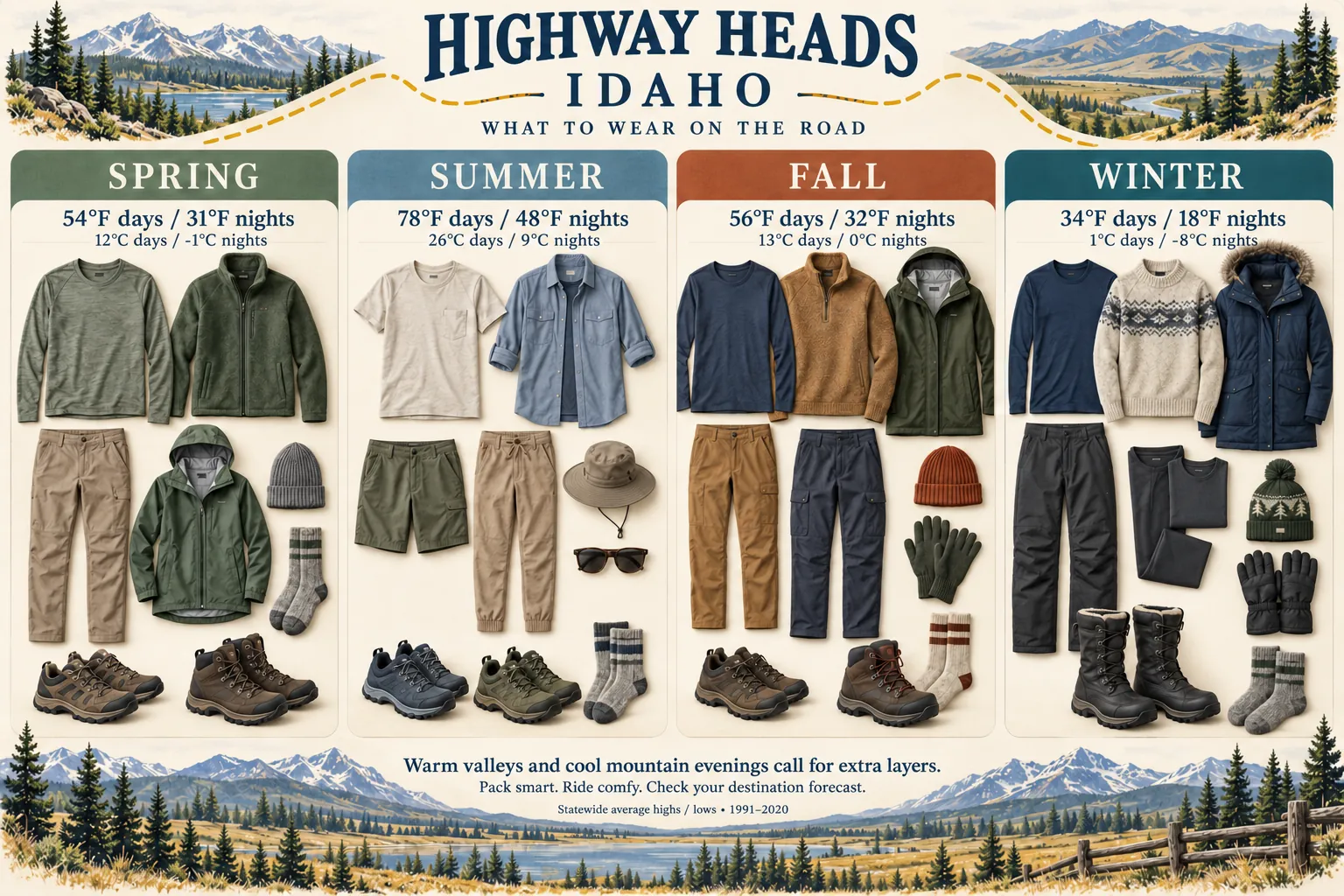
Idaho 54°/31°F (12°/-1°C)
Spring brings cool mornings, variable warmth, and lingering mountain snow.
Wear Start with a long-sleeve tee, stretch pants, and a fleece or sweater. Add a rain shell when the wind or showers pick up.
Shoes Water-resistant walking shoes with grip; boots for muddy stops.
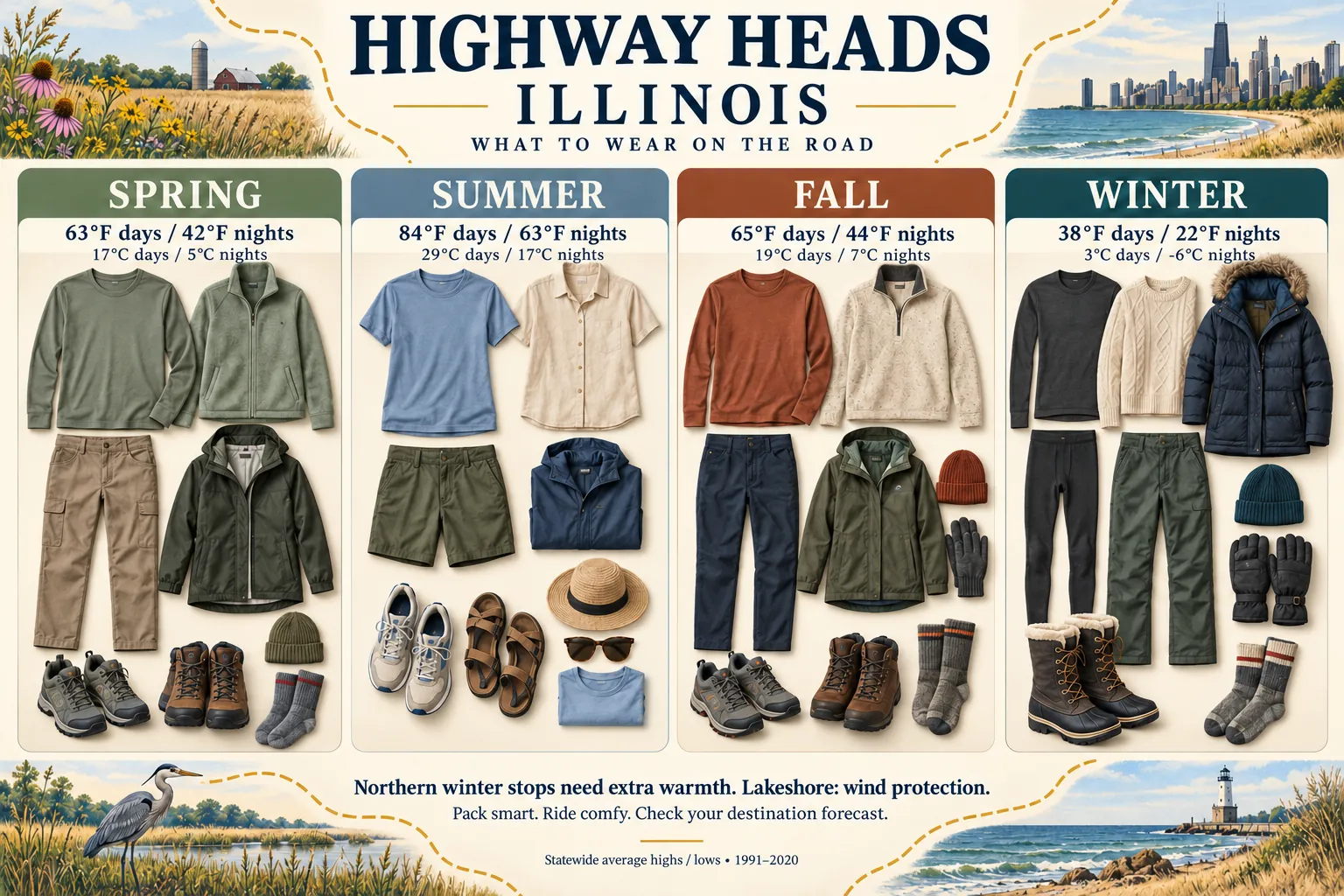
Illinois 63°/42°F (17°/5°C)
Spring has cool starts, warming afternoons, and rain.
Wear Start with a long-sleeve tee, stretch pants, and a fleece or sweater. Add a rain shell when the wind or showers pick up.
Shoes Water-resistant walking shoes with grip; boots for muddy stops.
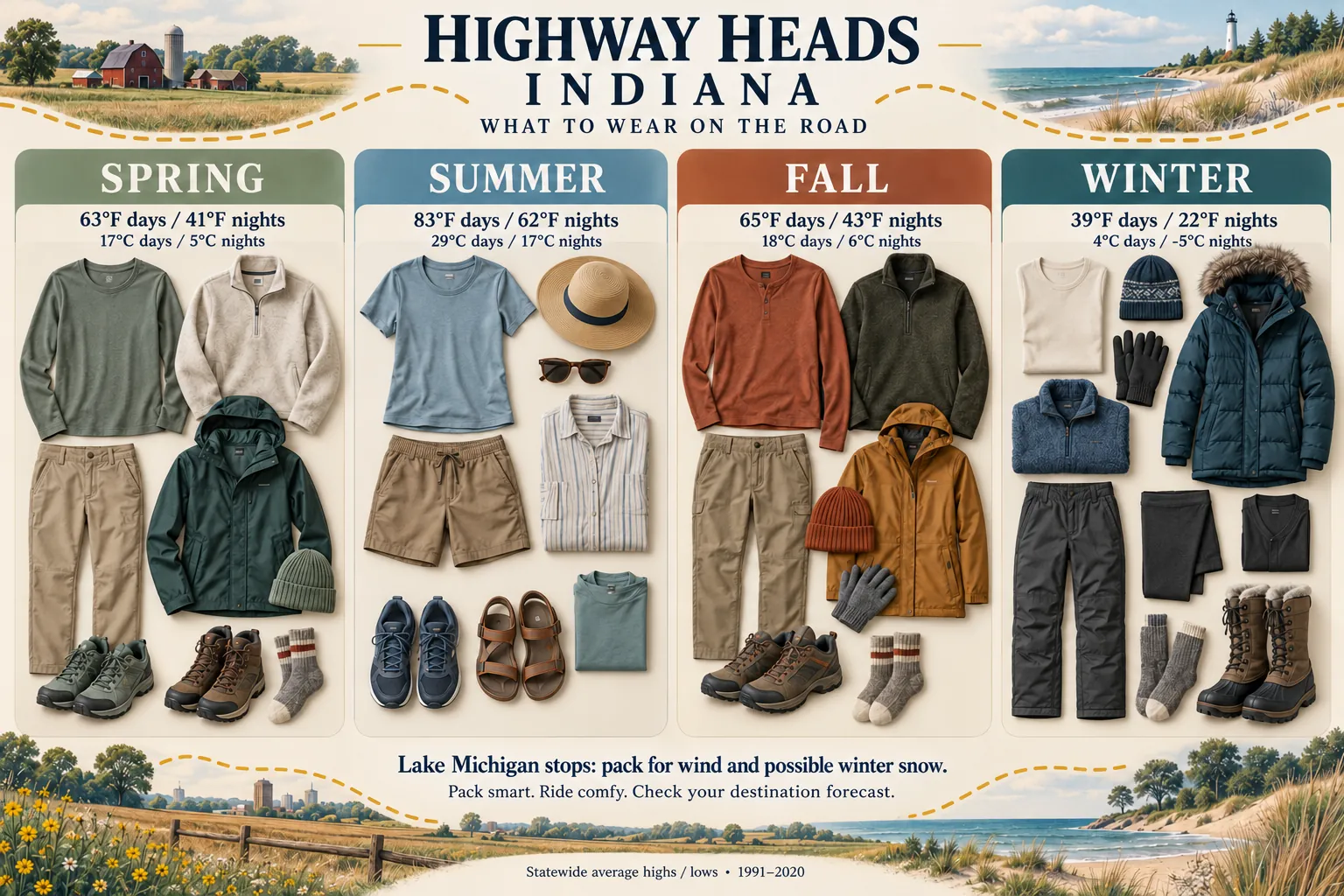
Indiana 63°/41°F (17°/5°C)
Spring temperatures fluctuate, with rain and cool mornings.
Wear Start with a long-sleeve tee, stretch pants, and a fleece or sweater. Add a rain shell when the wind or showers pick up.
Shoes Water-resistant walking shoes with grip; boots for muddy stops.
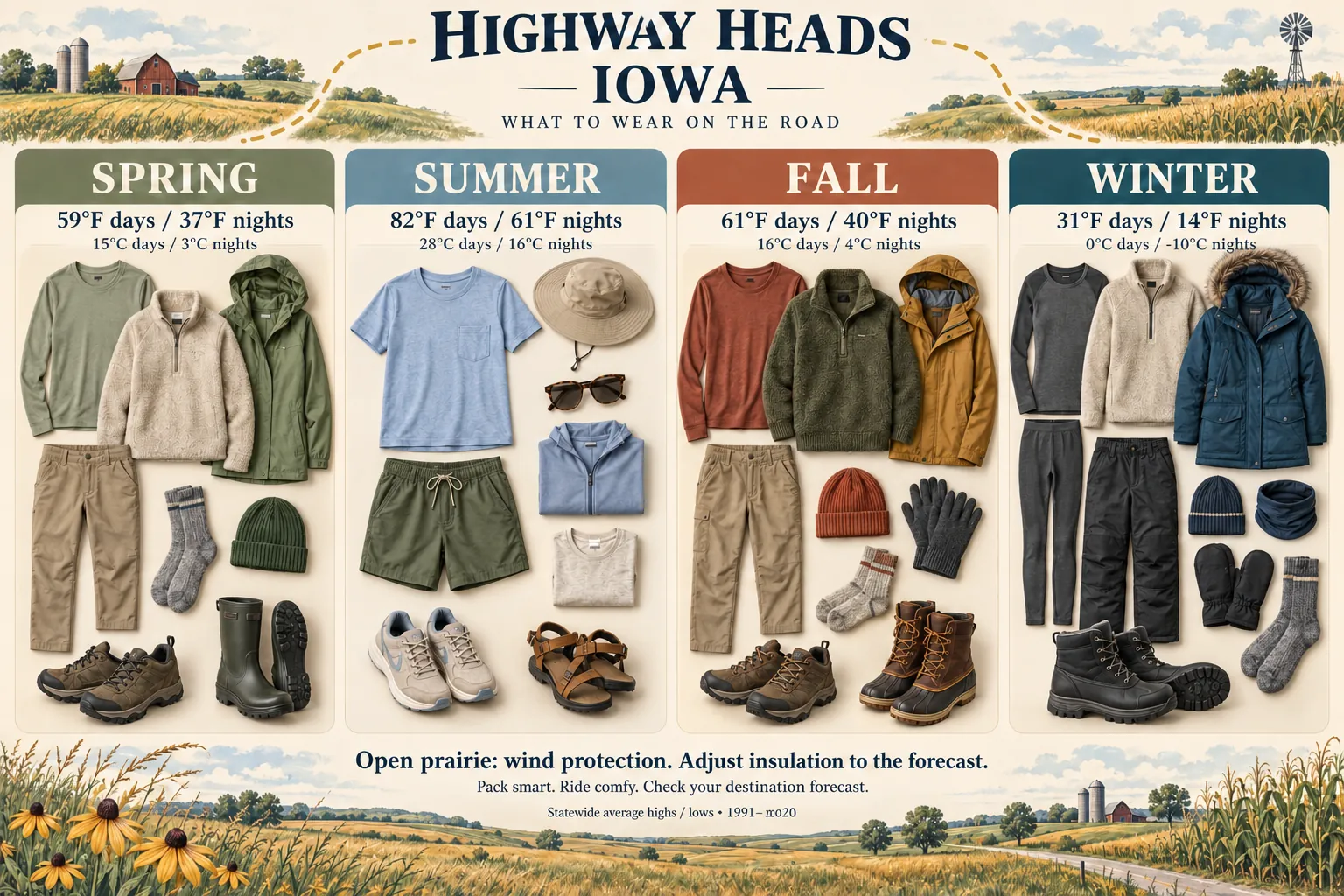
Iowa 59°/37°F (15°/3°C)
Spring alternates between chilly days, warm spells, and wet weather.
Wear Start with a long-sleeve tee, stretch pants, and a fleece or sweater. Add a rain shell when the wind or showers pick up.
Shoes Water-resistant walking shoes with grip; boots for muddy stops.
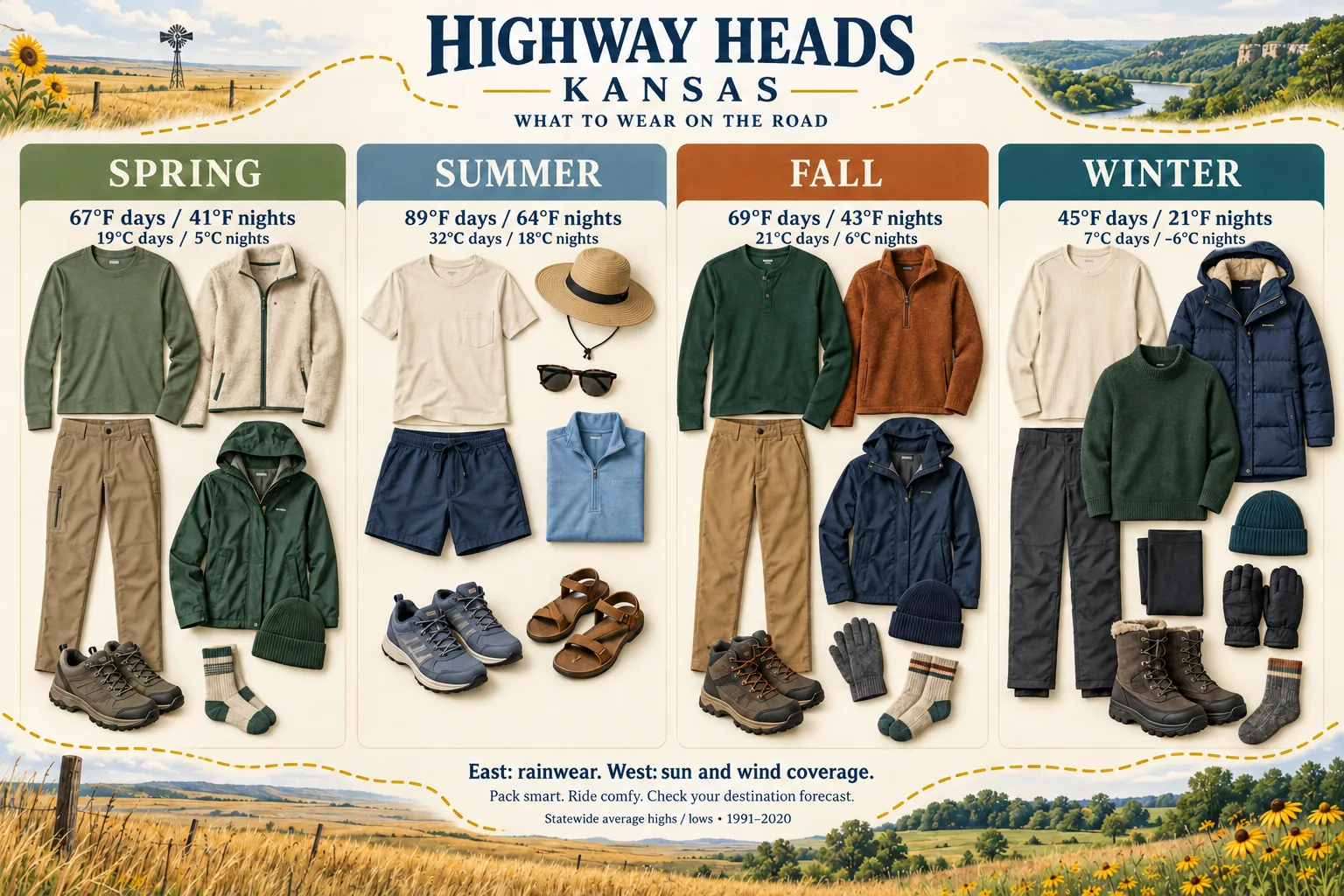
Kansas 67°/41°F (19°/5°C)
Spring can shift quickly between warm afternoons and chilly, windy weather.
Wear Start with a long-sleeve tee, stretch pants, and a fleece or sweater. Add a rain shell when the wind or showers pick up.
Shoes Water-resistant walking shoes with grip; boots for muddy stops.
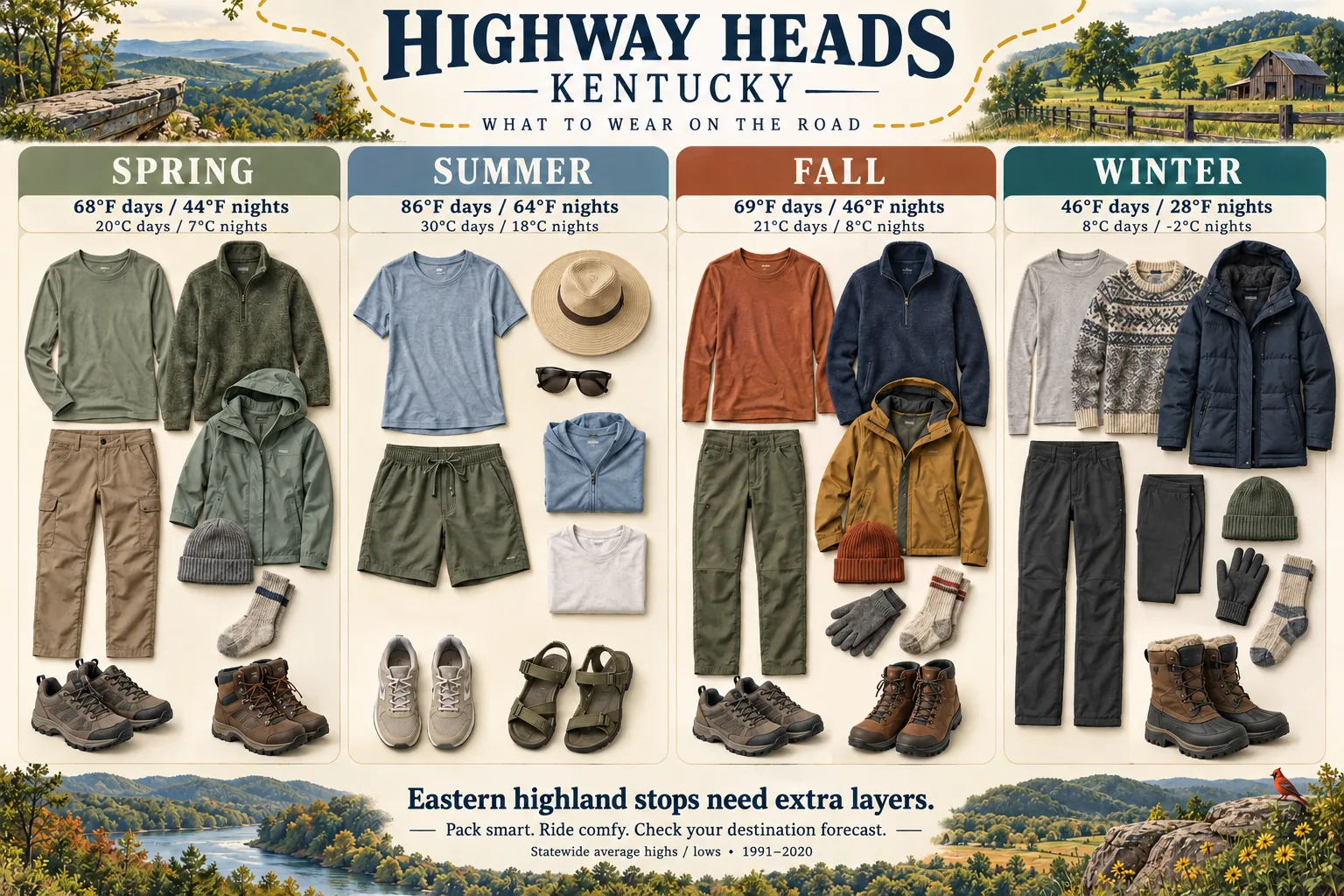
Kentucky 68°/44°F (20°/7°C)
Spring has changing temperatures and rain, with chilly mornings.
Wear Start with a long-sleeve tee, stretch pants, and a fleece or sweater. Add a rain shell when the wind or showers pick up.
Shoes Water-resistant walking shoes with grip; boots for muddy stops.
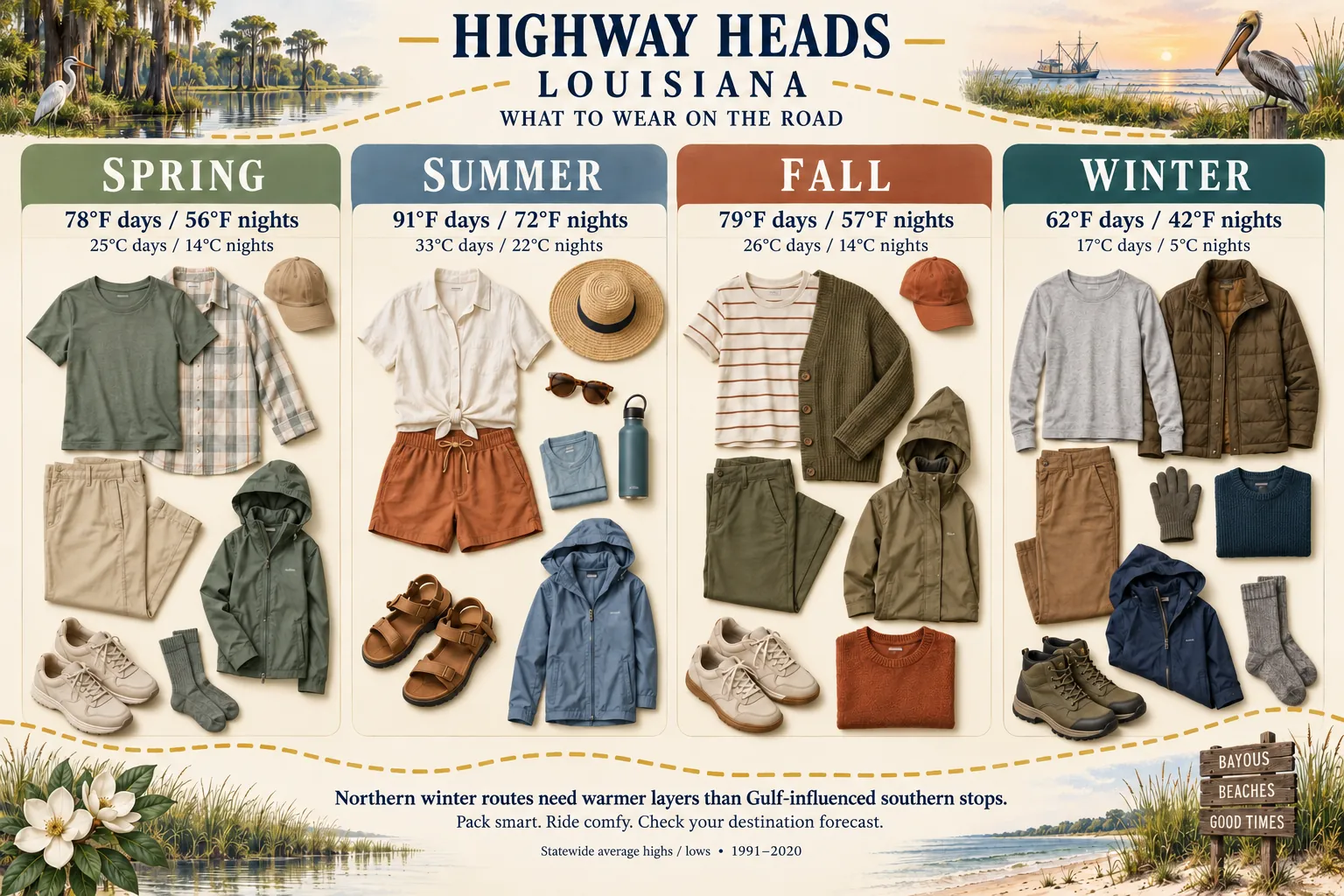
Louisiana 78°/56°F (25°/14°C)
Spring is often warm, with rain and cooler spells.
Wear Pair a breathable tee or relaxed shirt with lightweight chinos, joggers, or an easy midi skirt. Add an open overshirt for cool stops.
Shoes Broken-in walking sneakers; water-resistant shoes when rain is forecast.
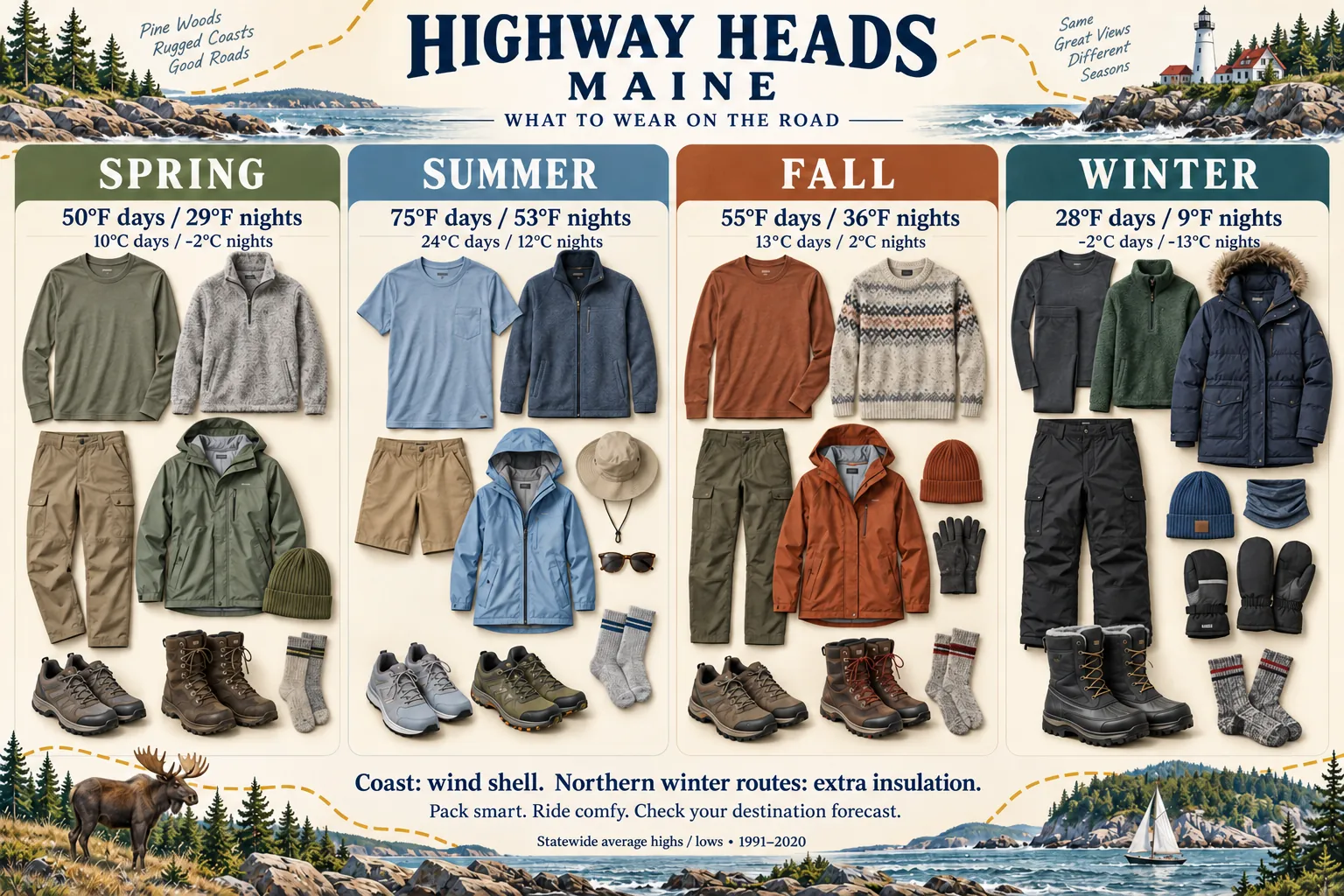
Maine 50°/29°F (10°/-2°C)
Spring is cool, with rain, snowmelt, and muddy stops.
Wear Start with a long-sleeve tee, stretch pants, and a fleece or sweater. Add a rain shell when the wind or showers pick up.
Shoes Water-resistant walking shoes with grip; boots for muddy stops.
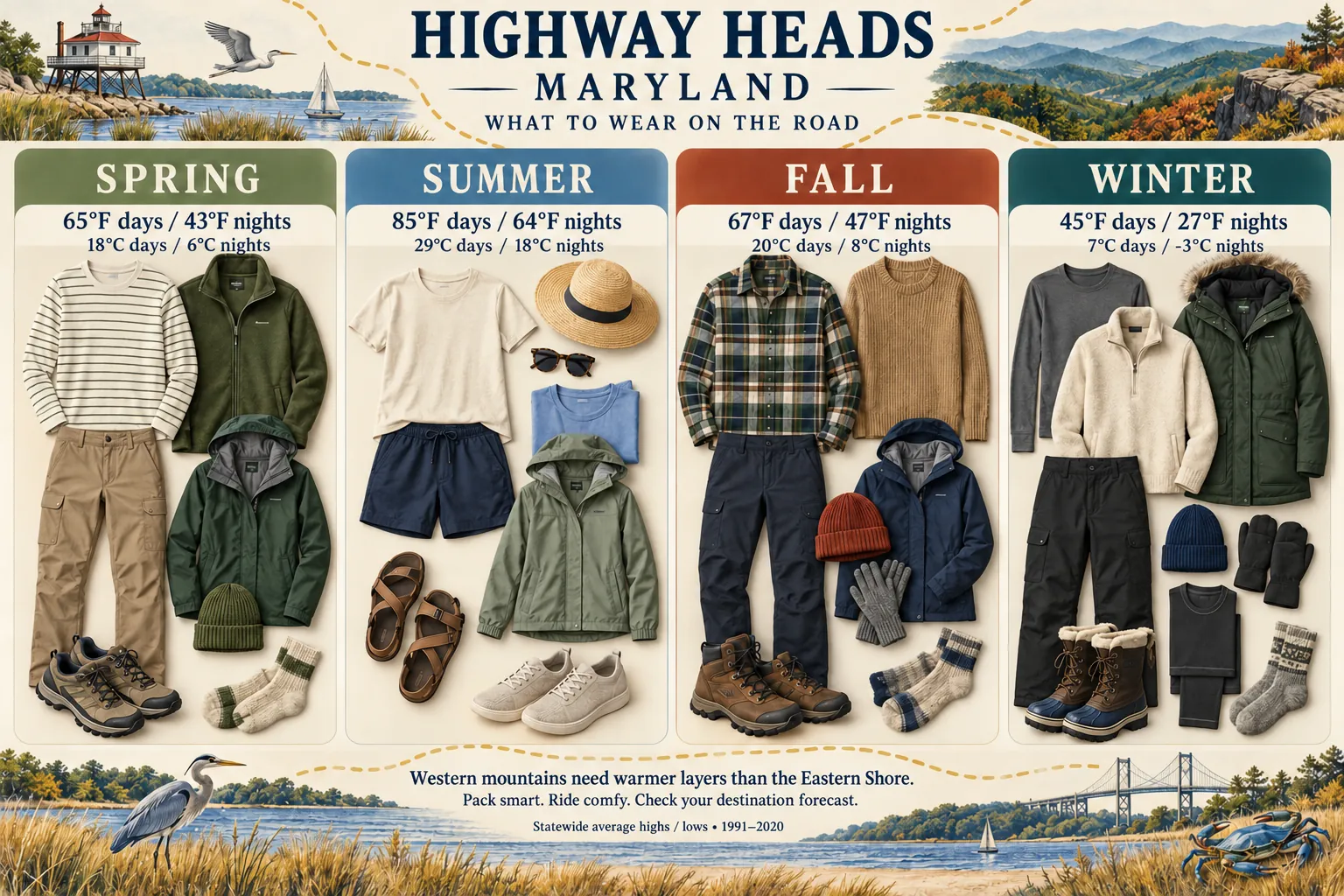
Maryland 65°/43°F (18°/6°C)
Spring brings changing temperatures, showers, and cool mornings.
Wear Start with a long-sleeve tee, stretch pants, and a fleece or sweater. Add a rain shell when the wind or showers pick up.
Shoes Water-resistant walking shoes with grip; boots for muddy stops.
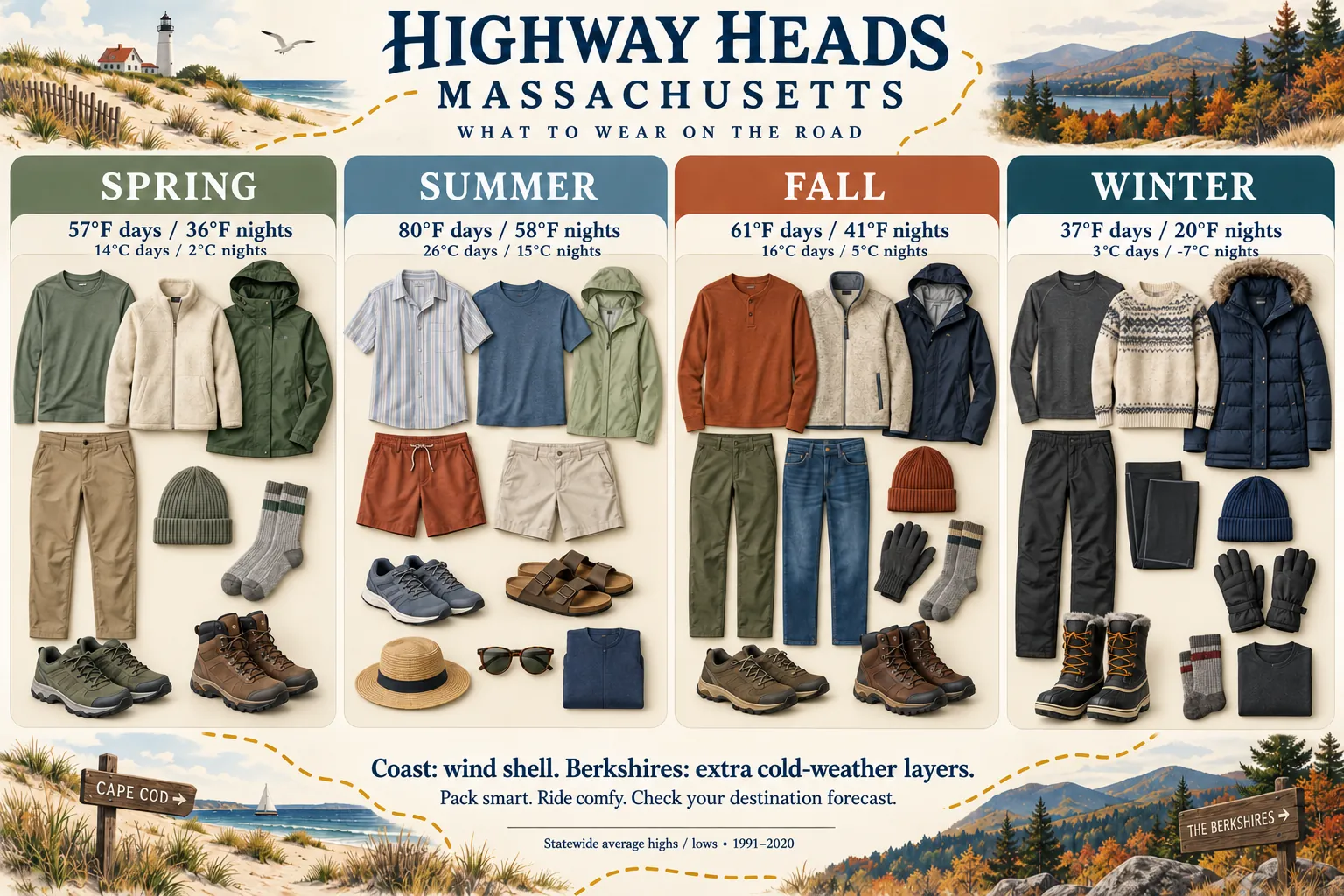
Massachusetts 57°/36°F (14°/2°C)
Spring often starts chilly, with rain and gradual warming.
Wear Start with a long-sleeve tee, stretch pants, and a fleece or sweater. Add a rain shell when the wind or showers pick up.
Shoes Water-resistant walking shoes with grip; boots for muddy stops.
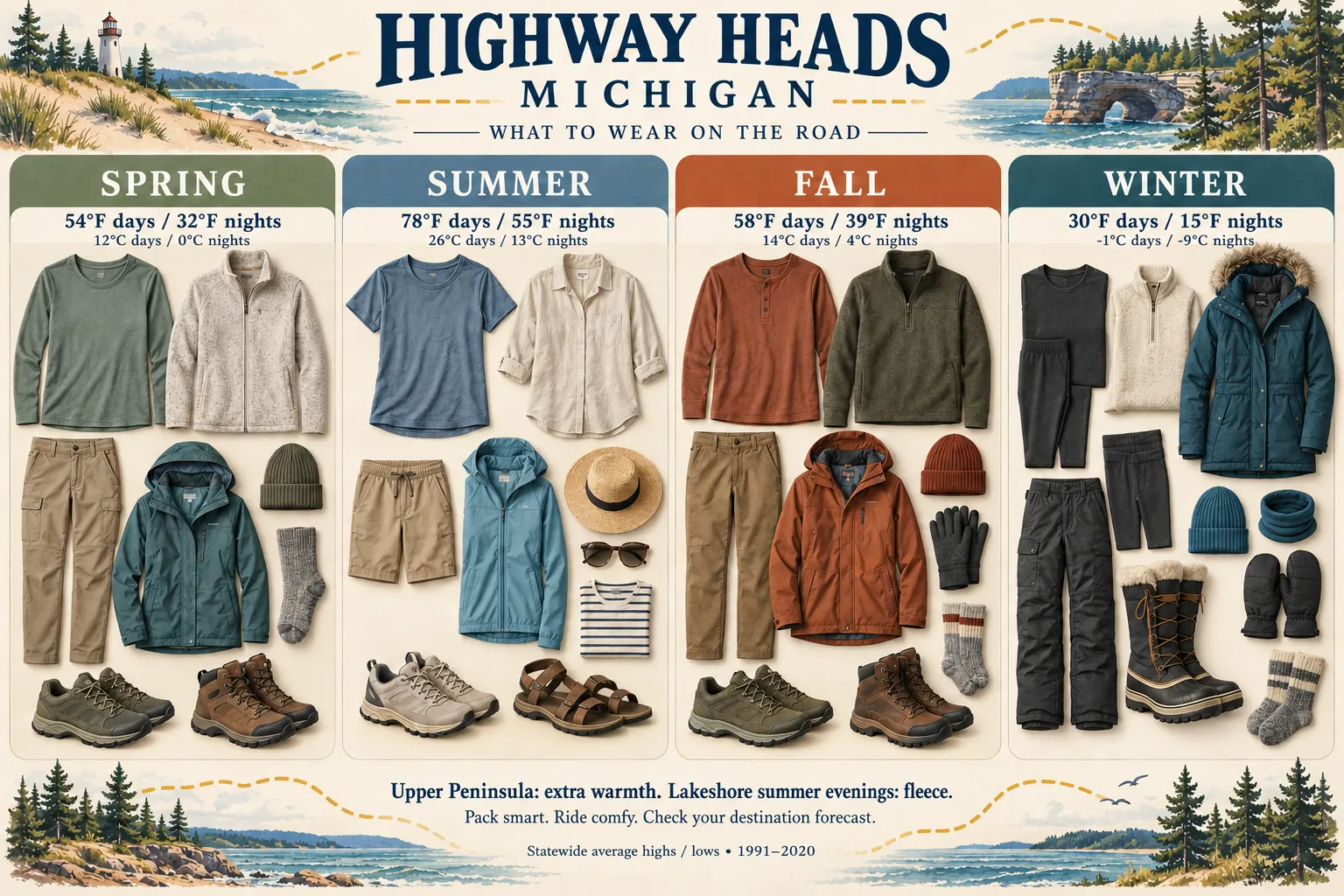
Michigan 54°/32°F (12°/0°C)
Spring can be chilly, especially near the Great Lakes and in the Upper Peninsula.
Wear Start with a long-sleeve tee, stretch pants, and a fleece or sweater. Add a rain shell when the wind or showers pick up.
Shoes Water-resistant walking shoes with grip; boots for muddy stops.
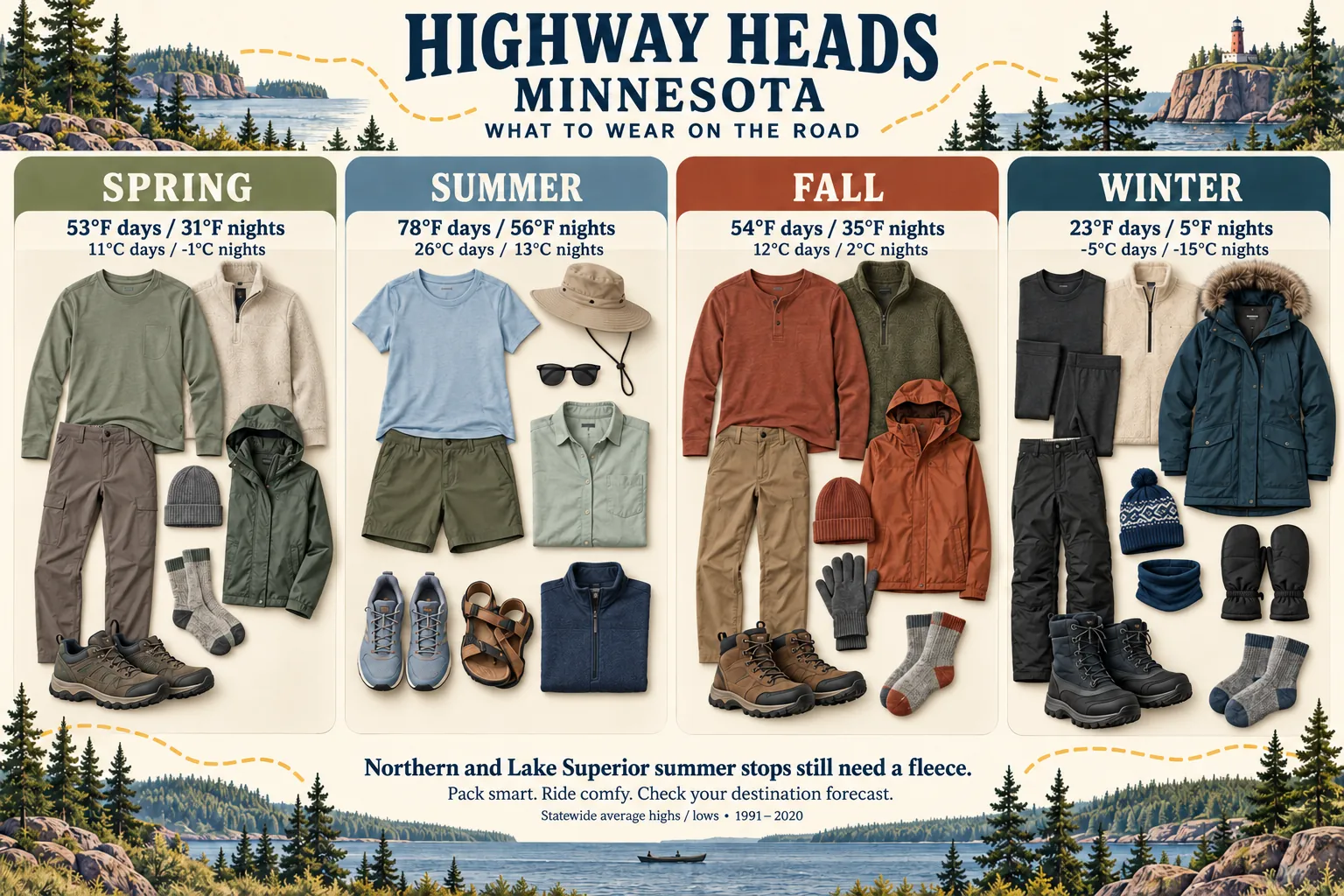
Minnesota 53°/31°F (11°/-1°C)
Spring has warming spells, chilly weather, and possible lingering snow.
Wear Start with a long-sleeve tee, stretch pants, and a fleece or sweater. Add a rain shell when the wind or showers pick up.
Shoes Water-resistant walking shoes with grip; boots for muddy stops.
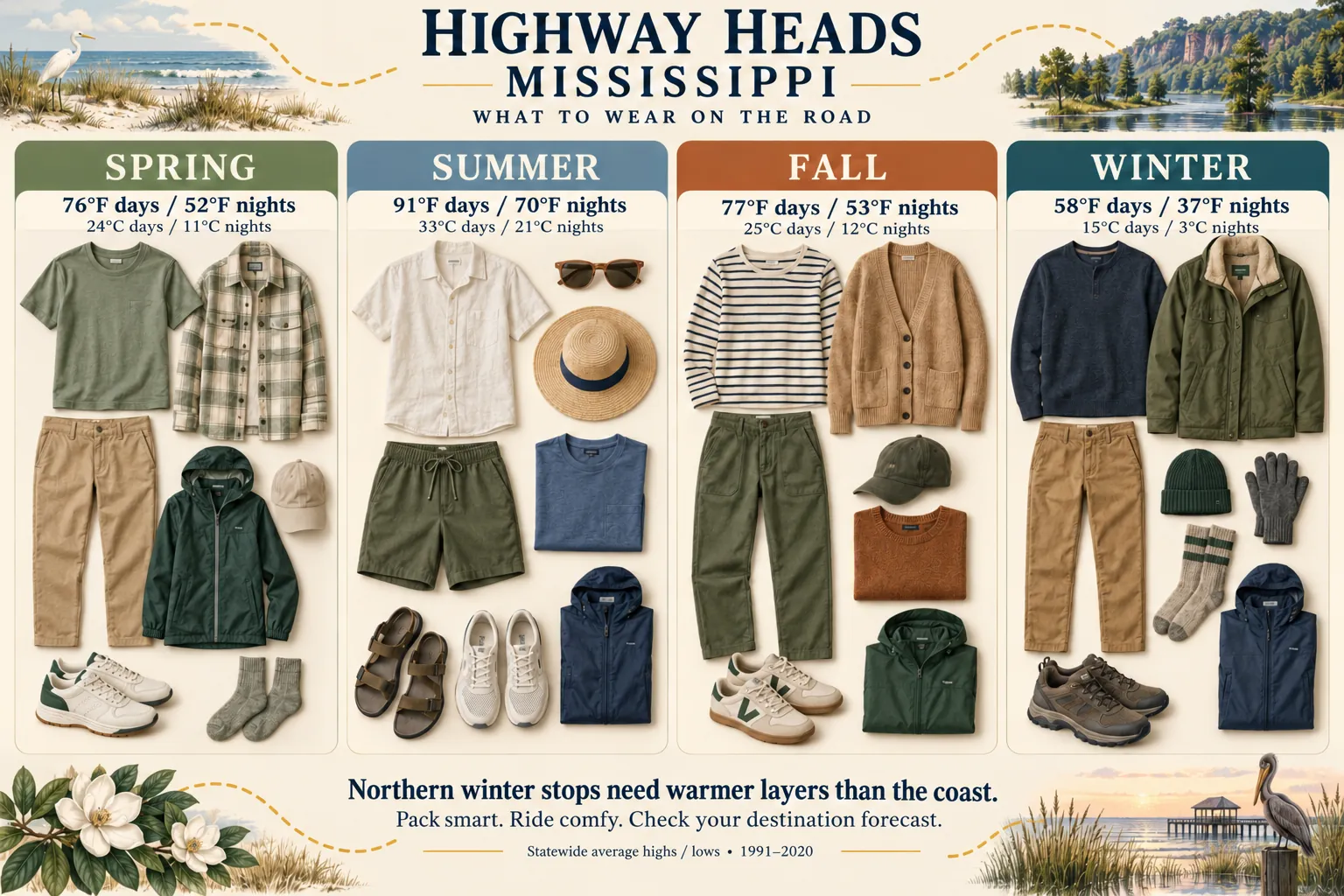
Mississippi 76°/52°F (24°/11°C)
Spring is warm with rain and occasional cool spells.
Wear Pair a breathable tee or relaxed shirt with lightweight chinos, joggers, or an easy midi skirt. Add an open overshirt for cool stops.
Shoes Broken-in walking sneakers; water-resistant shoes when rain is forecast.
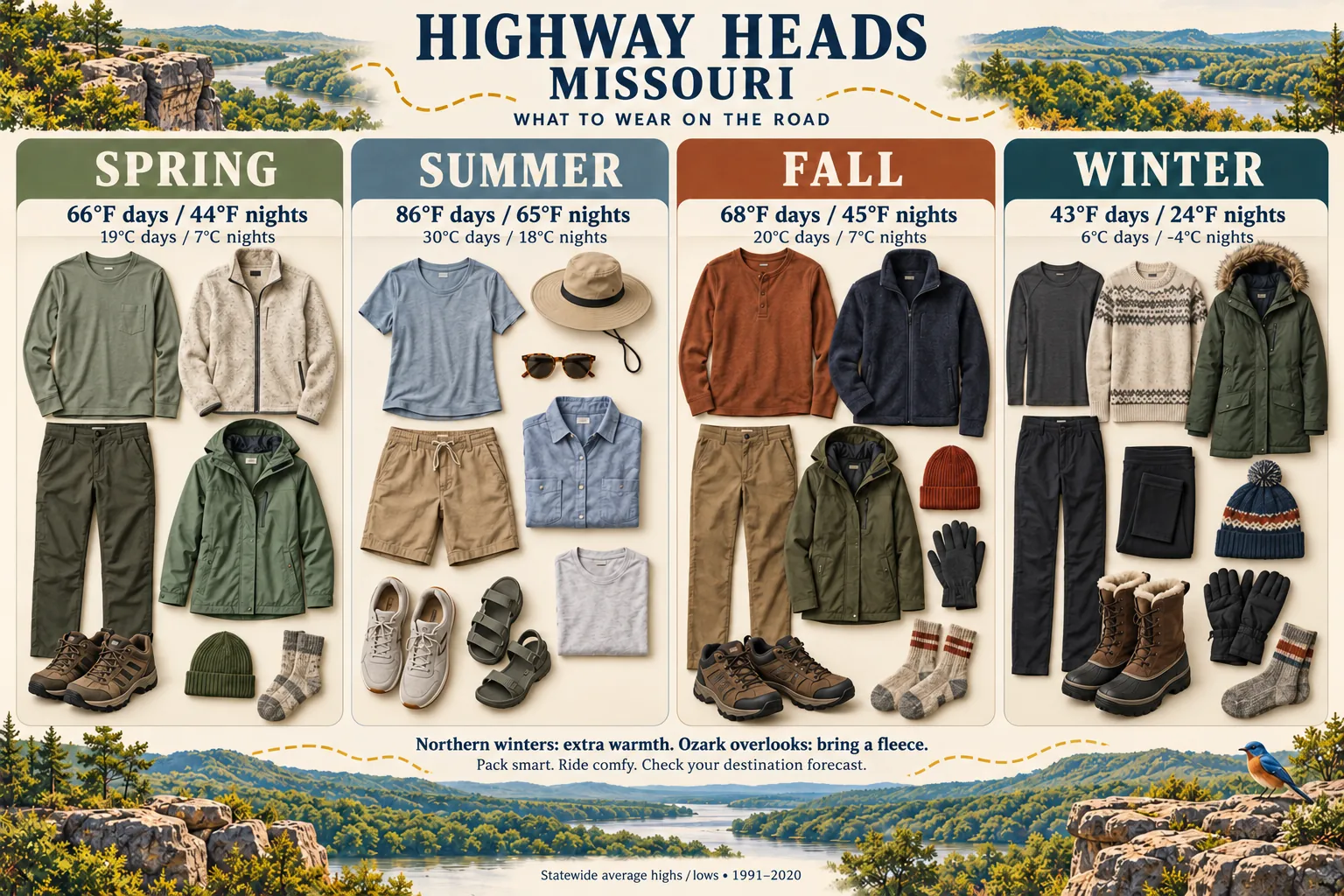
Missouri 66°/44°F (19°/7°C)
Spring brings changeable temperatures, rain, and cool mornings.
Wear Start with a long-sleeve tee, stretch pants, and a fleece or sweater. Add a rain shell when the wind or showers pick up.
Shoes Water-resistant walking shoes with grip; boots for muddy stops.
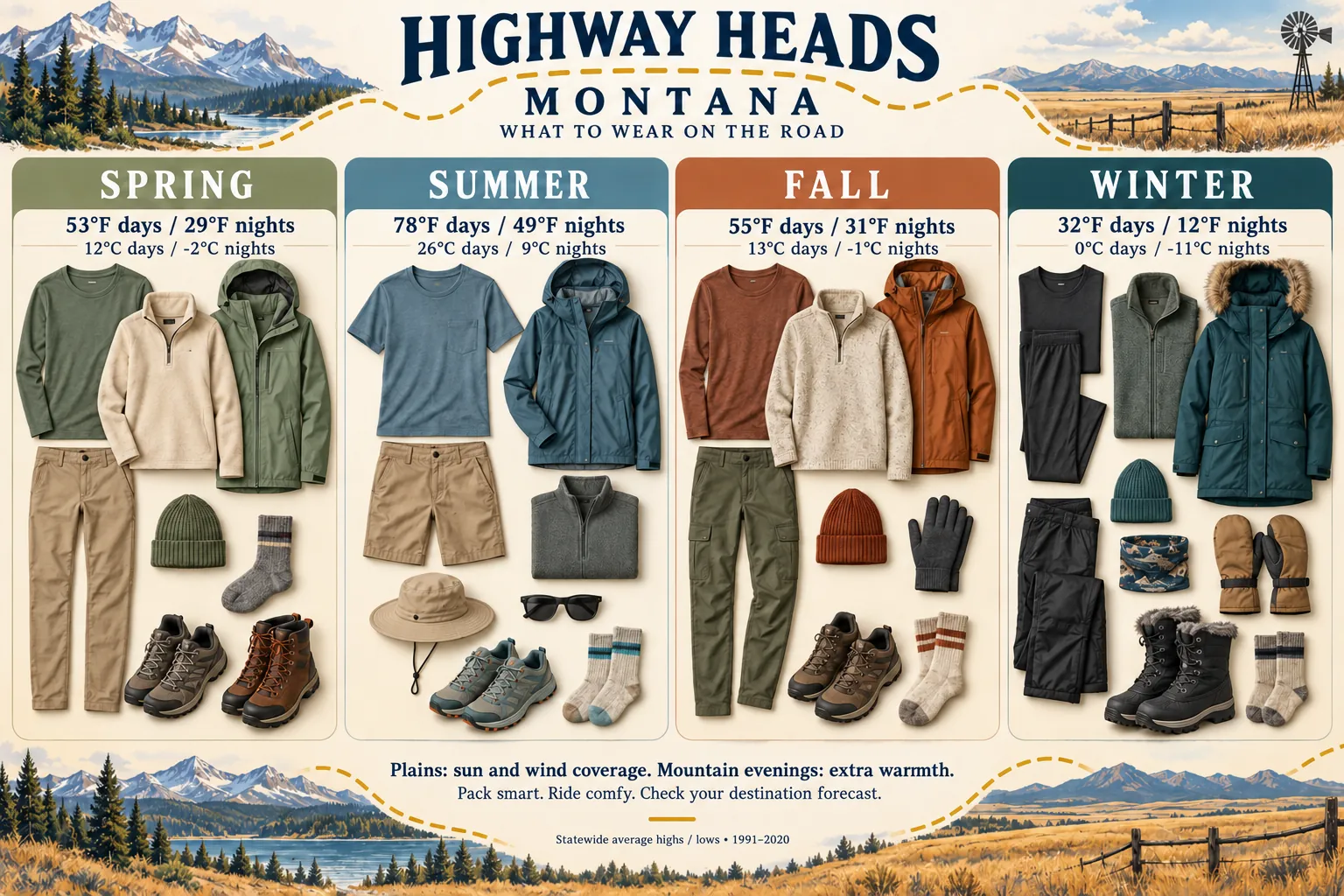
Montana 53°/29°F (12°/-2°C)
Spring can bring mild spells, cold wind, and lingering mountain snow.
Wear Start with a long-sleeve tee, stretch pants, and a fleece or sweater. Add a rain shell when the wind or showers pick up.
Shoes Water-resistant walking shoes with grip; boots for muddy stops.
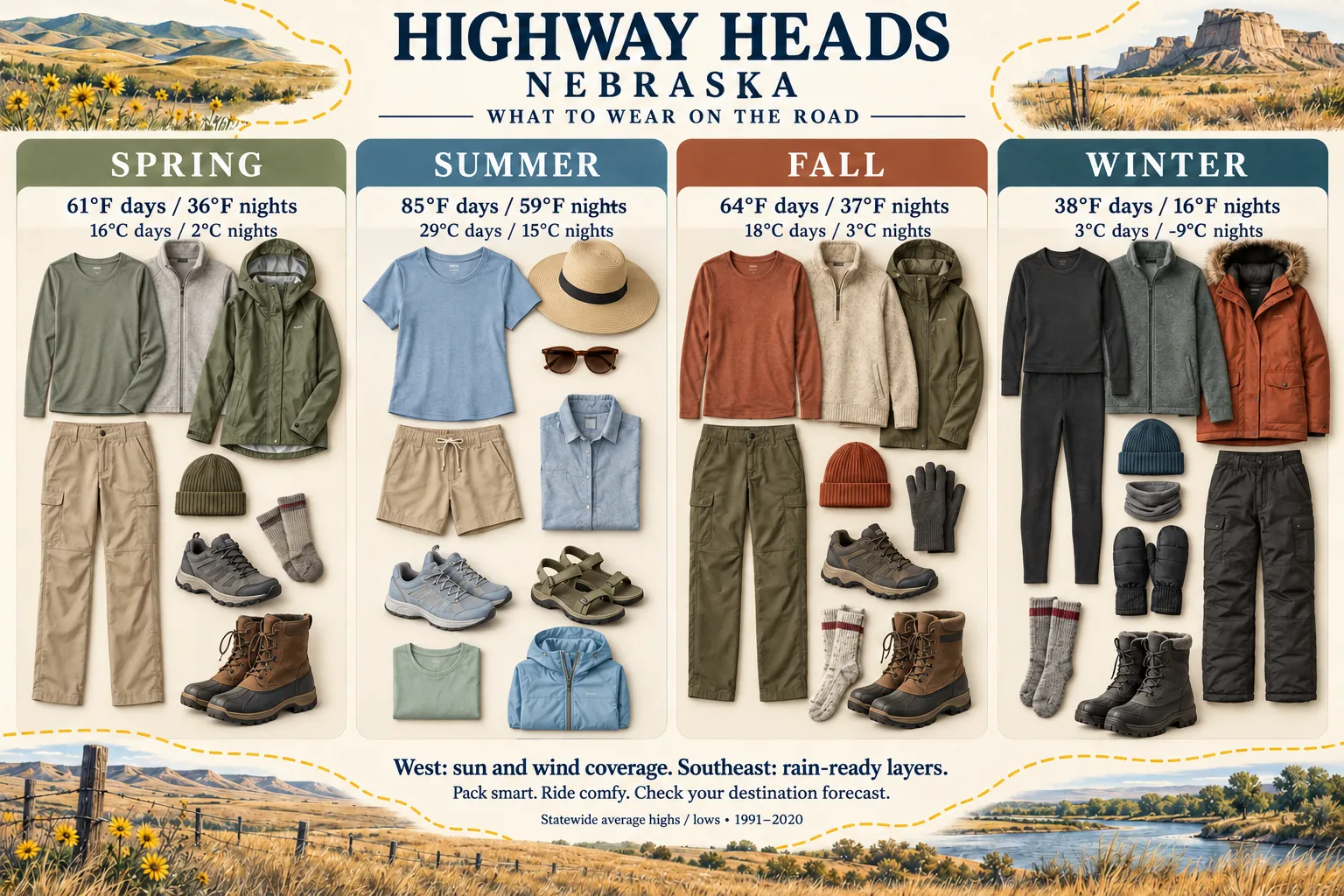
Nebraska 61°/36°F (16°/2°C)
Spring brings changeable temperatures, rain, and windy stops.
Wear Start with a long-sleeve tee, stretch pants, and a fleece or sweater. Add a rain shell when the wind or showers pick up.
Shoes Water-resistant walking shoes with grip; boots for muddy stops.
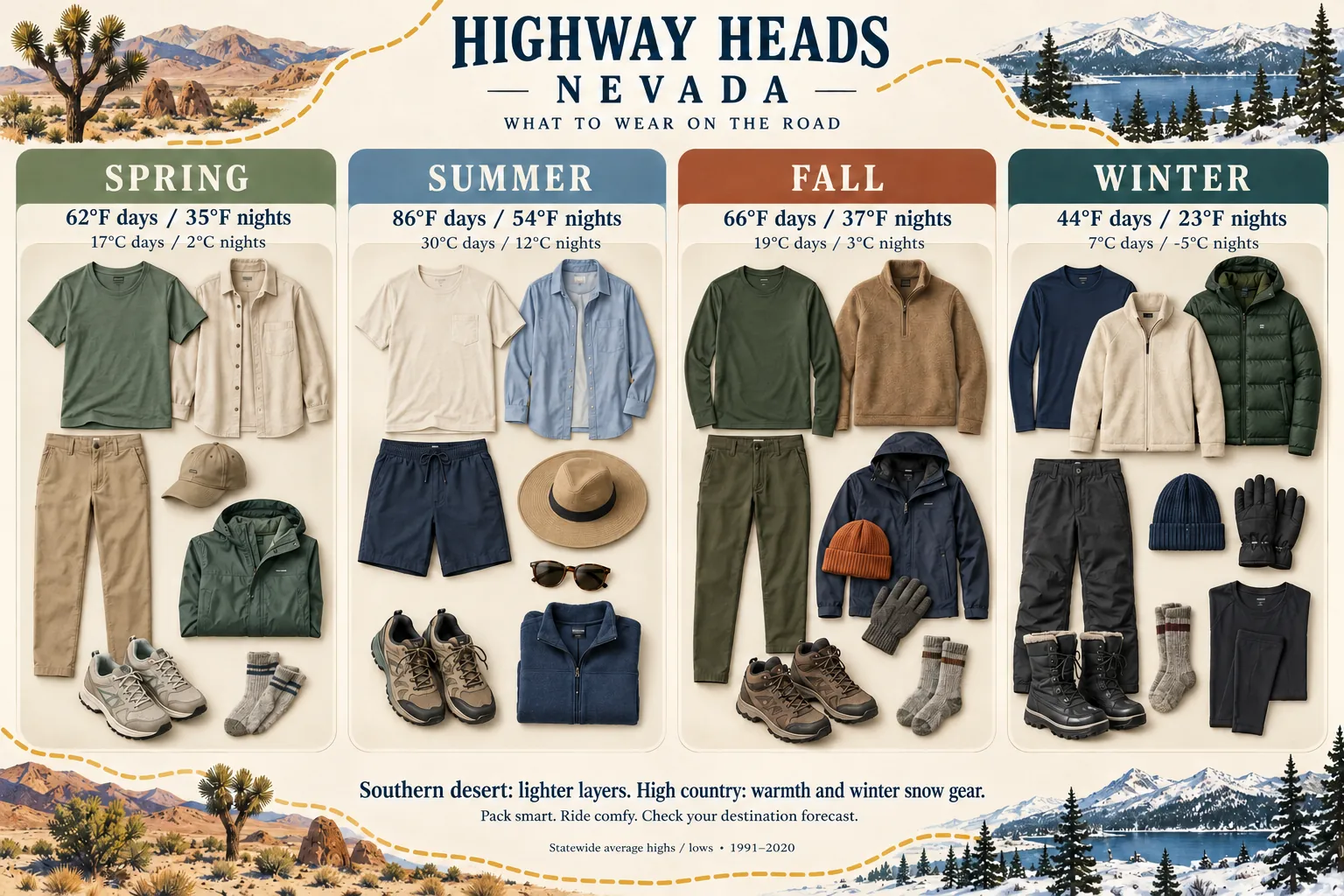
Nevada 62°/35°F (17°/2°C)
Spring warms southern deserts while northern and mountain areas remain cooler.
Wear Pair a breathable tee or relaxed shirt with lightweight chinos, joggers, or an easy midi skirt. Add an open overshirt for cool stops.
Shoes Broken-in walking sneakers; water-resistant shoes when rain is forecast.
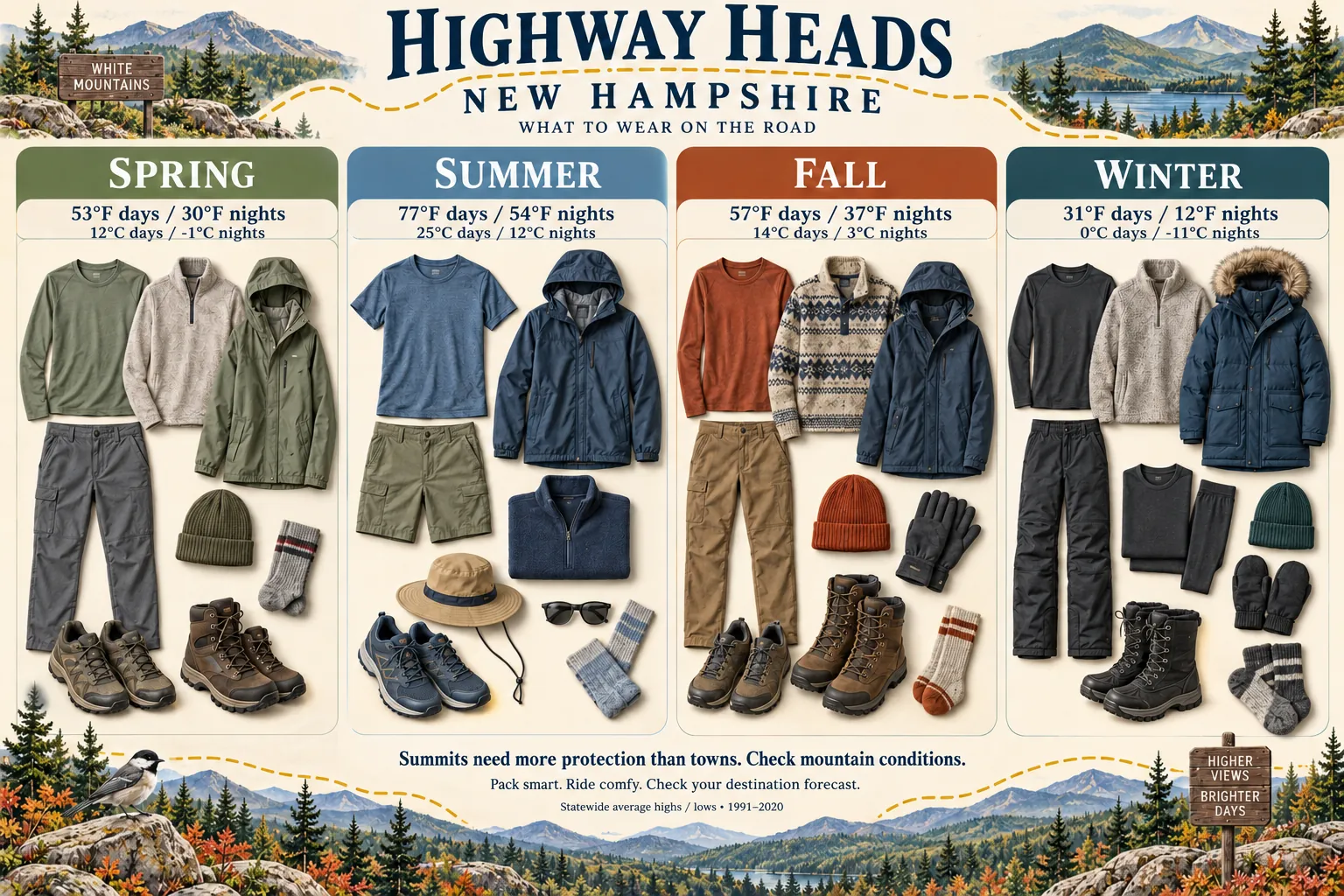
New Hampshire 53°/30°F (12°/-1°C)
Spring brings cool days, wet stops, and lingering mountain snow.
Wear Start with a long-sleeve tee, stretch pants, and a fleece or sweater. Add a rain shell when the wind or showers pick up.
Shoes Water-resistant walking shoes with grip; boots for muddy stops.
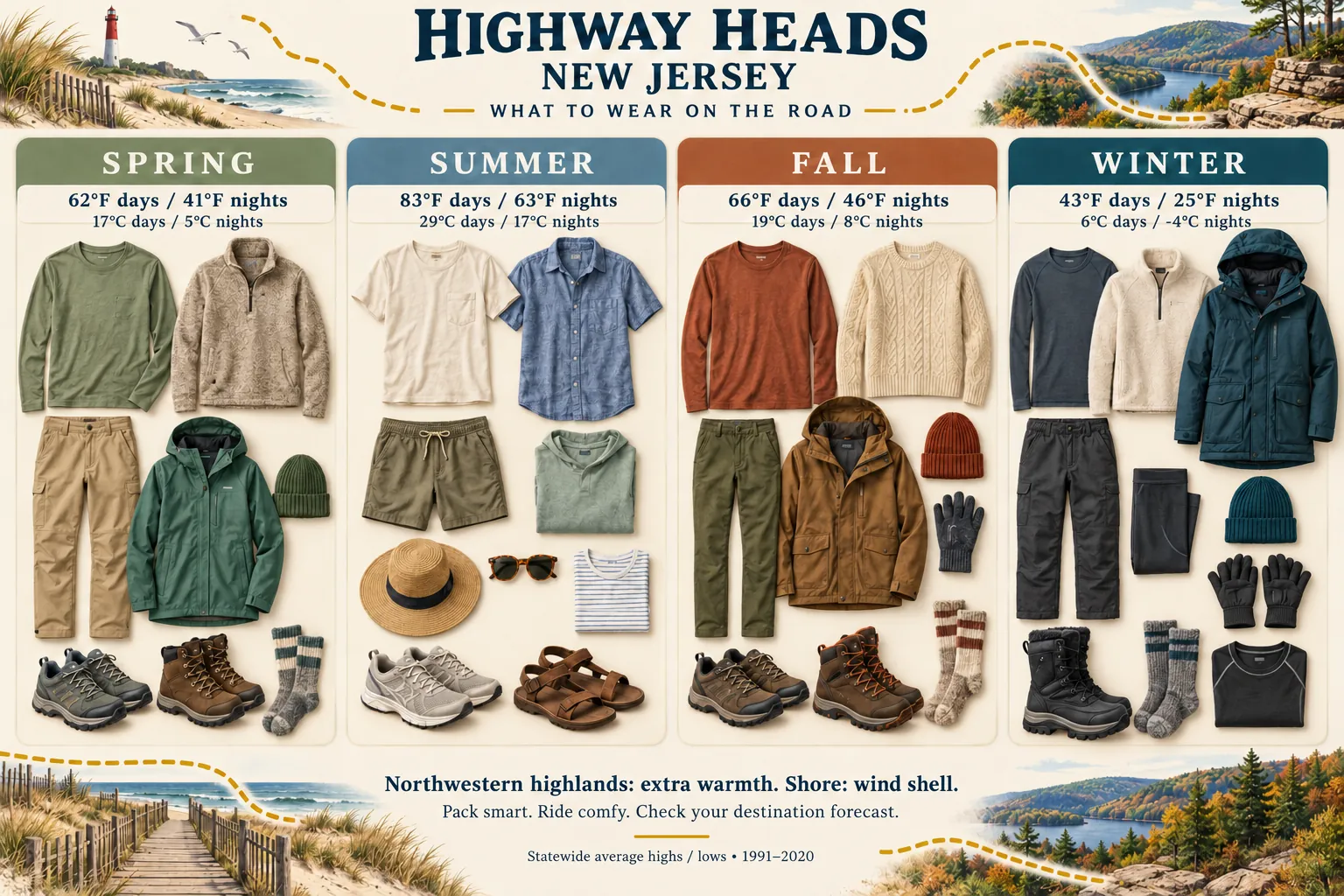
New Jersey 62°/41°F (17°/5°C)
Spring is changeable, with cool starts and rainy spells.
Wear Start with a long-sleeve tee, stretch pants, and a fleece or sweater. Add a rain shell when the wind or showers pick up.
Shoes Water-resistant walking shoes with grip; boots for muddy stops.
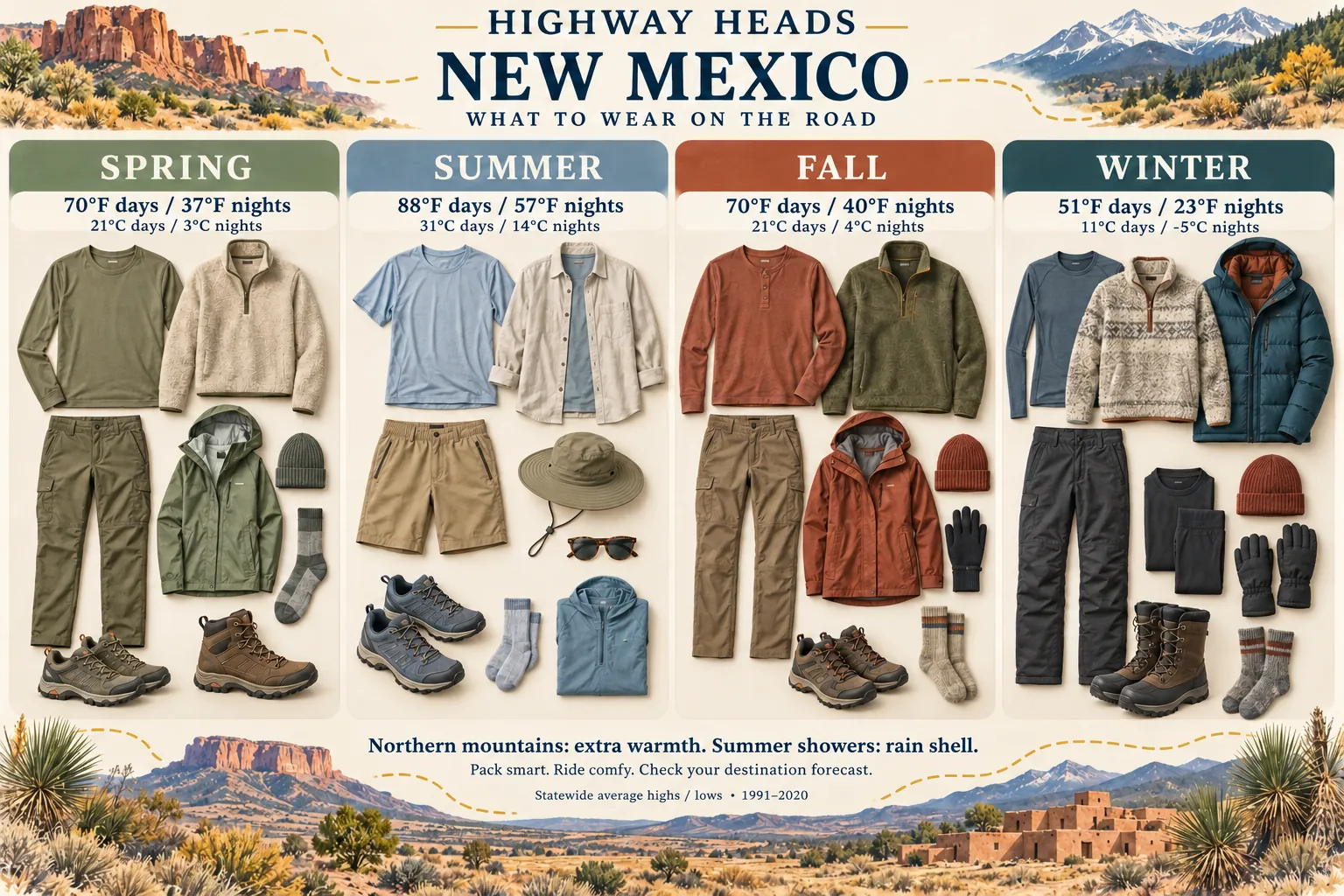
New Mexico 70°/37°F (21°/3°C)
Spring can be sunny and mild, with chilly mornings at elevation.
Wear Start with a long-sleeve tee, stretch pants, and a fleece or sweater. Add a rain shell when the wind or showers pick up.
Shoes Water-resistant walking shoes with grip; boots for muddy stops.
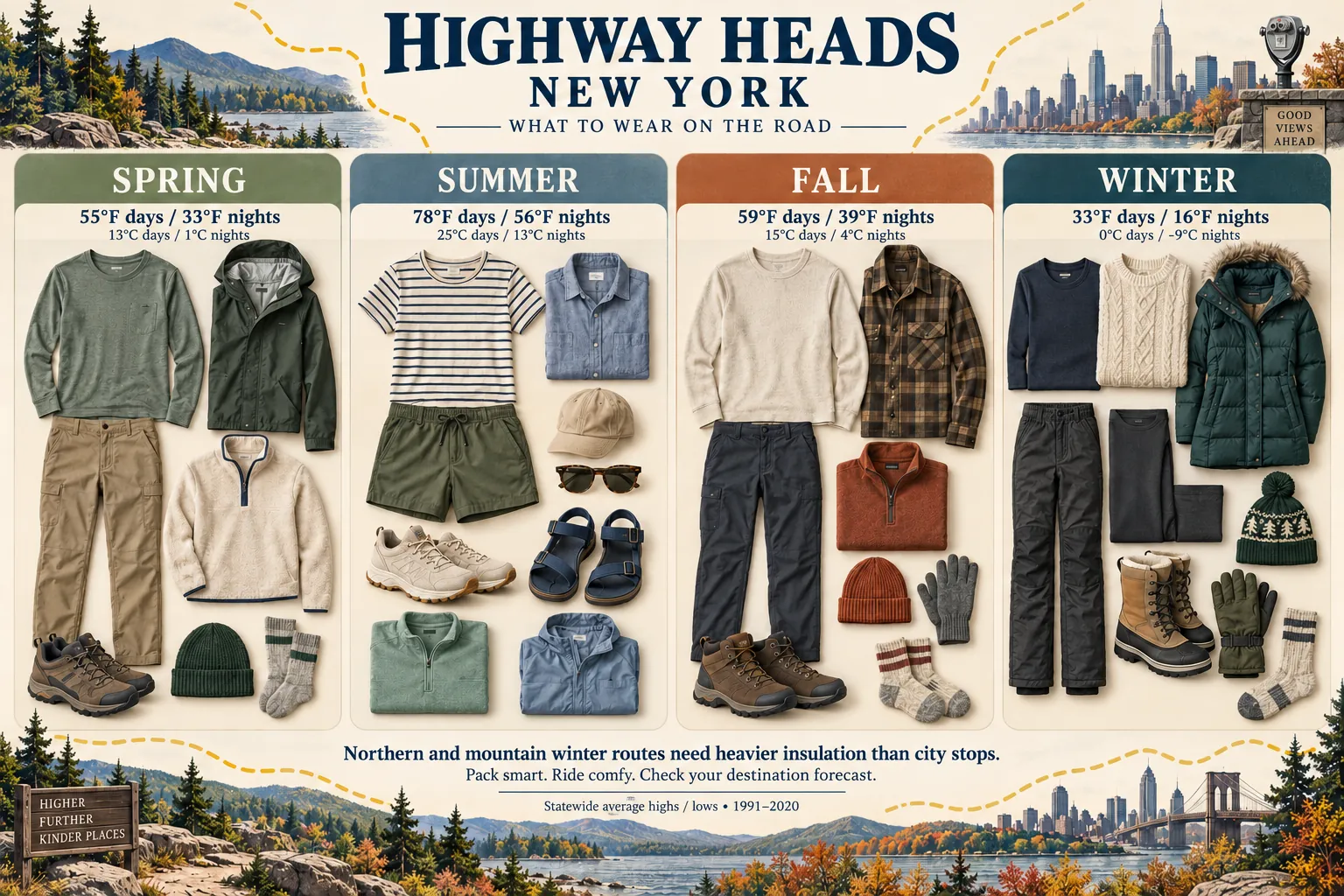
New York 55°/33°F (13°/1°C)
Spring warms unevenly, with chilly northern and mountain stops.
Wear Start with a long-sleeve tee, stretch pants, and a fleece or sweater. Add a rain shell when the wind or showers pick up.
Shoes Water-resistant walking shoes with grip; boots for muddy stops.
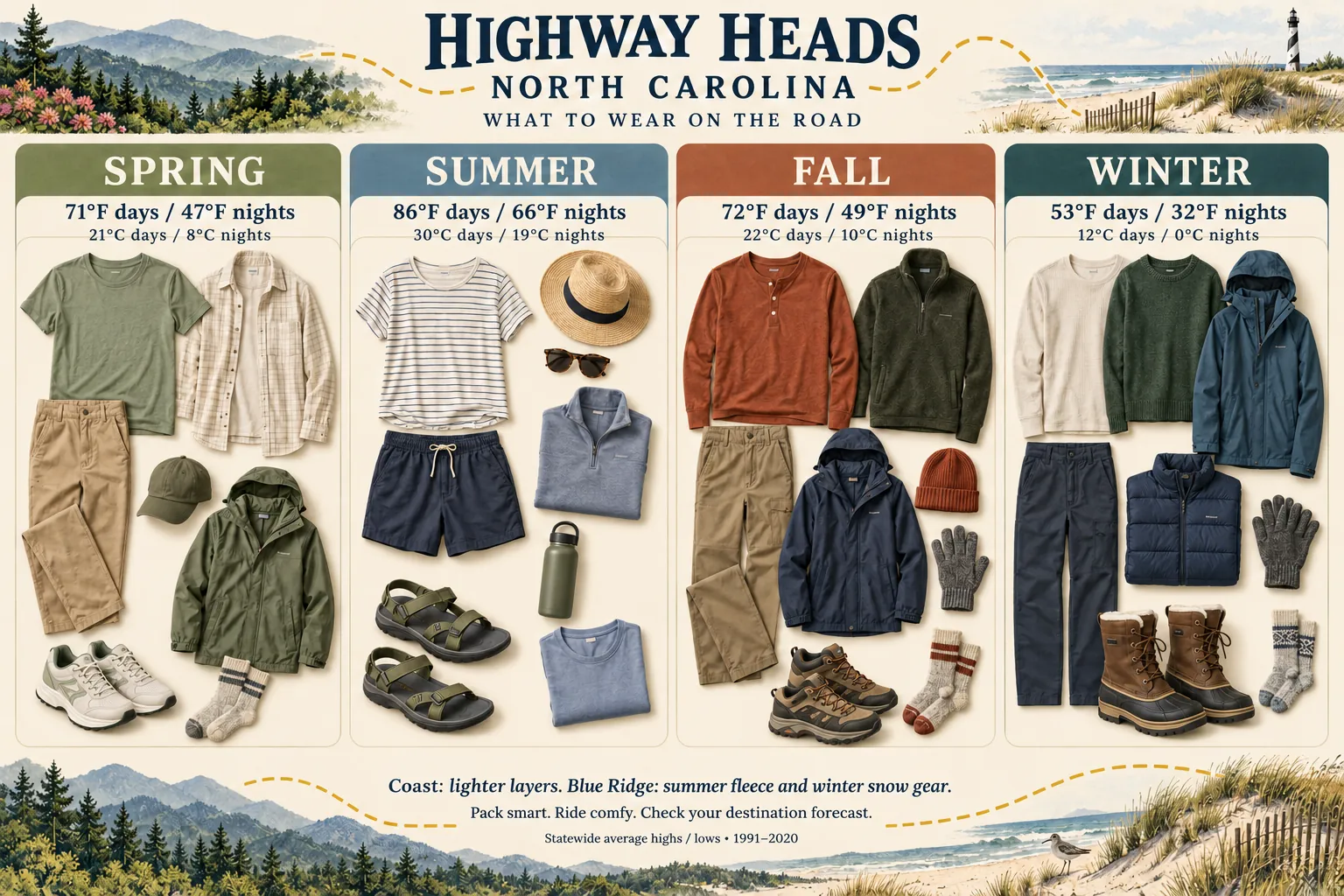
North Carolina 71°/47°F (21°/8°C)
Spring warms coastal and lowland areas while mountain mornings stay cool.
Wear Pair a breathable tee or relaxed shirt with lightweight chinos, joggers, or an easy midi skirt. Add an open overshirt for cool stops.
Shoes Broken-in walking sneakers; water-resistant shoes when rain is forecast.
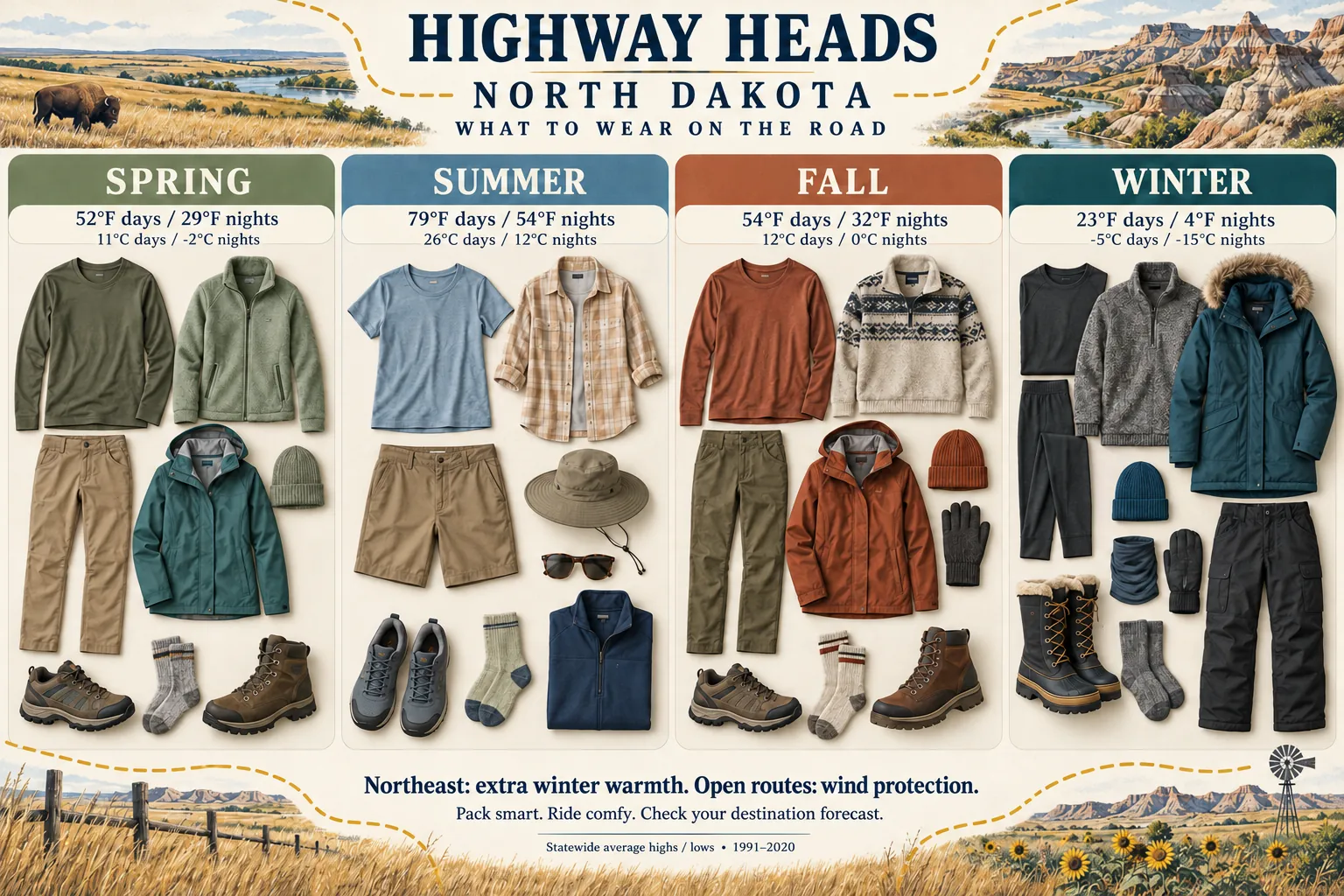
North Dakota 52°/29°F (11°/-2°C)
Spring can remain cold early, with warming afternoons and large temperature swings.
Wear Start with a long-sleeve tee, stretch pants, and a fleece or sweater. Add a rain shell when the wind or showers pick up.
Shoes Water-resistant walking shoes with grip; boots for muddy stops.
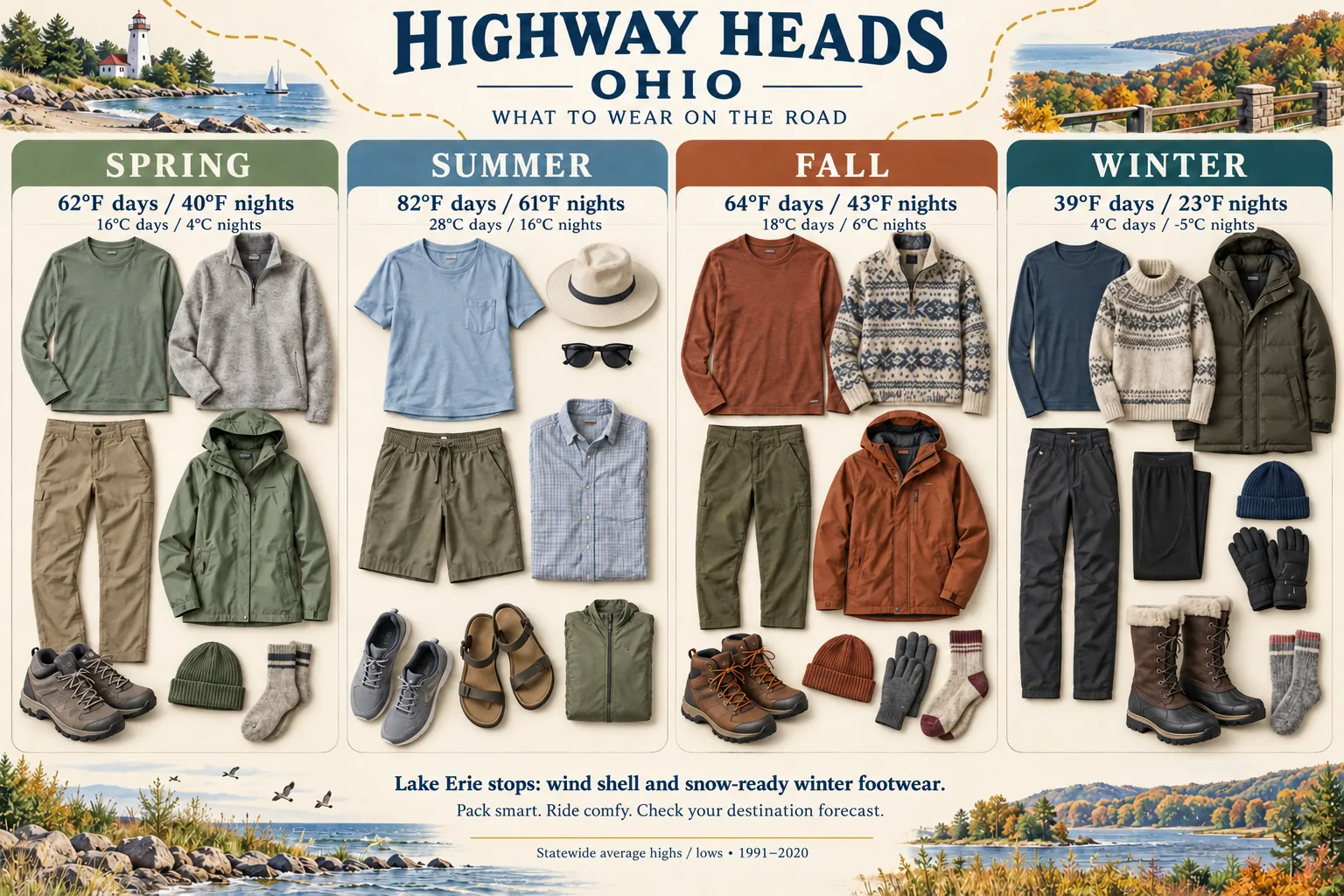
Ohio 62°/40°F (16°/4°C)
Spring has changing temperatures, rain, and chilly starts.
Wear Start with a long-sleeve tee, stretch pants, and a fleece or sweater. Add a rain shell when the wind or showers pick up.
Shoes Water-resistant walking shoes with grip; boots for muddy stops.
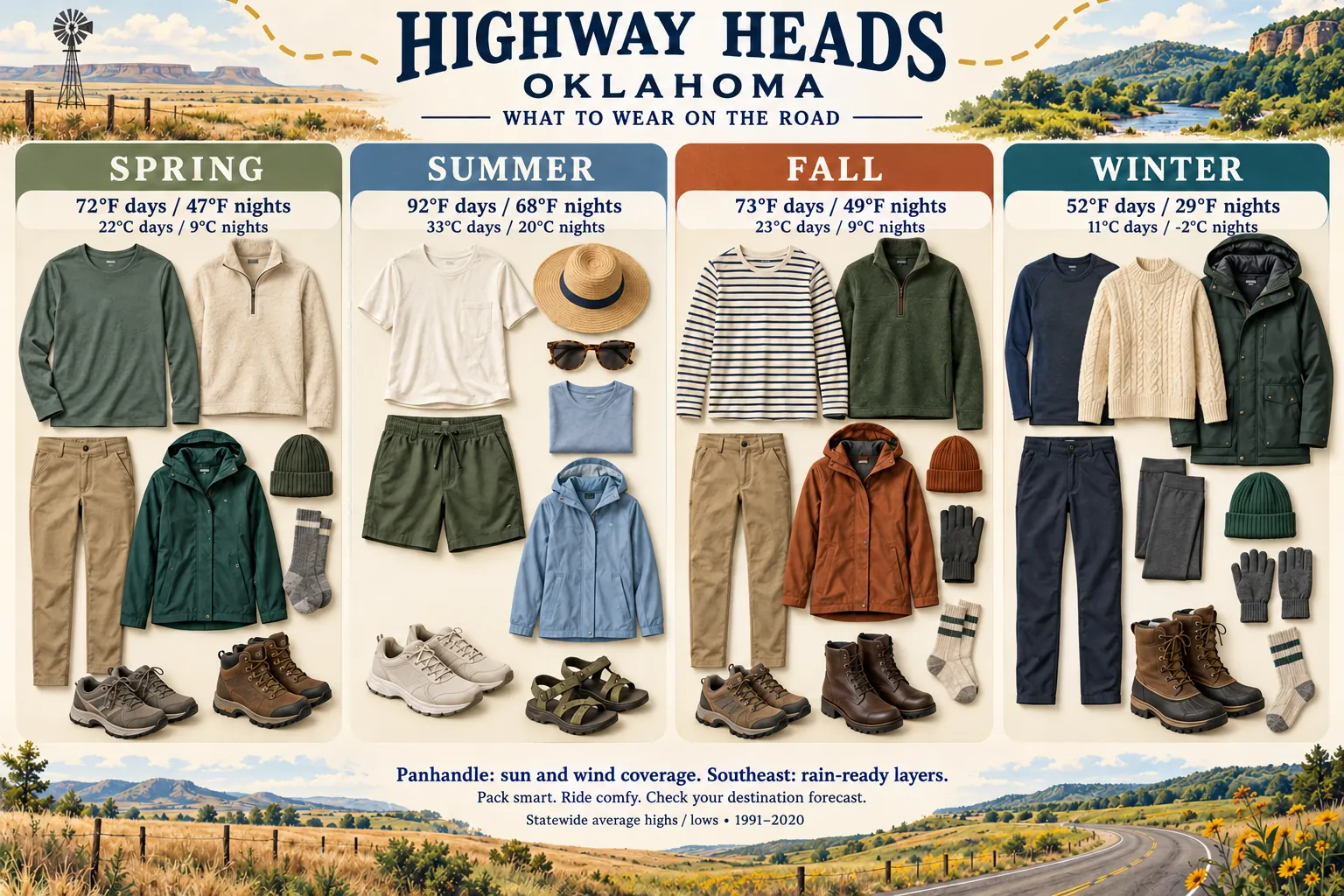
Oklahoma 72°/47°F (22°/9°C)
Spring mixes warm days, cold fronts, and wet weather.
Wear Start with a long-sleeve tee, stretch pants, and a fleece or sweater. Add a rain shell when the wind or showers pick up.
Shoes Water-resistant walking shoes with grip; boots for muddy stops.
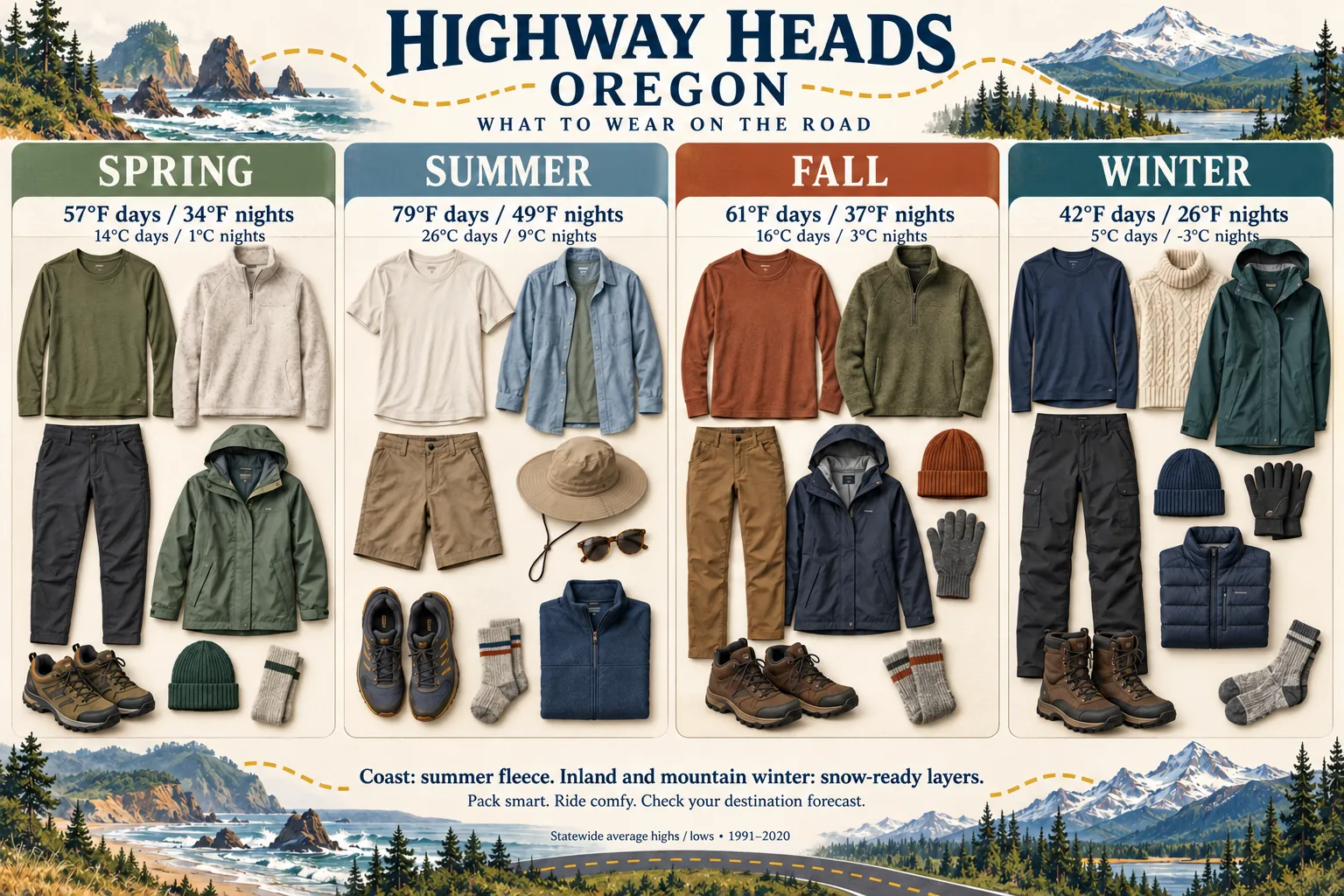
Oregon 57°/34°F (14°/1°C)
Spring is often wet west of the Cascades and cooler at elevation.
Wear Start with a long-sleeve tee, stretch pants, and a fleece or sweater. Add a rain shell when the wind or showers pick up.
Shoes Water-resistant walking shoes with grip; boots for muddy stops.
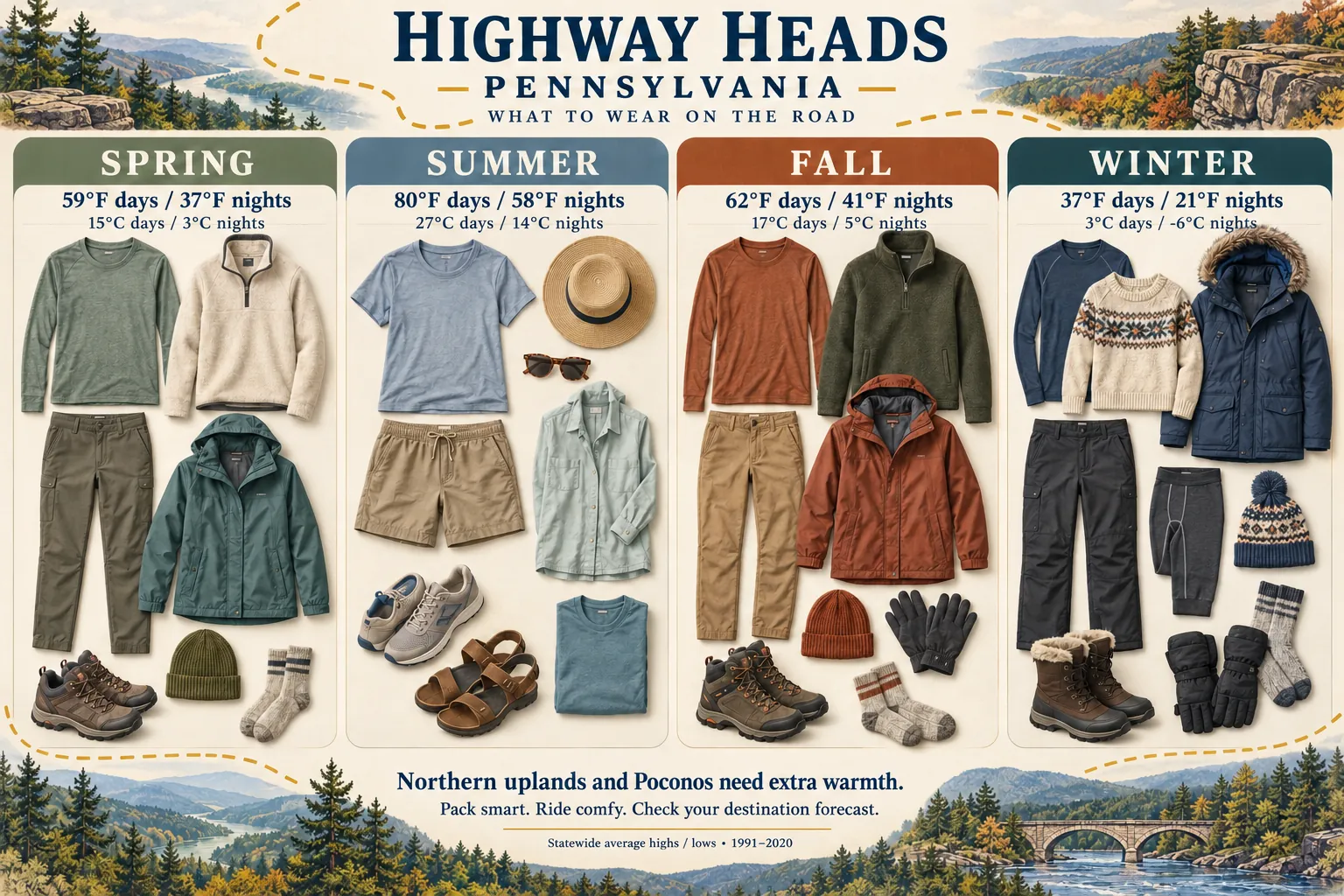
Pennsylvania 59°/37°F (15°/3°C)
Spring has changing temperatures, showers, and cooler mountain mornings.
Wear Start with a long-sleeve tee, stretch pants, and a fleece or sweater. Add a rain shell when the wind or showers pick up.
Shoes Water-resistant walking shoes with grip; boots for muddy stops.
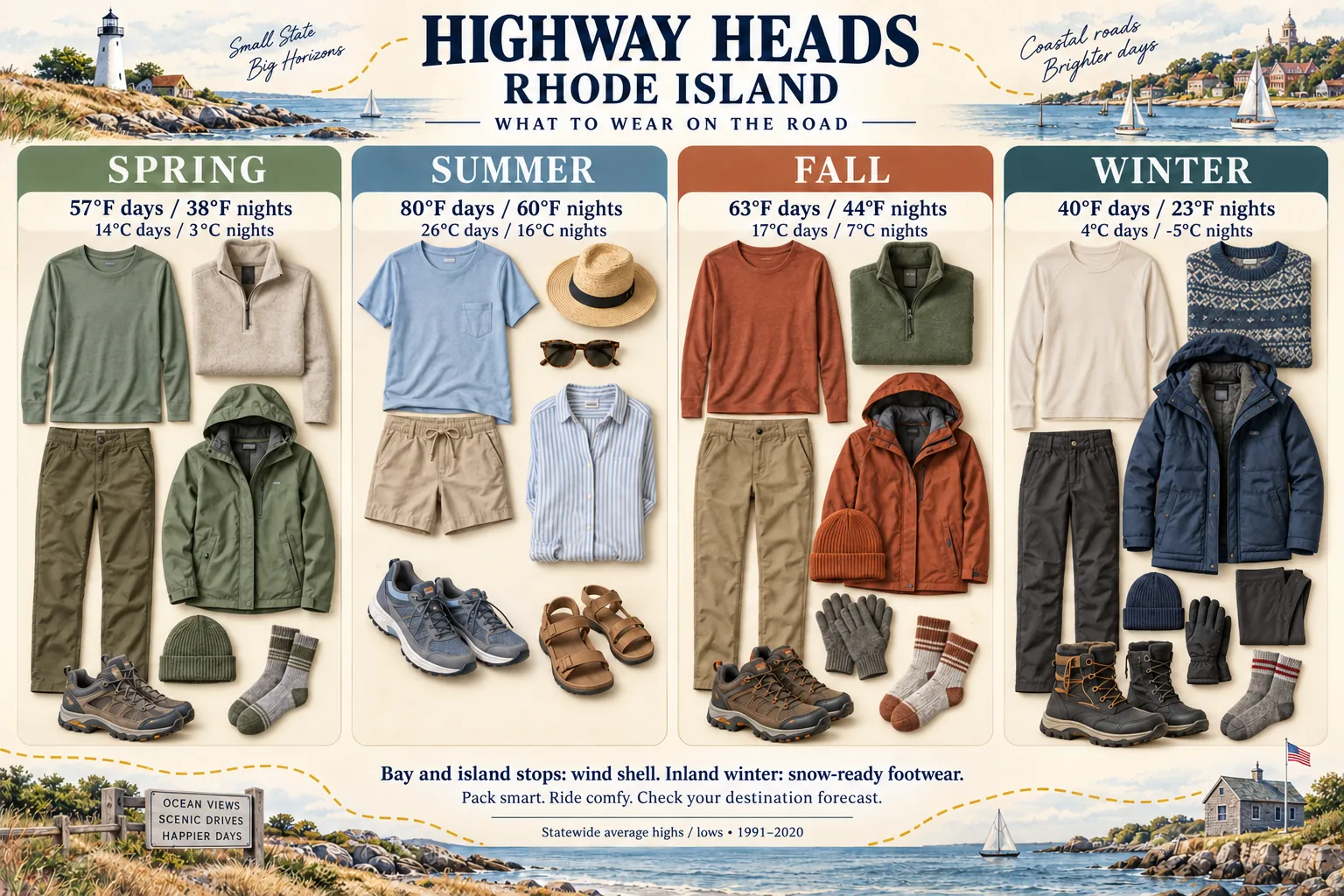
Rhode Island 57°/38°F (14°/3°C)
Spring is cool and changeable, especially at breezy coastal stops.
Wear Start with a long-sleeve tee, stretch pants, and a fleece or sweater. Add a rain shell when the wind or showers pick up.
Shoes Water-resistant walking shoes with grip; boots for muddy stops.
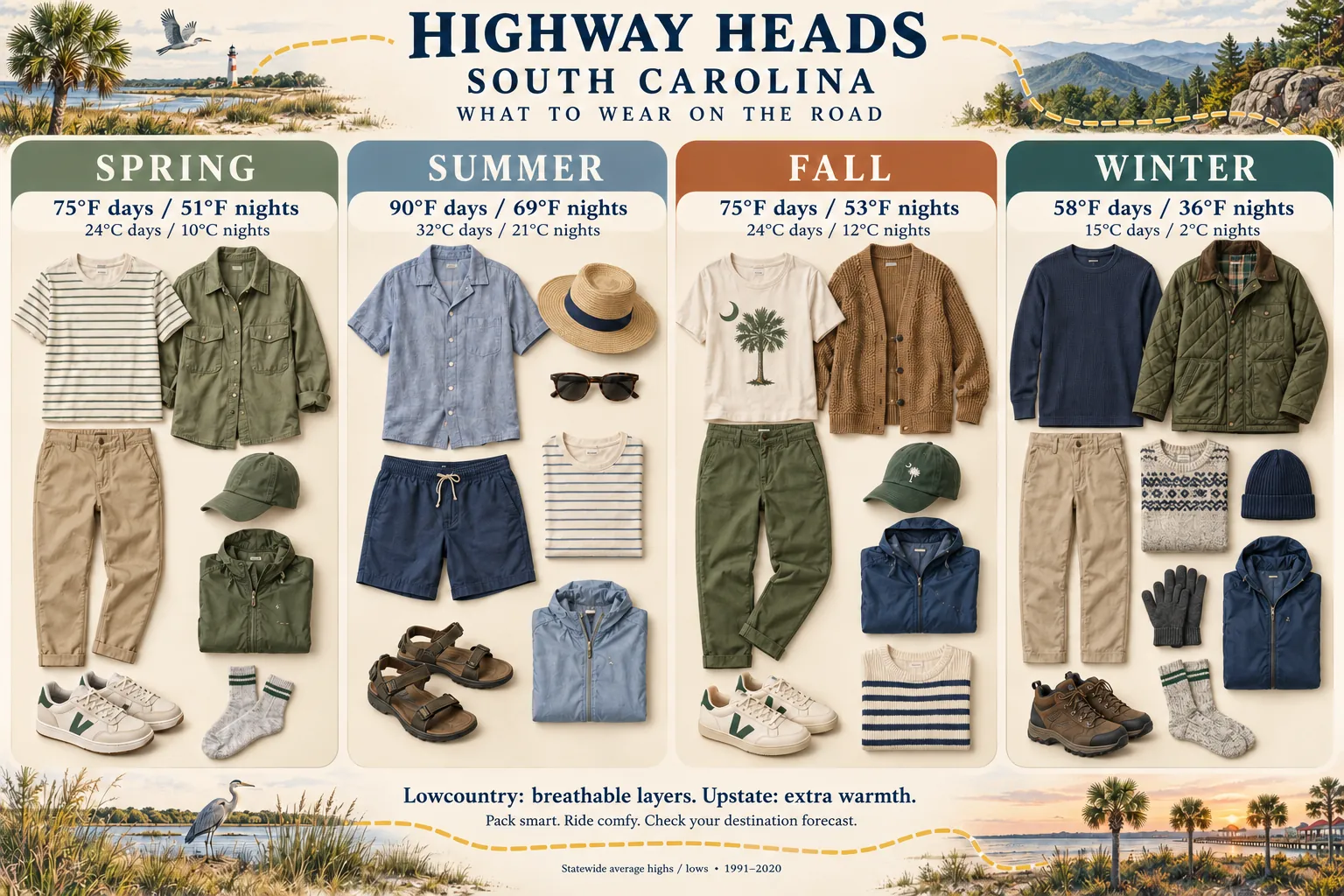
South Carolina 75°/51°F (24°/10°C)
Spring is generally warm, with cooler conditions in the Upstate.
Wear Pair a breathable tee or relaxed shirt with lightweight chinos, joggers, or an easy midi skirt. Add an open overshirt for cool stops.
Shoes Broken-in walking sneakers; water-resistant shoes when rain is forecast.
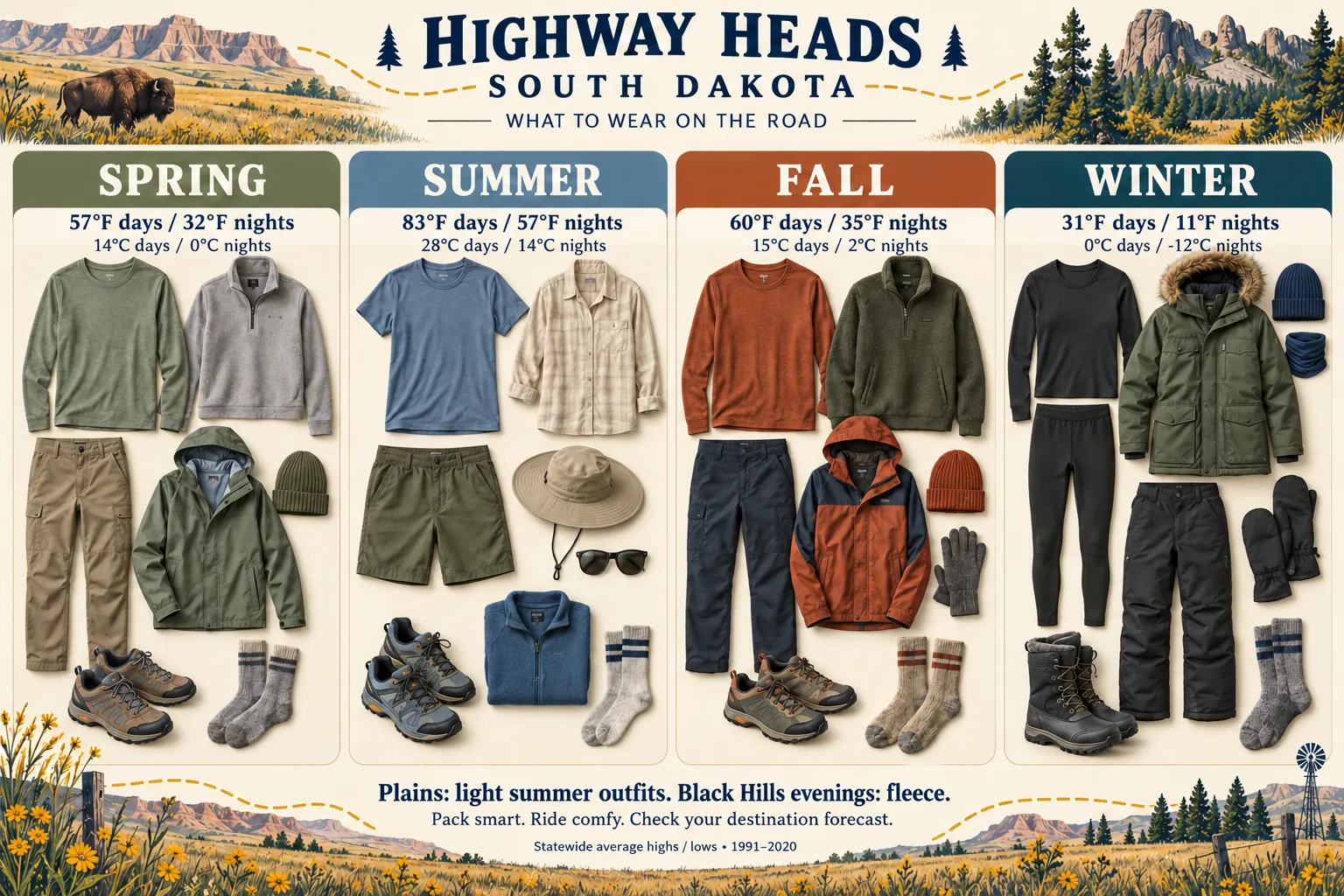
South Dakota 57°/32°F (14°/0°C)
Spring brings changeable temperatures, cold wind, and warming afternoons.
Wear Start with a long-sleeve tee, stretch pants, and a fleece or sweater. Add a rain shell when the wind or showers pick up.
Shoes Water-resistant walking shoes with grip; boots for muddy stops.
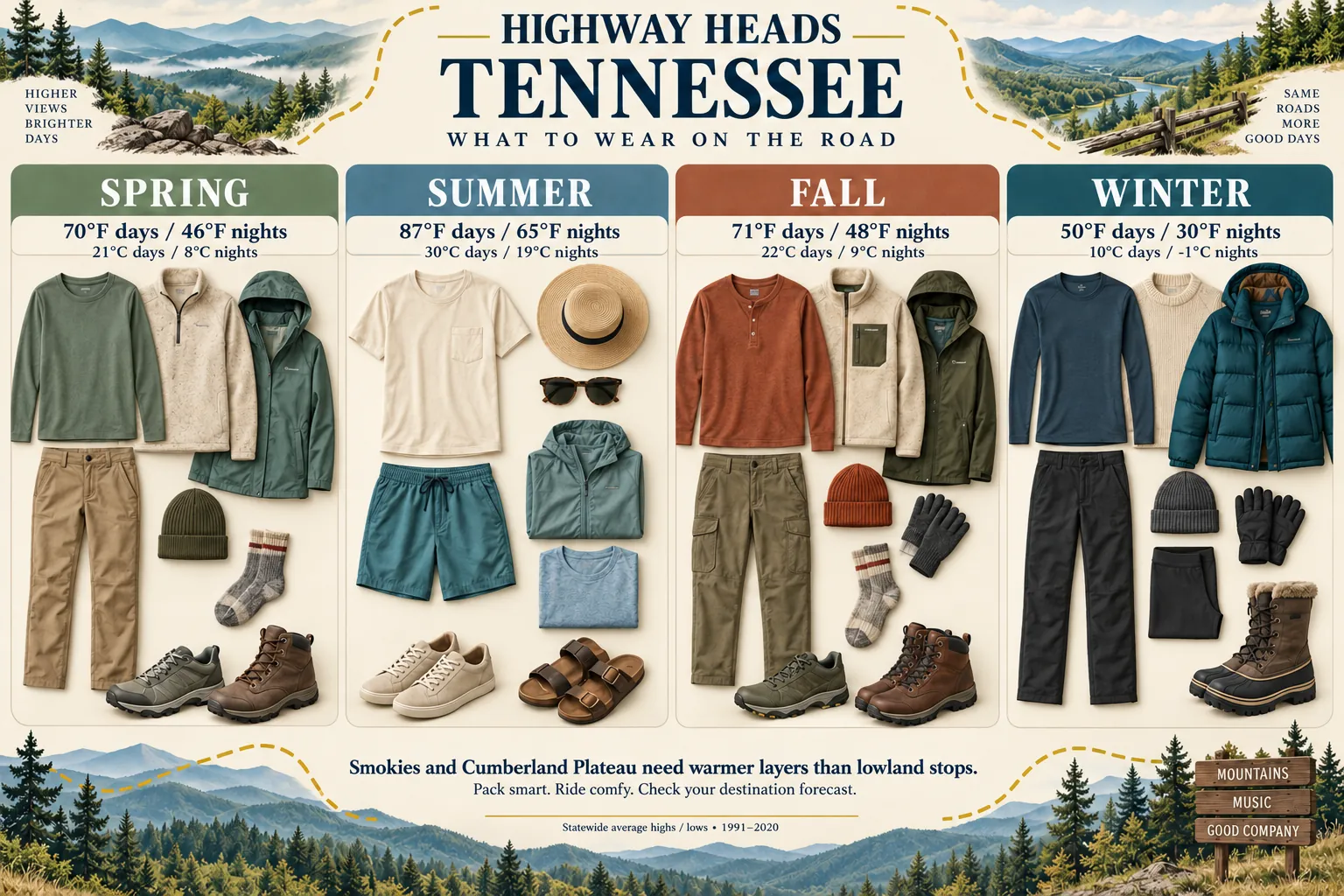
Tennessee 70°/46°F (21°/8°C)
Spring has warming days, rain, and cool mountain mornings.
Wear Start with a long-sleeve tee, stretch pants, and a fleece or sweater. Add a rain shell when the wind or showers pick up.
Shoes Water-resistant walking shoes with grip; boots for muddy stops.
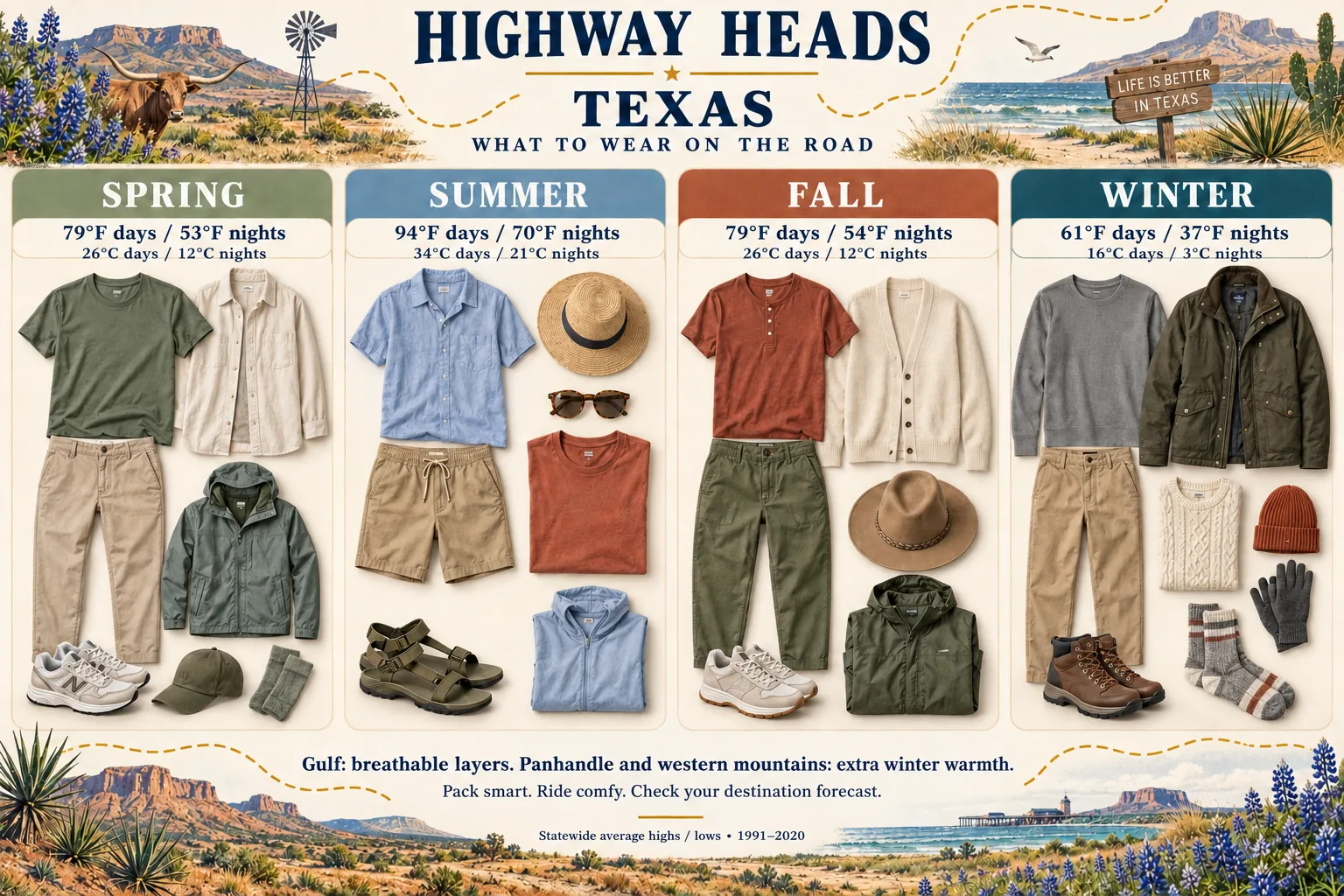
Texas 79°/53°F (26°/12°C)
Spring ranges from warm southern days to cooler Panhandle mornings.
Wear Pair a breathable tee or relaxed shirt with lightweight chinos, joggers, or an easy midi skirt. Add an open overshirt for cool stops.
Shoes Broken-in walking sneakers; water-resistant shoes when rain is forecast.
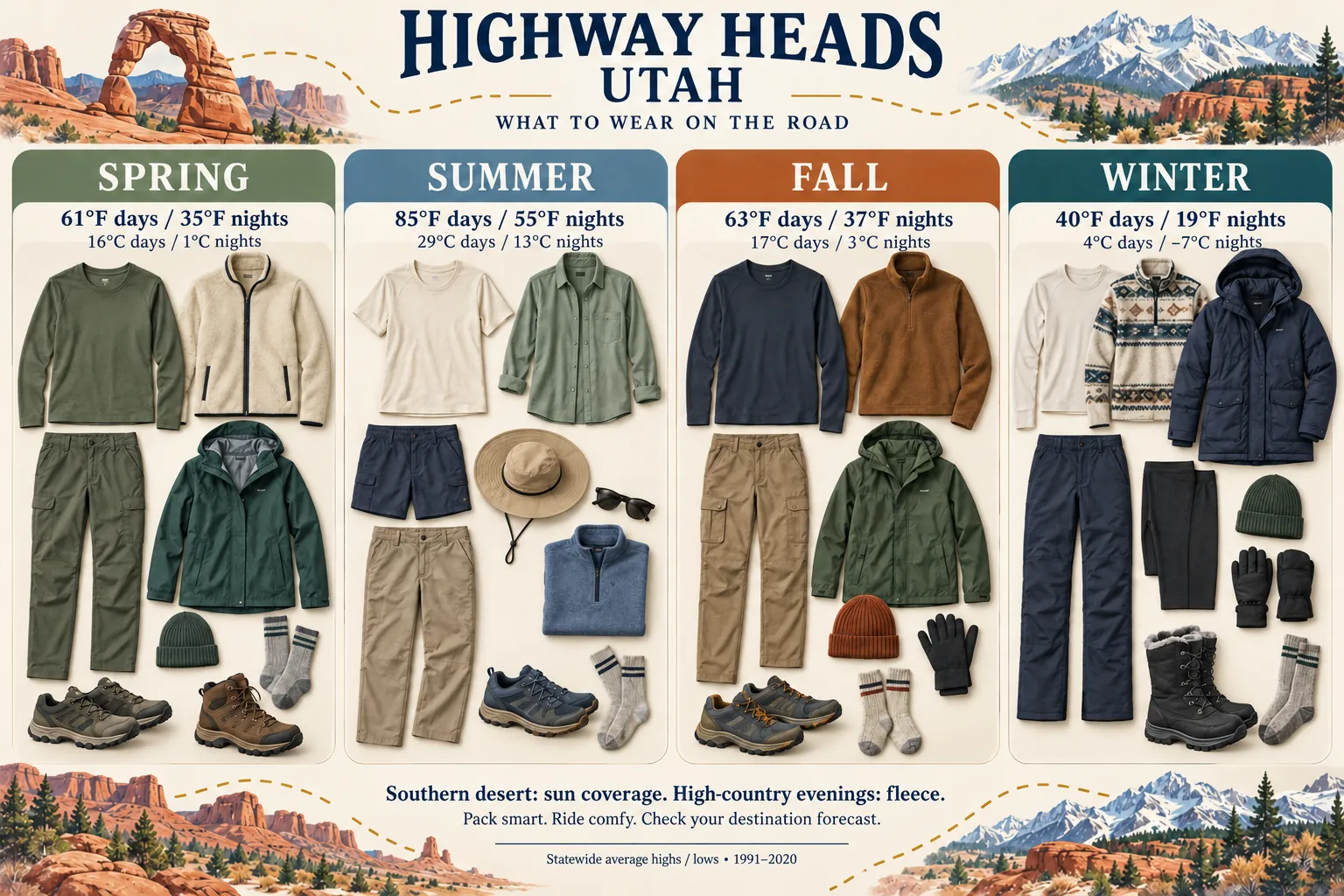
Utah 61°/35°F (16°/1°C)
Spring brings mild lower-elevation days and lingering mountain cold or snow.
Wear Start with a long-sleeve tee, stretch pants, and a fleece or sweater. Add a rain shell when the wind or showers pick up.
Shoes Water-resistant walking shoes with grip; boots for muddy stops.
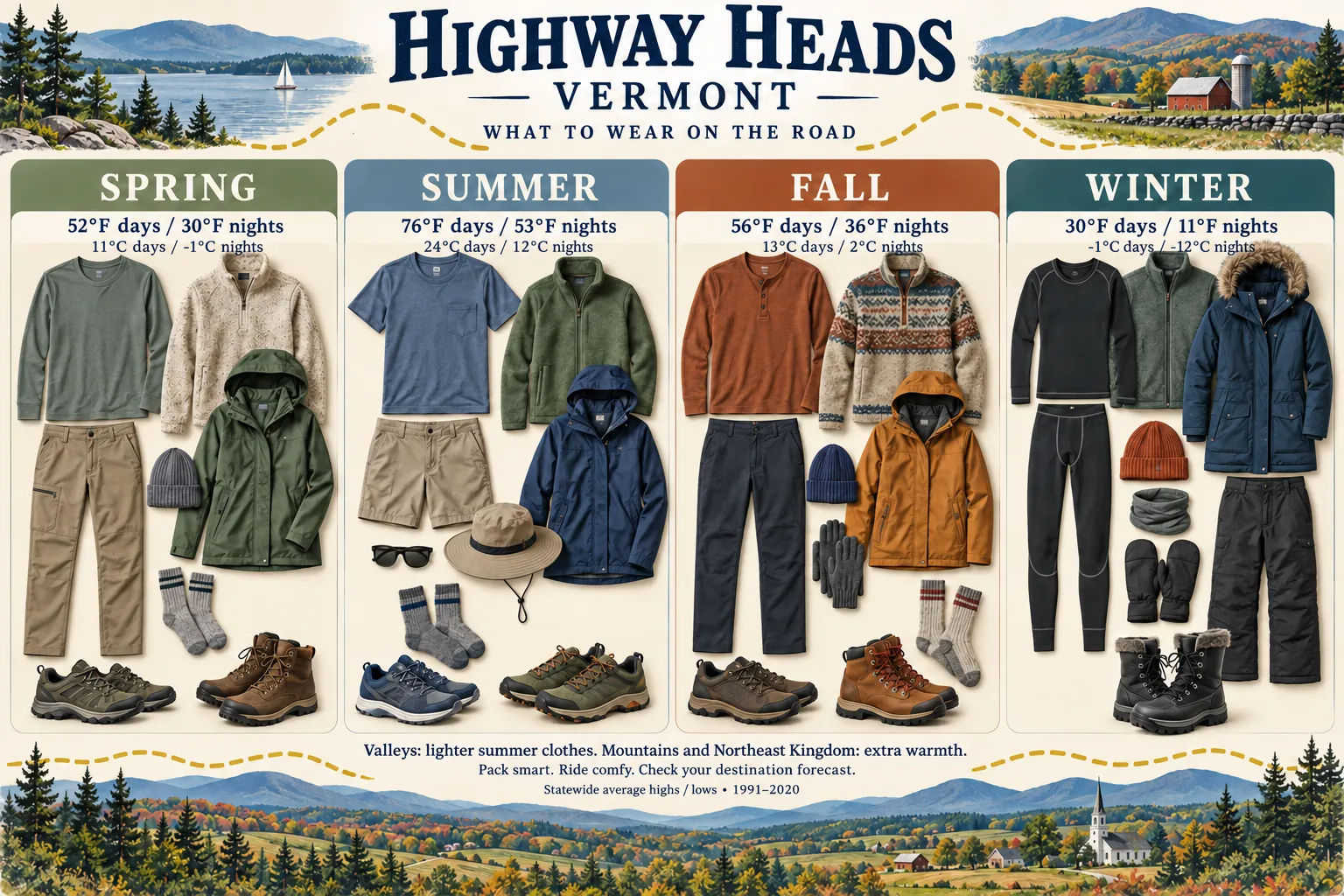
Vermont 52°/30°F (11°/-1°C)
Spring brings cool weather, snowmelt, and muddy stops.
Wear Start with a long-sleeve tee, stretch pants, and a fleece or sweater. Add a rain shell when the wind or showers pick up.
Shoes Water-resistant walking shoes with grip; boots for muddy stops.
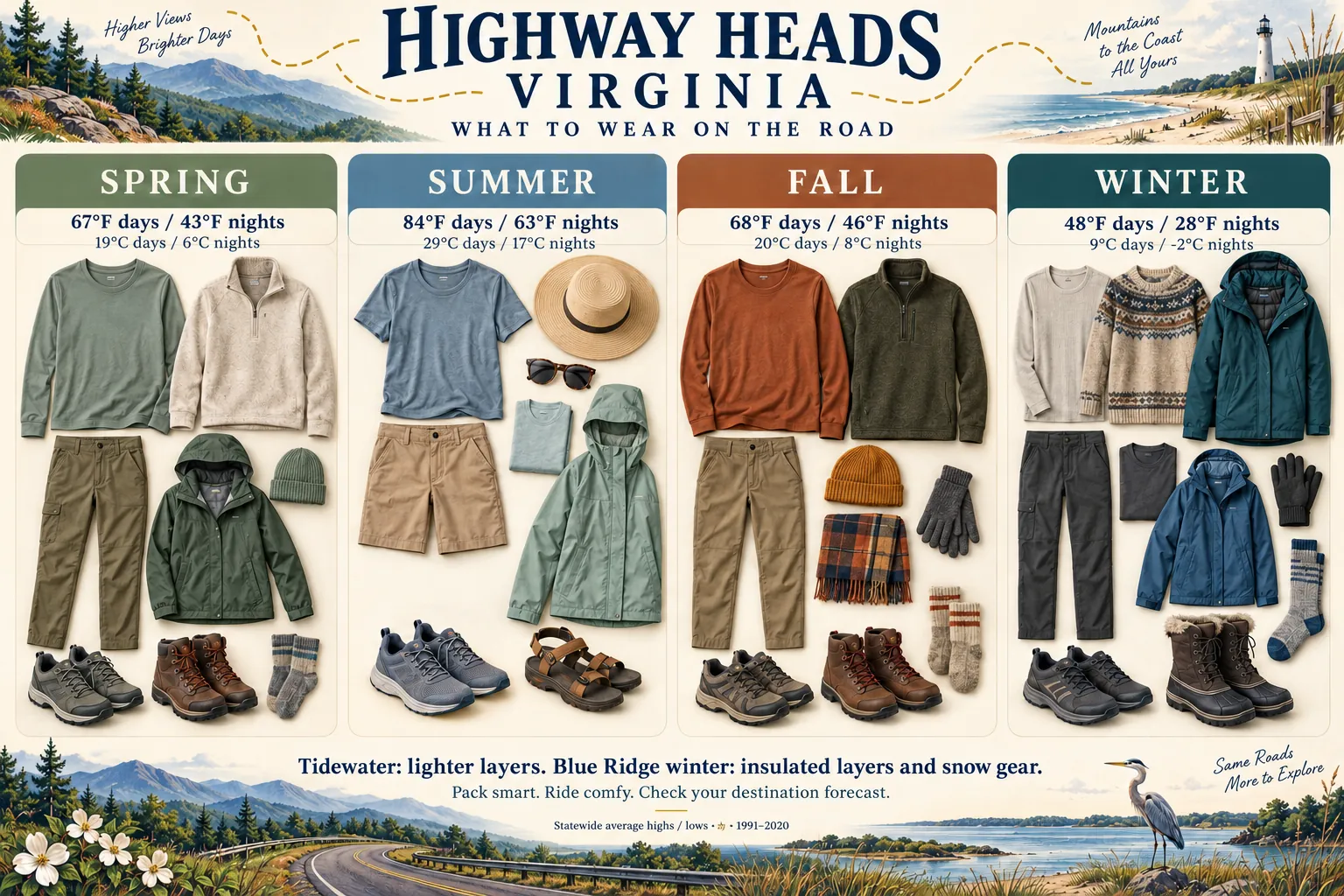
Virginia 67°/43°F (19°/6°C)
Spring has warming days, rain, and cool mountain mornings.
Wear Start with a long-sleeve tee, stretch pants, and a fleece or sweater. Add a rain shell when the wind or showers pick up.
Shoes Water-resistant walking shoes with grip; boots for muddy stops.
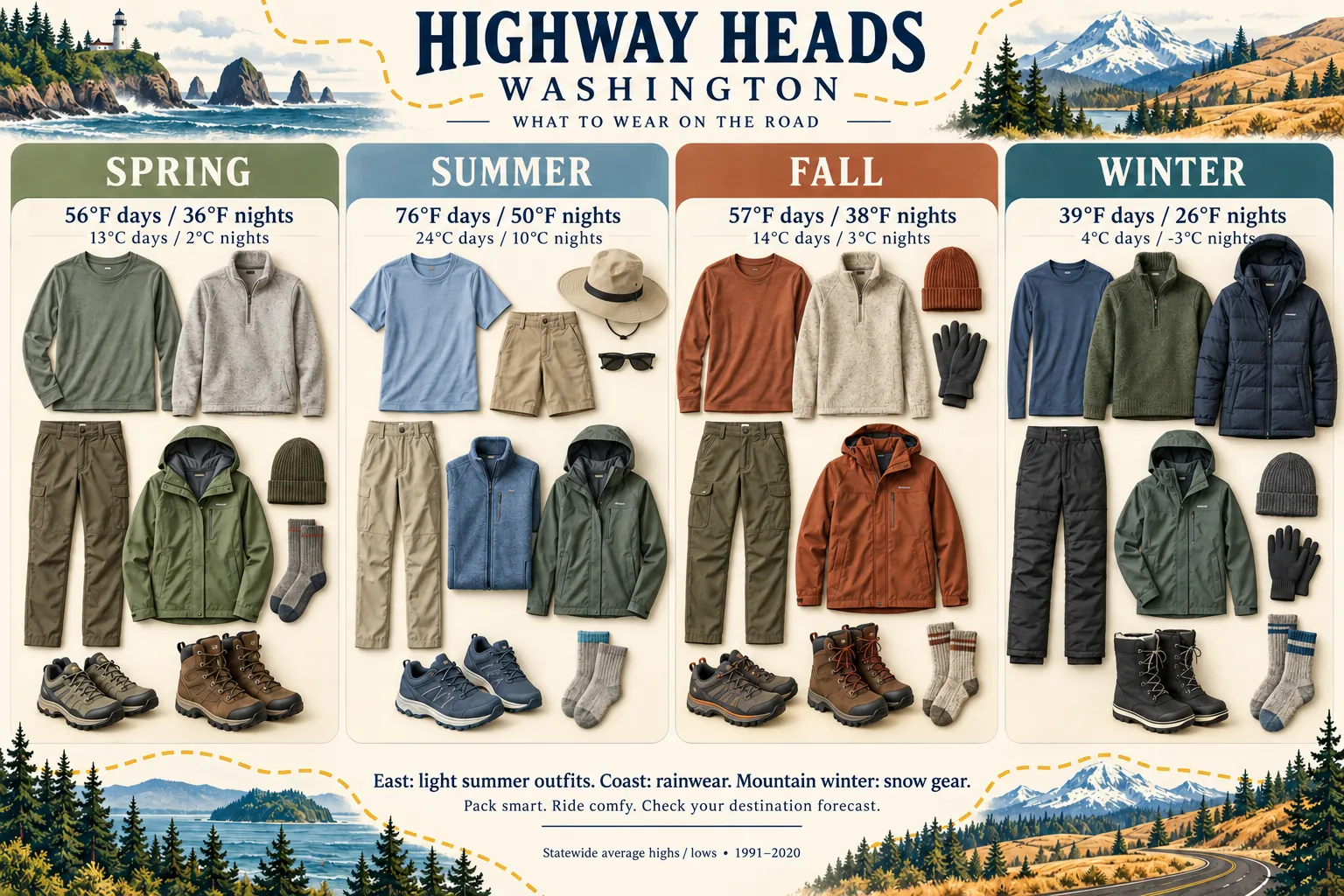
Washington 56°/36°F (13°/2°C)
Spring is often cool and wet in the west, with variable inland conditions.
Wear Start with a long-sleeve tee, stretch pants, and a fleece or sweater. Add a rain shell when the wind or showers pick up.
Shoes Water-resistant walking shoes with grip; boots for muddy stops.
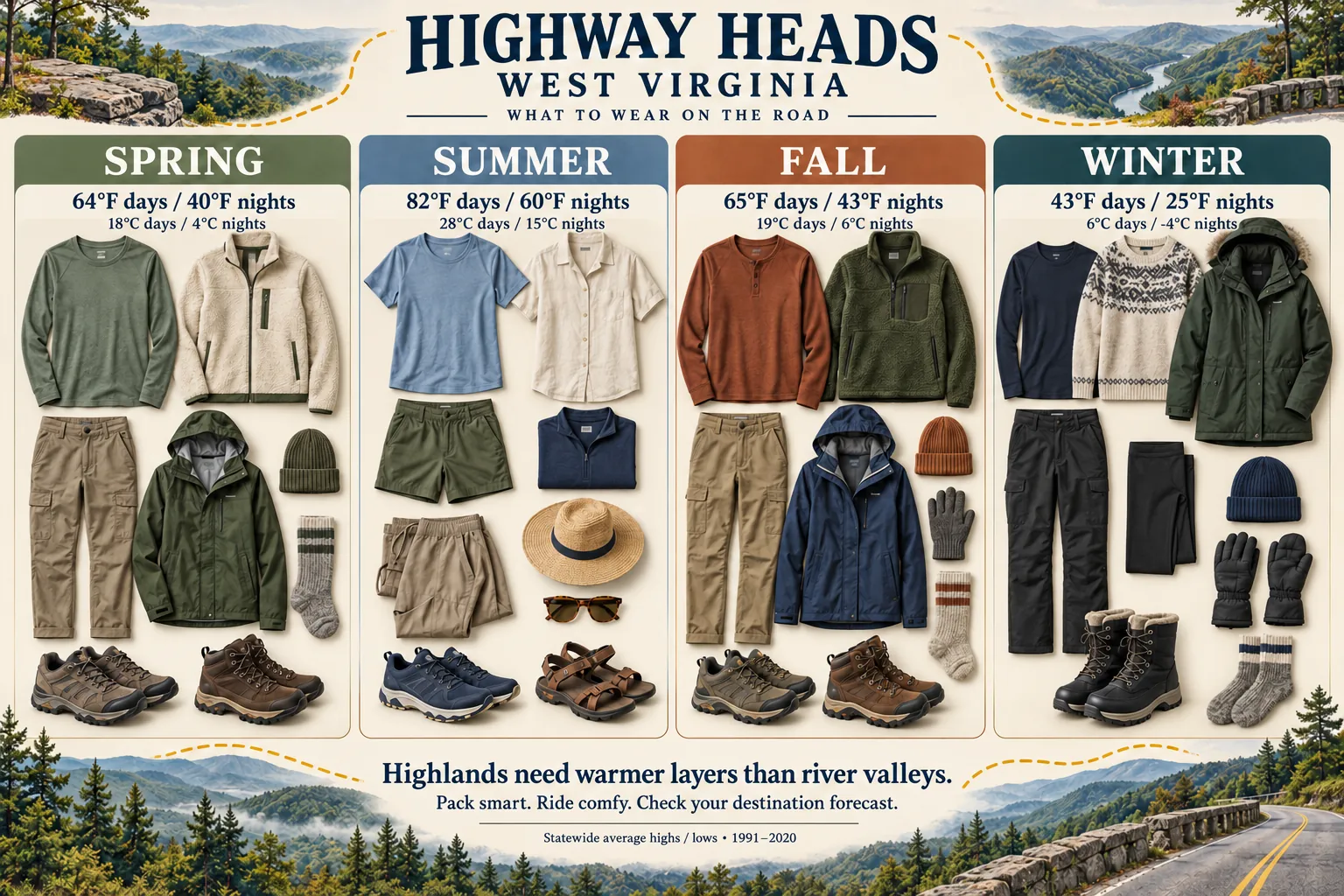
West Virginia 64°/40°F (18°/4°C)
Spring brings variable temperatures, wet stops, and cool mountain mornings.
Wear Start with a long-sleeve tee, stretch pants, and a fleece or sweater. Add a rain shell when the wind or showers pick up.
Shoes Water-resistant walking shoes with grip; boots for muddy stops.
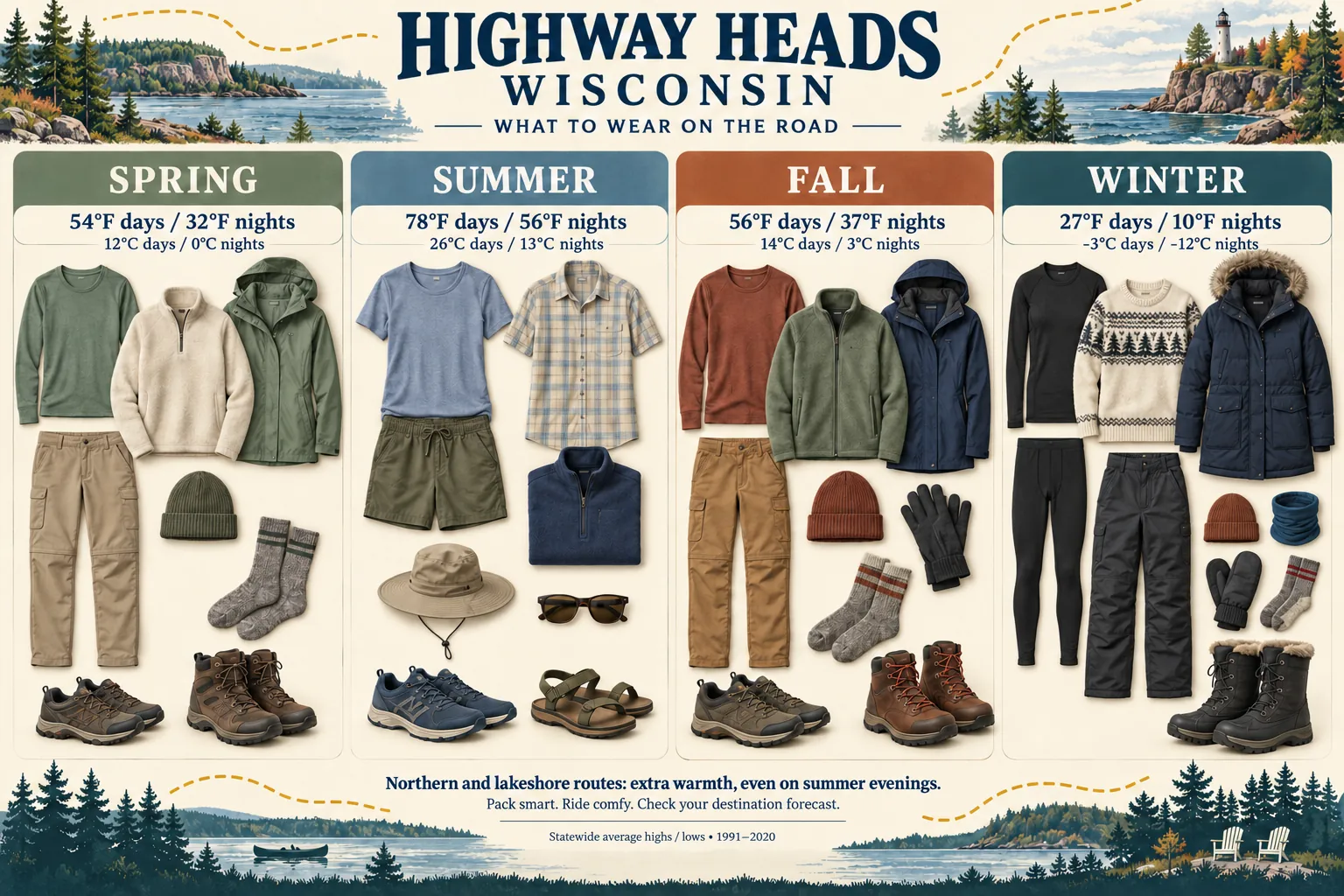
Wisconsin 54°/32°F (12°/0°C)
Spring brings chilly starts and gradually warmer days, with possible lingering snow.
Wear Start with a long-sleeve tee, stretch pants, and a fleece or sweater. Add a rain shell when the wind or showers pick up.
Shoes Water-resistant walking shoes with grip; boots for muddy stops.
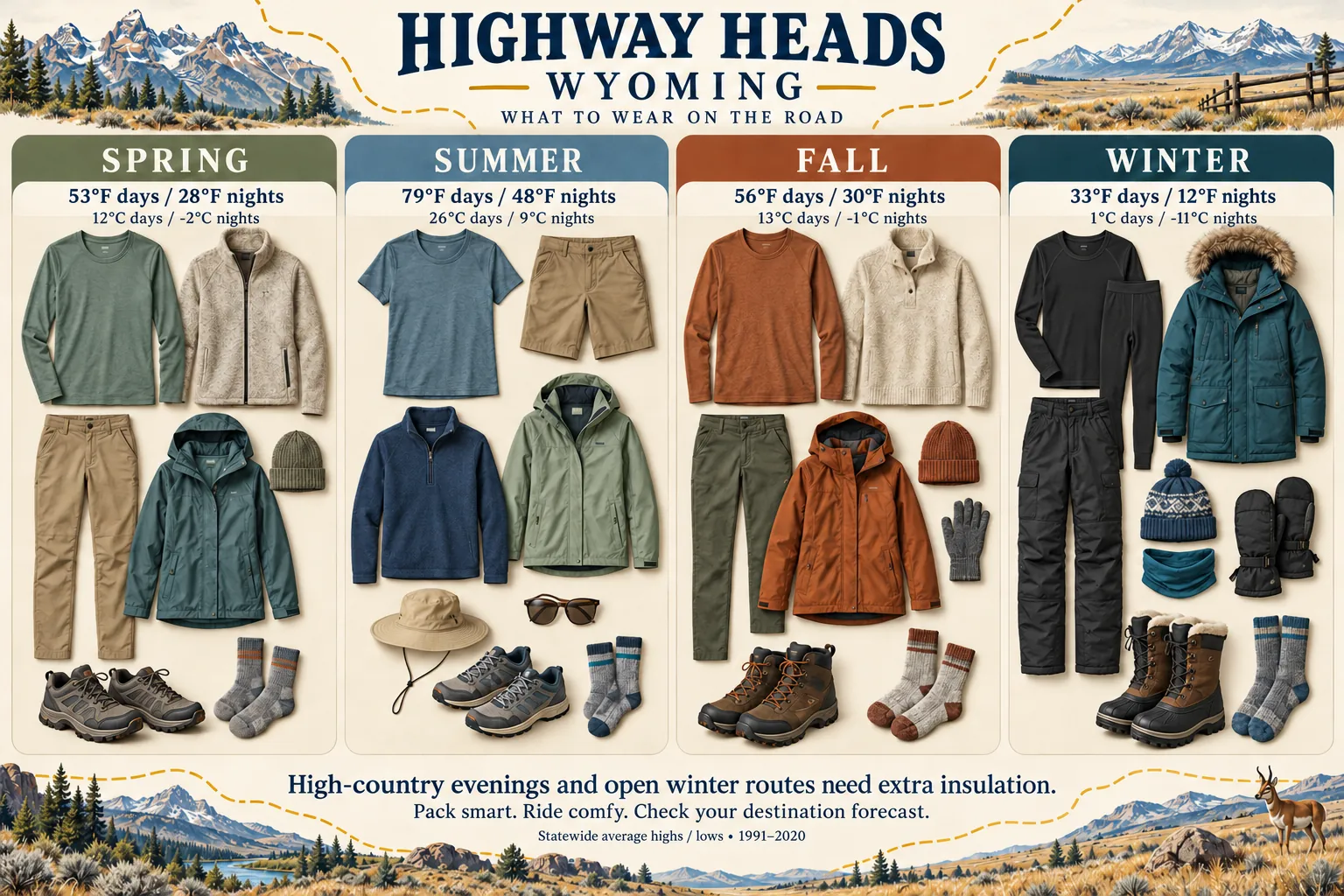
Wyoming 53°/28°F (12°/-2°C)
Spring can bring cold wind, warming spells, and lingering mountain snow.
Wear Start with a long-sleeve tee, stretch pants, and a fleece or sweater. Add a rain shell when the wind or showers pick up.
Shoes Water-resistant walking shoes with grip; boots for muddy stops.
Temperatures are summer averages for 1991–2020, not a forecast.
Alabama 90°/69°F (32°/20°C)
Summer is hot and humid, with showers possible.
Wear Choose a loose, breathable tee or shirt with quick-drying shorts, lightweight pants, or an airy dress. Carry a thin layer for chilly indoor stops.
Shoes Breathable walking sneakers; secure sandals for casual paved stops.
Alaska 60°/44°F (16°/6°C)
Summer ranges from cool coastal weather to warm interior afternoons.
Wear Wear a tee with lightweight pants or shorts, then carry a fleece and wind-resistant shell. Keep the warm layer handy even on sunny days.
Shoes Walking sneakers for town; trail shoes for rougher stops.
Arizona 94°/64°F (34°/18°C)
Summer brings intense desert heat and seasonal monsoon showers.
Wear Try a loose tee or breathable sun shirt with lightweight shorts or airy pants. Add a light overshirt after sunset.
Shoes Breathable closed-toe walking shoes for dusty stops; hiking shoes for uneven trails.
Arkansas 90°/68°F (32°/20°C)
Summer is hot and humid, including in many lake and river destinations.
Wear Choose a loose, breathable tee or shirt with quick-drying shorts, lightweight pants, or an airy dress. Carry a thin layer for chilly indoor stops.
Shoes Breathable walking sneakers; secure sandals for casual paved stops.
California 89°/59°F (31°/15°C)
Summer is generally dry, with hot inland areas and cooler coastal stops.
Wear Try a loose tee or breathable sun shirt with lightweight shorts or airy pants. Add a light overshirt after sunset.
Shoes Breathable closed-toe walking shoes for dusty stops; hiking shoes for uneven trails.
Colorado 81°/51°F (27°/11°C)
Summer afternoons can be warm below the peaks, while high-country evenings are cold.
Wear Wear a tee with lightweight pants or shorts, then carry a fleece and wind-resistant shell. Keep the warm layer handy even on sunny days.
Shoes Walking sneakers for town; trail shoes for rougher stops.
Connecticut 81°/59°F (27°/15°C)
Summer is warm and often humid, with cooler coastal breezes.
Wear Choose a loose, breathable tee or shirt with quick-drying shorts, lightweight pants, or an airy dress. Carry a thin layer for chilly indoor stops.
Shoes Breathable walking sneakers; secure sandals for casual paved stops.
Delaware 85°/65°F (30°/18°C)
Summer is warm, with humidity and coastal breezes.
Wear Choose a loose, breathable tee or shirt with quick-drying shorts, lightweight pants, or an airy dress. Carry a thin layer for chilly indoor stops.
Shoes Breathable walking sneakers; secure sandals for casual paved stops.
Florida 91°/72°F (33°/22°C)
Summer is hot and humid, with frequent afternoon or evening thunderstorms.
Wear Choose a loose, breathable tee or shirt with quick-drying shorts, lightweight pants, or an airy dress. Carry a thin layer for chilly indoor stops.
Shoes Breathable walking sneakers; secure sandals for casual paved stops.
Georgia 90°/69°F (32°/20°C)
Summer is hot and humid, especially in lowland and coastal areas.
Wear Choose a loose, breathable tee or shirt with quick-drying shorts, lightweight pants, or an airy dress. Carry a thin layer for chilly indoor stops.
Shoes Breathable walking sneakers; secure sandals for casual paved stops.
Hawaii 88°/75°F (31°/24°C)
Summer is warm at low elevations; breezes and showers still call for a light layer.
Wear Wear a breathable shirt or tee with shorts, airy pants, or a relaxed dress. Add a light layer for breezy evenings and indoor stops.
Shoes Walking sneakers or secure sandals; trail shoes for uneven paths.
Idaho 78°/48°F (26°/9°C)
Summer can be hot in lower valleys, with cooler mountain evenings.
Wear Try a loose tee or breathable sun shirt with lightweight shorts or airy pants. Add a light overshirt after sunset.
Shoes Breathable closed-toe walking shoes for dusty stops; hiking shoes for uneven trails.
Illinois 84°/63°F (29°/17°C)
Summer is warm to hot and often humid.
Wear Choose a loose, breathable tee or shirt with quick-drying shorts, lightweight pants, or an airy dress. Carry a thin layer for chilly indoor stops.
Shoes Breathable walking sneakers; secure sandals for casual paved stops.
Indiana 83°/62°F (29°/17°C)
Summer is warm to hot and humid.
Wear Choose a loose, breathable tee or shirt with quick-drying shorts, lightweight pants, or an airy dress. Carry a thin layer for chilly indoor stops.
Shoes Breathable walking sneakers; secure sandals for casual paved stops.
Iowa 82°/61°F (28°/16°C)
Summer can be hot and humid, with cooler breaks.
Wear Choose a loose, breathable tee or shirt with quick-drying shorts, lightweight pants, or an airy dress. Carry a thin layer for chilly indoor stops.
Shoes Breathable walking sneakers; secure sandals for casual paved stops.
Kansas 89°/64°F (32°/18°C)
Summer is hot; eastern areas are generally more humid than the west.
Wear Choose a loose, breathable tee or shirt with quick-drying shorts, lightweight pants, or an airy dress. Carry a thin layer for chilly indoor stops.
Shoes Breathable walking sneakers; secure sandals for casual paved stops.
Kentucky 86°/64°F (30°/18°C)
Summer is warm to hot and humid.
Wear Choose a loose, breathable tee or shirt with quick-drying shorts, lightweight pants, or an airy dress. Carry a thin layer for chilly indoor stops.
Shoes Breathable walking sneakers; secure sandals for casual paved stops.
Louisiana 91°/72°F (33°/22°C)
Summer is hot and humid, with rain possible throughout the season.
Wear Choose a loose, breathable tee or shirt with quick-drying shorts, lightweight pants, or an airy dress. Carry a thin layer for chilly indoor stops.
Shoes Breathable walking sneakers; secure sandals for casual paved stops.
Maine 75°/53°F (24°/12°C)
Summer can bring warm inland afternoons and cool coastal conditions.
Wear Wear a tee with lightweight pants or shorts, then carry a fleece and wind-resistant shell. Keep the warm layer handy even on sunny days.
Shoes Walking sneakers for town; trail shoes for rougher stops.
Maryland 85°/64°F (29°/18°C)
Summer is warm to hot and humid, with coastal breezes.
Wear Choose a loose, breathable tee or shirt with quick-drying shorts, lightweight pants, or an airy dress. Carry a thin layer for chilly indoor stops.
Shoes Breathable walking sneakers; secure sandals for casual paved stops.
Massachusetts 80°/58°F (26°/15°C)
Summer is warm and can be humid, with cooler coastal stops.
Wear Choose a loose, breathable tee or shirt with quick-drying shorts, lightweight pants, or an airy dress. Carry a thin layer for chilly indoor stops.
Shoes Breathable walking sneakers; secure sandals for casual paved stops.
Michigan 78°/55°F (26°/13°C)
Summer is warm inland, with cooler lakeshore evenings.
Wear Choose a loose, breathable tee or shirt with quick-drying shorts, lightweight pants, or an airy dress. Carry a thin layer for chilly indoor stops.
Shoes Breathable walking sneakers; secure sandals for casual paved stops.
Minnesota 78°/56°F (26°/13°C)
Summer ranges from warm or hot southern days to cooler northern stops.
Wear Choose a loose, breathable tee or shirt with quick-drying shorts, lightweight pants, or an airy dress. Carry a thin layer for chilly indoor stops.
Shoes Breathable walking sneakers; secure sandals for casual paved stops.
Mississippi 91°/70°F (33°/21°C)
Summer is hot and humid, with rain possible.
Wear Choose a loose, breathable tee or shirt with quick-drying shorts, lightweight pants, or an airy dress. Carry a thin layer for chilly indoor stops.
Shoes Breathable walking sneakers; secure sandals for casual paved stops.
Missouri 86°/65°F (30°/18°C)
Summer is hot and often humid.
Wear Choose a loose, breathable tee or shirt with quick-drying shorts, lightweight pants, or an airy dress. Carry a thin layer for chilly indoor stops.
Shoes Breathable walking sneakers; secure sandals for casual paved stops.
Montana 78°/49°F (26°/9°C)
Summer ranges from hot plains afternoons to cool mountain evenings.
Wear Wear a tee with lightweight pants or shorts, then carry a fleece and wind-resistant shell. Keep the warm layer handy even on sunny days.
Shoes Walking sneakers for town; trail shoes for rougher stops.
Nebraska 85°/59°F (29°/15°C)
Summer is hot, with greater humidity generally toward the east.
Wear Choose a loose, breathable tee or shirt with quick-drying shorts, lightweight pants, or an airy dress. Carry a thin layer for chilly indoor stops.
Shoes Breathable walking sneakers; secure sandals for casual paved stops.
Nevada 86°/54°F (30°/12°C)
Summer brings intense low-desert heat and cooler high-elevation nights.
Wear Try a loose tee or breathable sun shirt with lightweight shorts or airy pants. Add a light overshirt after sunset.
Shoes Breathable closed-toe walking shoes for dusty stops; hiking shoes for uneven trails.
New Hampshire 77°/54°F (25°/12°C)
Summer is warm in lower areas and cooler in the mountains.
Wear Wear a tee with lightweight pants or shorts, then carry a fleece and wind-resistant shell. Keep the warm layer handy even on sunny days.
Shoes Walking sneakers for town; trail shoes for rougher stops.
New Jersey 83°/63°F (29°/17°C)
Summer is warm and humid, with breezes along the shore.
Wear Choose a loose, breathable tee or shirt with quick-drying shorts, lightweight pants, or an airy dress. Carry a thin layer for chilly indoor stops.
Shoes Breathable walking sneakers; secure sandals for casual paved stops.
New Mexico 88°/57°F (31°/14°C)
Summer brings hot lower-elevation days and seasonal monsoon showers.
Wear Try a loose tee or breathable sun shirt with lightweight shorts or airy pants. Add a light overshirt after sunset.
Shoes Breathable closed-toe walking shoes for dusty stops; hiking shoes for uneven trails.
New York 78°/56°F (25°/13°C)
Summer is warm and often humid, with cooler higher-elevation evenings.
Wear Choose a loose, breathable tee or shirt with quick-drying shorts, lightweight pants, or an airy dress. Carry a thin layer for chilly indoor stops.
Shoes Breathable walking sneakers; secure sandals for casual paved stops.
North Carolina 86°/66°F (30°/19°C)
Summer is hot and humid in lower areas and cooler at elevation.
Wear Choose a loose, breathable tee or shirt with quick-drying shorts, lightweight pants, or an airy dress. Carry a thin layer for chilly indoor stops.
Shoes Breathable walking sneakers; secure sandals for casual paved stops.
North Dakota 79°/54°F (26°/12°C)
Summer brings warm to hot afternoons, cooler nights, and possible storms.
Wear Try a loose tee or breathable sun shirt with lightweight shorts or airy pants. Add a light overshirt after sunset.
Shoes Breathable closed-toe walking shoes for dusty stops; hiking shoes for uneven trails.
Ohio 82°/61°F (28°/16°C)
Summer is warm and often humid.
Wear Choose a loose, breathable tee or shirt with quick-drying shorts, lightweight pants, or an airy dress. Carry a thin layer for chilly indoor stops.
Shoes Breathable walking sneakers; secure sandals for casual paved stops.
Oklahoma 92°/68°F (33°/20°C)
Summer is hot, with drier conditions toward the west.
Wear Choose a loose, breathable tee or shirt with quick-drying shorts, lightweight pants, or an airy dress. Carry a thin layer for chilly indoor stops.
Shoes Breathable walking sneakers; secure sandals for casual paved stops.
Oregon 79°/49°F (26°/9°C)
Summer is generally drier, with hot inland days and cool coastal stops.
Wear Try a loose tee or breathable sun shirt with lightweight shorts or airy pants. Add a light overshirt after sunset.
Shoes Breathable closed-toe walking shoes for dusty stops; hiking shoes for uneven trails.
Pennsylvania 80°/58°F (27°/14°C)
Summer is warm and often humid.
Wear Choose a loose, breathable tee or shirt with quick-drying shorts, lightweight pants, or an airy dress. Carry a thin layer for chilly indoor stops.
Shoes Breathable walking sneakers; secure sandals for casual paved stops.
Rhode Island 80°/60°F (26°/16°C)
Summer is warm, with cooler ocean breezes.
Wear Choose a loose, breathable tee or shirt with quick-drying shorts, lightweight pants, or an airy dress. Carry a thin layer for chilly indoor stops.
Shoes Breathable walking sneakers; secure sandals for casual paved stops.
South Carolina 90°/69°F (32°/21°C)
Summer is hot and humid, particularly in lowland areas.
Wear Choose a loose, breathable tee or shirt with quick-drying shorts, lightweight pants, or an airy dress. Carry a thin layer for chilly indoor stops.
Shoes Breathable walking sneakers; secure sandals for casual paved stops.
South Dakota 83°/57°F (28°/14°C)
Summer can be hot on the plains and cooler in the Black Hills.
Wear Try a loose tee or breathable sun shirt with lightweight shorts or airy pants. Add a light overshirt after sunset.
Shoes Breathable closed-toe walking shoes for dusty stops; hiking shoes for uneven trails.
Tennessee 87°/65°F (30°/19°C)
Summer is warm to hot and humid, with cooler conditions at elevation.
Wear Choose a loose, breathable tee or shirt with quick-drying shorts, lightweight pants, or an airy dress. Carry a thin layer for chilly indoor stops.
Shoes Breathable walking sneakers; secure sandals for casual paved stops.
Texas 94°/70°F (34°/21°C)
Summer is hot statewide, with humid eastern areas and drier western areas.
Wear Choose a loose, breathable tee or shirt with quick-drying shorts, lightweight pants, or an airy dress. Carry a thin layer for chilly indoor stops.
Shoes Breathable walking sneakers; secure sandals for casual paved stops.
Utah 85°/55°F (29°/13°C)
Summer is hot in southern lowlands, with cooler mountain evenings.
Wear Try a loose tee or breathable sun shirt with lightweight shorts or airy pants. Add a light overshirt after sunset.
Shoes Breathable closed-toe walking shoes for dusty stops; hiking shoes for uneven trails.
Vermont 76°/53°F (24°/12°C)
Summer is often comfortable, with warmer valley afternoons and cooler mountains.
Wear Wear a tee with lightweight pants or shorts, then carry a fleece and wind-resistant shell. Keep the warm layer handy even on sunny days.
Shoes Walking sneakers for town; trail shoes for rougher stops.
Virginia 84°/63°F (29°/17°C)
Summer is hot and humid in lowlands, with cooler higher-elevation stops.
Wear Choose a loose, breathable tee or shirt with quick-drying shorts, lightweight pants, or an airy dress. Carry a thin layer for chilly indoor stops.
Shoes Breathable walking sneakers; secure sandals for casual paved stops.
Washington 76°/50°F (24°/10°C)
Summer is often mild in western lowlands and hotter east of the Cascades.
Wear Wear a tee with lightweight pants or shorts, then carry a fleece and wind-resistant shell. Keep the warm layer handy even on sunny days.
Shoes Walking sneakers for town; trail shoes for rougher stops.
West Virginia 82°/60°F (28°/15°C)
Summer is warm and humid in lower areas, with cooler highlands.
Wear Choose a loose, breathable tee or shirt with quick-drying shorts, lightweight pants, or an airy dress. Carry a thin layer for chilly indoor stops.
Shoes Breathable walking sneakers; secure sandals for casual paved stops.
Wisconsin 78°/56°F (26°/13°C)
Summer ranges from warm southern afternoons to cooler northern and lakeshore stops.
Wear Choose a loose, breathable tee or shirt with quick-drying shorts, lightweight pants, or an airy dress. Carry a thin layer for chilly indoor stops.
Shoes Breathable walking sneakers; secure sandals for casual paved stops.
Wyoming 79°/48°F (26°/9°C)
Summer is mild to warm by day, with cool nights and colder high country.
Wear Wear a tee with lightweight pants or shorts, then carry a fleece and wind-resistant shell. Keep the warm layer handy even on sunny days.
Shoes Walking sneakers for town; trail shoes for rougher stops.
Temperatures are fall averages for 1991–2020, not a forecast.
Alabama 76°/52°F (25°/11°C)
Fall starts warm and becomes cooler as the season progresses.
Wear Pair a tee with lightweight pants or a casual skirt, then add a cardigan or overshirt as evenings cool. Swap to a sweater later in the season.
Shoes Comfortable walking sneakers; water-resistant shoes for rainy days.
Alaska 34°/21°F (1°/-6°C)
Fall brings cooling temperatures, rain, and an early return of snow in some areas.
Wear Build around a long-sleeve tee, comfortable pants, and a sweater or fleece. Add a wind-resistant jacket for breezy overlooks.
Shoes Walking shoes with grip; water-resistant boots for wet or muddy routes.
Arizona 77°/48°F (25°/9°C)
Fall stays warm in low deserts while high elevations cool quickly.
Wear Pair a tee with lightweight pants or a casual skirt, then add a cardigan or overshirt as evenings cool. Swap to a sweater later in the season.
Shoes Comfortable walking sneakers; water-resistant shoes for rainy days.
Arkansas 73°/50°F (23°/10°C)
Fall shifts from warm afternoons to chilly mornings and evenings.
Wear Build around a long-sleeve tee, comfortable pants, and a sweater or fleece. Add a wind-resistant jacket for breezy overlooks.
Shoes Walking shoes with grip; water-resistant boots for wet or muddy routes.
California 74°/48°F (23°/9°C)
Fall can remain warm inland while coastal evenings and mountains turn chilly.
Wear Pair a tee with lightweight pants or a casual skirt, then add a cardigan or overshirt as evenings cool. Swap to a sweater later in the season.
Shoes Comfortable walking sneakers; water-resistant shoes for rainy days.
Colorado 61°/33°F (16°/1°C)
Fall brings chilly mornings and possible early snow at elevation.
Wear Build around a long-sleeve tee, comfortable pants, and a sweater or fleece. Add a wind-resistant jacket for breezy overlooks.
Shoes Walking shoes with grip; water-resistant boots for wet or muddy routes.
Connecticut 63°/42°F (17°/6°C)
Fall moves from mild early days to cold late-season mornings.
Wear Build around a long-sleeve tee, comfortable pants, and a sweater or fleece. Add a wind-resistant jacket for breezy overlooks.
Shoes Walking shoes with grip; water-resistant boots for wet or muddy routes.
Delaware 68°/48°F (20°/9°C)
Fall brings cooling days and breezy beach stops.
Wear Build around a long-sleeve tee, comfortable pants, and a sweater or fleece. Add a wind-resistant jacket for breezy overlooks.
Shoes Walking shoes with grip; water-resistant boots for wet or muddy routes.
Florida 83°/63°F (28°/17°C)
Fall often stays warm, with wetter weather and cooler spells possible.
Wear Pair a tee with lightweight pants or a casual skirt, then add a cardigan or overshirt as evenings cool. Swap to a sweater later in the season.
Shoes Comfortable walking sneakers; water-resistant shoes for rainy days.
Georgia 77°/53°F (25°/12°C)
Fall starts warm and becomes cooler, particularly in the mountains.
Wear Pair a tee with lightweight pants or a casual skirt, then add a cardigan or overshirt as evenings cool. Swap to a sweater later in the season.
Shoes Comfortable walking sneakers; water-resistant shoes for rainy days.
Hawaii 86°/74°F (30°/23°C)
Fall stays warm near sea level, with wetter conditions possible toward winter.
Wear Wear a breathable shirt or tee with shorts, airy pants, or a relaxed dress. Add a light layer for breezy evenings and indoor stops.
Shoes Walking sneakers or secure sandals; trail shoes for uneven paths.
Idaho 56°/32°F (13°/0°C)
Fall brings sharp overnight cooling and possible early mountain snow.
Wear Build around a long-sleeve tee, comfortable pants, and a sweater or fleece. Add a wind-resistant jacket for breezy overlooks.
Shoes Walking shoes with grip; water-resistant boots for wet or muddy routes.
Illinois 65°/44°F (19°/7°C)
Fall cools steadily, with breezy days and chilly evenings.
Wear Build around a long-sleeve tee, comfortable pants, and a sweater or fleece. Add a wind-resistant jacket for breezy overlooks.
Shoes Walking shoes with grip; water-resistant boots for wet or muddy routes.
Indiana 65°/43°F (18°/6°C)
Fall brings cooling afternoons and increasingly cold nights.
Wear Build around a long-sleeve tee, comfortable pants, and a sweater or fleece. Add a wind-resistant jacket for breezy overlooks.
Shoes Walking shoes with grip; water-resistant boots for wet or muddy routes.
Iowa 61°/40°F (16°/4°C)
Fall brings cooling temperatures and chilly nights.
Wear Build around a long-sleeve tee, comfortable pants, and a sweater or fleece. Add a wind-resistant jacket for breezy overlooks.
Shoes Walking shoes with grip; water-resistant boots for wet or muddy routes.
Kansas 69°/43°F (21°/6°C)
Fall brings comfortable afternoons mixed with cold fronts and chilly starts.
Wear Build around a long-sleeve tee, comfortable pants, and a sweater or fleece. Add a wind-resistant jacket for breezy overlooks.
Shoes Walking shoes with grip; water-resistant boots for wet or muddy routes.
Kentucky 69°/46°F (21°/8°C)
Fall brings cooler mornings and pleasant-to-chilly afternoons.
Wear Build around a long-sleeve tee, comfortable pants, and a sweater or fleece. Add a wind-resistant jacket for breezy overlooks.
Shoes Walking shoes with grip; water-resistant boots for wet or muddy routes.
Louisiana 79°/57°F (26°/14°C)
Fall often starts hot before cooler weather arrives.
Wear Pair a tee with lightweight pants or a casual skirt, then add a cardigan or overshirt as evenings cool. Swap to a sweater later in the season.
Shoes Comfortable walking sneakers; water-resistant shoes for rainy days.
Maine 55°/36°F (13°/2°C)
Fall turns chilly, particularly inland and farther north.
Wear Build around a long-sleeve tee, comfortable pants, and a sweater or fleece. Add a wind-resistant jacket for breezy overlooks.
Shoes Walking shoes with grip; water-resistant boots for wet or muddy routes.
Maryland 67°/47°F (20°/8°C)
Fall brings cooling days and chilly mountain mornings.
Wear Build around a long-sleeve tee, comfortable pants, and a sweater or fleece. Add a wind-resistant jacket for breezy overlooks.
Shoes Walking shoes with grip; water-resistant boots for wet or muddy routes.
Massachusetts 61°/41°F (16°/5°C)
Fall brings crisp mornings and increasingly cold evenings.
Wear Build around a long-sleeve tee, comfortable pants, and a sweater or fleece. Add a wind-resistant jacket for breezy overlooks.
Shoes Walking shoes with grip; water-resistant boots for wet or muddy routes.
Michigan 58°/39°F (14°/4°C)
Fall brings cool-to-cold conditions, particularly in the north.
Wear Build around a long-sleeve tee, comfortable pants, and a sweater or fleece. Add a wind-resistant jacket for breezy overlooks.
Shoes Walking shoes with grip; water-resistant boots for wet or muddy routes.
Minnesota 54°/35°F (12°/2°C)
Fall cools quickly, with cold mornings common later in the season.
Wear Build around a long-sleeve tee, comfortable pants, and a sweater or fleece. Add a wind-resistant jacket for breezy overlooks.
Shoes Walking shoes with grip; water-resistant boots for wet or muddy routes.
Mississippi 77°/53°F (25°/12°C)
Fall stays warm early before cooler nights become more common.
Wear Pair a tee with lightweight pants or a casual skirt, then add a cardigan or overshirt as evenings cool. Swap to a sweater later in the season.
Shoes Comfortable walking sneakers; water-resistant shoes for rainy days.
Missouri 68°/45°F (20°/7°C)
Fall shifts from warm days to cold mornings and evenings.
Wear Build around a long-sleeve tee, comfortable pants, and a sweater or fleece. Add a wind-resistant jacket for breezy overlooks.
Shoes Walking shoes with grip; water-resistant boots for wet or muddy routes.
Montana 55°/31°F (13°/-1°C)
Fall brings cold mornings and possible early mountain snow.
Wear Build around a long-sleeve tee, comfortable pants, and a sweater or fleece. Add a wind-resistant jacket for breezy overlooks.
Shoes Walking shoes with grip; water-resistant boots for wet or muddy routes.
Nebraska 64°/37°F (18°/3°C)
Fall brings cooling days and cold overnight temperatures.
Wear Build around a long-sleeve tee, comfortable pants, and a sweater or fleece. Add a wind-resistant jacket for breezy overlooks.
Shoes Walking shoes with grip; water-resistant boots for wet or muddy routes.
Nevada 66°/37°F (19°/3°C)
Fall ranges from warm southern afternoons to cold high-country mornings.
Wear Build around a long-sleeve tee, comfortable pants, and a sweater or fleece. Add a wind-resistant jacket for breezy overlooks.
Shoes Walking shoes with grip; water-resistant boots for wet or muddy routes.
New Hampshire 57°/37°F (14°/3°C)
Fall brings chilly mornings and cold conditions at elevation.
Wear Build around a long-sleeve tee, comfortable pants, and a sweater or fleece. Add a wind-resistant jacket for breezy overlooks.
Shoes Walking shoes with grip; water-resistant boots for wet or muddy routes.
New Jersey 66°/46°F (19°/8°C)
Fall brings cooling days and chilly evenings.
Wear Build around a long-sleeve tee, comfortable pants, and a sweater or fleece. Add a wind-resistant jacket for breezy overlooks.
Shoes Walking shoes with grip; water-resistant boots for wet or muddy routes.
New Mexico 70°/40°F (21°/4°C)
Fall has warm afternoons in some areas and cold high-country nights.
Wear Build around a long-sleeve tee, comfortable pants, and a sweater or fleece. Add a wind-resistant jacket for breezy overlooks.
Shoes Walking shoes with grip; water-resistant boots for wet or muddy routes.
New York 59°/39°F (15°/4°C)
Fall brings cooling temperatures and cold late-season mornings.
Wear Build around a long-sleeve tee, comfortable pants, and a sweater or fleece. Add a wind-resistant jacket for breezy overlooks.
Shoes Walking shoes with grip; water-resistant boots for wet or muddy routes.
North Carolina 72°/49°F (22°/10°C)
Fall brings warm early days and increasingly chilly mountain conditions.
Wear Build around a long-sleeve tee, comfortable pants, and a sweater or fleece. Add a wind-resistant jacket for breezy overlooks.
Shoes Walking shoes with grip; water-resistant boots for wet or muddy routes.
North Dakota 54°/32°F (12°/0°C)
Fall cools quickly, with wind and increasingly cold mornings.
Wear Build around a long-sleeve tee, comfortable pants, and a sweater or fleece. Add a wind-resistant jacket for breezy overlooks.
Shoes Walking shoes with grip; water-resistant boots for wet or muddy routes.
Ohio 64°/43°F (18°/6°C)
Fall brings cooler days and cold late-season mornings.
Wear Build around a long-sleeve tee, comfortable pants, and a sweater or fleece. Add a wind-resistant jacket for breezy overlooks.
Shoes Walking shoes with grip; water-resistant boots for wet or muddy routes.
Oklahoma 73°/49°F (23°/9°C)
Fall brings warm afternoons mixed with chilly mornings.
Wear Build around a long-sleeve tee, comfortable pants, and a sweater or fleece. Add a wind-resistant jacket for breezy overlooks.
Shoes Walking shoes with grip; water-resistant boots for wet or muddy routes.
Oregon 61°/37°F (16°/3°C)
Fall brings cooling nights and a return of wetter western weather.
Wear Build around a long-sleeve tee, comfortable pants, and a sweater or fleece. Add a wind-resistant jacket for breezy overlooks.
Shoes Walking shoes with grip; water-resistant boots for wet or muddy routes.
Pennsylvania 62°/41°F (17°/5°C)
Fall brings crisp days and cold late-season mornings.
Wear Build around a long-sleeve tee, comfortable pants, and a sweater or fleece. Add a wind-resistant jacket for breezy overlooks.
Shoes Walking shoes with grip; water-resistant boots for wet or muddy routes.
Rhode Island 63°/44°F (17°/7°C)
Fall brings cooling days and chilly waterfront evenings.
Wear Build around a long-sleeve tee, comfortable pants, and a sweater or fleece. Add a wind-resistant jacket for breezy overlooks.
Shoes Walking shoes with grip; water-resistant boots for wet or muddy routes.
South Carolina 75°/53°F (24°/12°C)
Fall often stays warm early before cooler nights arrive.
Wear Pair a tee with lightweight pants or a casual skirt, then add a cardigan or overshirt as evenings cool. Swap to a sweater later in the season.
Shoes Comfortable walking sneakers; water-resistant shoes for rainy days.
South Dakota 60°/35°F (15°/2°C)
Fall brings chilly mornings and colder late-season conditions.
Wear Build around a long-sleeve tee, comfortable pants, and a sweater or fleece. Add a wind-resistant jacket for breezy overlooks.
Shoes Walking shoes with grip; water-resistant boots for wet or muddy routes.
Tennessee 71°/48°F (22°/9°C)
Fall brings warm early afternoons and increasingly cold mountain stops.
Wear Build around a long-sleeve tee, comfortable pants, and a sweater or fleece. Add a wind-resistant jacket for breezy overlooks.
Shoes Walking shoes with grip; water-resistant boots for wet or muddy routes.
Texas 79°/54°F (26°/12°C)
Fall often stays hot early before colder fronts arrive.
Wear Pair a tee with lightweight pants or a casual skirt, then add a cardigan or overshirt as evenings cool. Swap to a sweater later in the season.
Shoes Comfortable walking sneakers; water-resistant shoes for rainy days.
Utah 63°/37°F (17°/3°C)
Fall has warm desert afternoons and cold high-country mornings.
Wear Build around a long-sleeve tee, comfortable pants, and a sweater or fleece. Add a wind-resistant jacket for breezy overlooks.
Shoes Walking shoes with grip; water-resistant boots for wet or muddy routes.
Vermont 56°/36°F (13°/2°C)
Fall becomes chilly, with cold evenings and possible late-season snow.
Wear Build around a long-sleeve tee, comfortable pants, and a sweater or fleece. Add a wind-resistant jacket for breezy overlooks.
Shoes Walking shoes with grip; water-resistant boots for wet or muddy routes.
Virginia 68°/46°F (20°/8°C)
Fall shifts from warm afternoons to chilly mornings.
Wear Build around a long-sleeve tee, comfortable pants, and a sweater or fleece. Add a wind-resistant jacket for breezy overlooks.
Shoes Walking shoes with grip; water-resistant boots for wet or muddy routes.
Washington 57°/38°F (14°/3°C)
Fall brings cooler temperatures and wetter western weather.
Wear Build around a long-sleeve tee, comfortable pants, and a sweater or fleece. Add a wind-resistant jacket for breezy overlooks.
Shoes Walking shoes with grip; water-resistant boots for wet or muddy routes.
West Virginia 65°/43°F (19°/6°C)
Fall brings chilly mornings and cold late-season mountain stops.
Wear Build around a long-sleeve tee, comfortable pants, and a sweater or fleece. Add a wind-resistant jacket for breezy overlooks.
Shoes Walking shoes with grip; water-resistant boots for wet or muddy routes.
Wisconsin 56°/37°F (14°/3°C)
Fall turns cool and then cold, especially in the north.
Wear Build around a long-sleeve tee, comfortable pants, and a sweater or fleece. Add a wind-resistant jacket for breezy overlooks.
Shoes Walking shoes with grip; water-resistant boots for wet or muddy routes.
Wyoming 56°/30°F (13°/-1°C)
Fall brings cold mornings and possible early mountain snow.
Wear Build around a long-sleeve tee, comfortable pants, and a sweater or fleece. Add a wind-resistant jacket for breezy overlooks.
Shoes Walking shoes with grip; water-resistant boots for wet or muddy routes.
Temperatures are winter averages for 1991–2020, not a forecast.
Alabama 58°/36°F (15°/2°C)
Winter is often mild, but freezing nights and cold spells occur.
Wear Wear a tee or long-sleeve top with pants and a sweater. Add a medium-weight jacket on colder days and a rain shell for wet stops.
Shoes Closed-toe walking shoes; water-resistant shoes when showers are forecast.
Alaska 13°/0°F (-10°/-18°C)
Winter brings prolonged cold; interior and northern areas can be extremely cold.
Wear Use thermal top and bottoms, an insulating fleece or sweater, and a wind-resistant insulated parka. Add insulated pants for extended outdoor stops.
Shoes Waterproof insulated winter boots with wool or synthetic socks.
Arizona 57°/31°F (14°/0°C)
Winter can be mild in desert cities and snowy at higher elevations.
Wear Wear a tee or long-sleeve top with pants and a sweater. Add a medium-weight jacket on colder days and a rain shell for wet stops.
Shoes Closed-toe walking shoes; water-resistant shoes when showers are forecast.
Arkansas 52°/32°F (11°/0°C)
Winter is cool to cold, with freezing weather and occasional snow or ice.
Wear Layer a moisture-wicking long-sleeve top under a sweater or fleece and an insulated coat. Wear long pants; add thermal bottoms when the forecast calls for them.
Shoes Waterproof insulated boots for snowy stops, with warm wool or synthetic socks.
California 55°/35°F (13°/2°C)
Winter brings more rain in many lowlands and snow in the mountains.
Wear Wear a tee or long-sleeve top with pants and a sweater. Add a medium-weight jacket on colder days and a rain shell for wet stops.
Shoes Closed-toe walking shoes; water-resistant shoes when showers are forecast.
Colorado 40°/15°F (4°/-10°C)
Winter brings cold and snow, with especially demanding conditions in the mountains.
Wear Layer a moisture-wicking long-sleeve top under a sweater or fleece and an insulated coat. Wear long pants; add thermal bottoms when the forecast calls for them.
Shoes Waterproof insulated boots for snowy stops, with warm wool or synthetic socks.
Connecticut 39°/21°F (4°/-6°C)
Winter is cold, with snow, rain, and mixed precipitation possible.
Wear Layer a moisture-wicking long-sleeve top under a sweater or fleece and an insulated coat. Wear long pants; add thermal bottoms when the forecast calls for them.
Shoes Waterproof insulated boots for snowy stops, with warm wool or synthetic socks.
Delaware 46°/28°F (8°/-2°C)
Winter is cold, with wind, rain, and occasional snow.
Wear Layer a moisture-wicking long-sleeve top under a sweater or fleece and an insulated coat. Wear long pants; add thermal bottoms when the forecast calls for them.
Shoes Waterproof insulated boots for snowy stops, with warm wool or synthetic socks.
Florida 71°/49°F (22°/9°C)
Winter is generally mild; northern Florida has colder spells than the south.
Wear Wear a tee or long-sleeve top with pants and a sweater. Add a medium-weight jacket on colder days and a rain shell for wet stops.
Shoes Closed-toe walking shoes; water-resistant shoes when showers are forecast.
Georgia 60°/37°F (15°/3°C)
Winter is usually cool to mild, with freezing conditions possible inland.
Wear Wear a tee or long-sleeve top with pants and a sweater. Add a medium-weight jacket on colder days and a rain shell for wet stops.
Shoes Closed-toe walking shoes; water-resistant shoes when showers are forecast.
Hawaii 81°/68°F (27°/20°C)
Winter stays warm at low elevations, with more wet-weather potential.
Wear Choose a breathable tee or aloha-style shirt with lightweight shorts, pants, or an easy dress. Carry a light rain shell and an evening layer.
Shoes Walking sneakers or secure sandals for paved stops; grippy trail shoes for muddy paths.
Idaho 34°/18°F (1°/-8°C)
Winter is cold, with snow particularly important on mountain routes.
Wear Layer a moisture-wicking long-sleeve top under a sweater or fleece and an insulated coat. Wear long pants; add thermal bottoms when the forecast calls for them.
Shoes Waterproof insulated boots for snowy stops, with warm wool or synthetic socks.
Illinois 38°/22°F (3°/-6°C)
Winter can be very cold, with wind, snow, and freezing conditions.
Wear Layer a moisture-wicking long-sleeve top under a sweater or fleece and an insulated coat. Wear long pants; add thermal bottoms when the forecast calls for them.
Shoes Waterproof insulated boots for snowy stops, with warm wool or synthetic socks.
Indiana 39°/22°F (4°/-5°C)
Winter brings cold weather, with snow and ice possible.
Wear Layer a moisture-wicking long-sleeve top under a sweater or fleece and an insulated coat. Wear long pants; add thermal bottoms when the forecast calls for them.
Shoes Waterproof insulated boots for snowy stops, with warm wool or synthetic socks.
Iowa 31°/14°F (0°/-10°C)
Winter can be bitterly cold, with wind and snow.
Wear Use thermal top and bottoms, an insulating fleece or sweater, and a wind-resistant insulated parka. Add insulated pants for extended outdoor stops.
Shoes Waterproof insulated winter boots with wool or synthetic socks.
Kansas 45°/21°F (7°/-6°C)
Winter is cold and can be windy, with snow or ice possible.
Wear Layer a moisture-wicking long-sleeve top under a sweater or fleece and an insulated coat. Wear long pants; add thermal bottoms when the forecast calls for them.
Shoes Waterproof insulated boots for snowy stops, with warm wool or synthetic socks.
Kentucky 46°/28°F (8°/-2°C)
Winter is cool to cold, with occasional very cold spells.
Wear Layer a moisture-wicking long-sleeve top under a sweater or fleece and an insulated coat. Wear long pants; add thermal bottoms when the forecast calls for them.
Shoes Waterproof insulated boots for snowy stops, with warm wool or synthetic socks.
Louisiana 62°/42°F (17°/5°C)
Winter is typically mild, but cold fronts can bring freezing weather.
Wear Wear a tee or long-sleeve top with pants and a sweater. Add a medium-weight jacket on colder days and a rain shell for wet stops.
Shoes Closed-toe walking shoes; water-resistant shoes when showers are forecast.
Maine 28°/9°F (-2°/-13°C)
Winter is cold, especially in northern and interior areas.
Wear Use thermal top and bottoms, an insulating fleece or sweater, and a wind-resistant insulated parka. Add insulated pants for extended outdoor stops.
Shoes Waterproof insulated winter boots with wool or synthetic socks.
Maryland 45°/27°F (7°/-3°C)
Winter is cold, with rain, snow, and freezing conditions possible.
Wear Layer a moisture-wicking long-sleeve top under a sweater or fleece and an insulated coat. Wear long pants; add thermal bottoms when the forecast calls for them.
Shoes Waterproof insulated boots for snowy stops, with warm wool or synthetic socks.
Massachusetts 37°/20°F (3°/-7°C)
Winter is cold, with snow and strong coastal storms possible.
Wear Layer a moisture-wicking long-sleeve top under a sweater or fleece and an insulated coat. Wear long pants; add thermal bottoms when the forecast calls for them.
Shoes Waterproof insulated boots for snowy stops, with warm wool or synthetic socks.
Michigan 30°/15°F (-1°/-9°C)
Winter is cold, with snowy conditions important on many routes.
Wear Use thermal top and bottoms, an insulating fleece or sweater, and a wind-resistant insulated parka. Add insulated pants for extended outdoor stops.
Shoes Waterproof insulated winter boots with wool or synthetic socks.
Minnesota 23°/5°F (-5°/-15°C)
Winter is cold to frigid, particularly in the north.
Wear Use thermal top and bottoms, an insulating fleece or sweater, and a wind-resistant insulated parka. Add insulated pants for extended outdoor stops.
Shoes Waterproof insulated winter boots with wool or synthetic socks.
Mississippi 58°/37°F (15°/3°C)
Winter is generally mild, but freezing weather can occur.
Wear Wear a tee or long-sleeve top with pants and a sweater. Add a medium-weight jacket on colder days and a rain shell for wet stops.
Shoes Closed-toe walking shoes; water-resistant shoes when showers are forecast.
Missouri 43°/24°F (6°/-4°C)
Winter can be cold, with snow, ice, and cold fronts.
Wear Layer a moisture-wicking long-sleeve top under a sweater or fleece and an insulated coat. Wear long pants; add thermal bottoms when the forecast calls for them.
Shoes Waterproof insulated boots for snowy stops, with warm wool or synthetic socks.
Montana 32°/12°F (0°/-11°C)
Winter is cold, with especially harsh conditions on exposed northern and eastern routes.
Wear Use thermal top and bottoms, an insulating fleece or sweater, and a wind-resistant insulated parka. Add insulated pants for extended outdoor stops.
Shoes Waterproof insulated winter boots with wool or synthetic socks.
Nebraska 38°/16°F (3°/-9°C)
Winter can be very cold, with wind and snow.
Wear Use thermal top and bottoms, an insulating fleece or sweater, and a wind-resistant insulated parka. Add insulated pants for extended outdoor stops.
Shoes Waterproof insulated winter boots with wool or synthetic socks.
Nevada 44°/23°F (7°/-5°C)
Winter can be mild by day in southern deserts and snowy in the mountains.
Wear Layer a moisture-wicking long-sleeve top under a sweater or fleece and an insulated coat. Wear long pants; add thermal bottoms when the forecast calls for them.
Shoes Waterproof insulated boots for snowy stops, with warm wool or synthetic socks.
New Hampshire 31°/12°F (0°/-11°C)
Winter is cold and snowy, especially in northern and elevated areas.
Wear Layer a moisture-wicking long-sleeve top under a sweater or fleece and an insulated coat. Wear long pants; add thermal bottoms when the forecast calls for them.
Shoes Waterproof insulated boots for snowy stops, with warm wool or synthetic socks.
New Jersey 43°/25°F (6°/-4°C)
Winter is cold, with occasional snow and coastal storms.
Wear Layer a moisture-wicking long-sleeve top under a sweater or fleece and an insulated coat. Wear long pants; add thermal bottoms when the forecast calls for them.
Shoes Waterproof insulated boots for snowy stops, with warm wool or synthetic socks.
New Mexico 51°/23°F (11°/-5°C)
Winter is cold in northern and higher areas, with milder southern lowlands.
Wear Layer a moisture-wicking long-sleeve top under a sweater or fleece and an insulated coat. Wear long pants; add thermal bottoms when the forecast calls for them.
Shoes Waterproof insulated boots for snowy stops, with warm wool or synthetic socks.
New York 33°/16°F (0°/-9°C)
Winter is cold, with snow and ice important on many upstate routes.
Wear Layer a moisture-wicking long-sleeve top under a sweater or fleece and an insulated coat. Wear long pants; add thermal bottoms when the forecast calls for them.
Shoes Waterproof insulated boots for snowy stops, with warm wool or synthetic socks.
North Carolina 53°/32°F (12°/0°C)
Winter is milder near the coast and colder, sometimes snowy, in the mountains.
Wear Wear a tee or long-sleeve top with pants and a sweater. Add a medium-weight jacket on colder days and a rain shell for wet stops.
Shoes Closed-toe walking shoes; water-resistant shoes when showers are forecast.
North Dakota 23°/4°F (-5°/-15°C)
Winter can be bitterly cold, with exposed wind and snow.
Wear Use thermal top and bottoms, an insulating fleece or sweater, and a wind-resistant insulated parka. Add insulated pants for extended outdoor stops.
Shoes Waterproof insulated winter boots with wool or synthetic socks.
Ohio 39°/23°F (4°/-5°C)
Winter is cold, with snow and ice possible.
Wear Layer a moisture-wicking long-sleeve top under a sweater or fleece and an insulated coat. Wear long pants; add thermal bottoms when the forecast calls for them.
Shoes Waterproof insulated boots for snowy stops, with warm wool or synthetic socks.
Oklahoma 52°/29°F (11°/-2°C)
Winter is cool to cold, with freezing weather and ice possible.
Wear Layer a moisture-wicking long-sleeve top under a sweater or fleece and an insulated coat. Wear long pants; add thermal bottoms when the forecast calls for them.
Shoes Waterproof insulated boots for snowy stops, with warm wool or synthetic socks.
Oregon 42°/26°F (5°/-3°C)
Winter is often wet in western lowlands and cold or snowy inland and uphill.
Wear Wear a tee or long-sleeve top with pants and a sweater. Add a medium-weight jacket on colder days and a rain shell for wet stops.
Shoes Closed-toe walking shoes; water-resistant shoes when showers are forecast.
Pennsylvania 37°/21°F (3°/-6°C)
Winter is cold, with snow, ice, and wind possible.
Wear Layer a moisture-wicking long-sleeve top under a sweater or fleece and an insulated coat. Wear long pants; add thermal bottoms when the forecast calls for them.
Shoes Waterproof insulated boots for snowy stops, with warm wool or synthetic socks.
Rhode Island 40°/23°F (4°/-5°C)
Winter is cold, with coastal wind, rain, and snow possible.
Wear Layer a moisture-wicking long-sleeve top under a sweater or fleece and an insulated coat. Wear long pants; add thermal bottoms when the forecast calls for them.
Shoes Waterproof insulated boots for snowy stops, with warm wool or synthetic socks.
South Carolina 58°/36°F (15°/2°C)
Winter is generally mild near the coast and colder in the Upstate.
Wear Wear a tee or long-sleeve top with pants and a sweater. Add a medium-weight jacket on colder days and a rain shell for wet stops.
Shoes Closed-toe walking shoes; water-resistant shoes when showers are forecast.
South Dakota 31°/11°F (0°/-12°C)
Winter can be very cold, with exposed wind and snow.
Wear Use thermal top and bottoms, an insulating fleece or sweater, and a wind-resistant insulated parka. Add insulated pants for extended outdoor stops.
Shoes Waterproof insulated winter boots with wool or synthetic socks.
Tennessee 50°/30°F (10°/-1°C)
Winter is cool to cold, with freezing weather and mountain snow possible.
Wear Layer a moisture-wicking long-sleeve top under a sweater or fleece and an insulated coat. Wear long pants; add thermal bottoms when the forecast calls for them.
Shoes Waterproof insulated boots for snowy stops, with warm wool or synthetic socks.
Texas 61°/37°F (16°/3°C)
Winter is mild to cool in many areas, but strong freezes can occur.
Wear Wear a tee or long-sleeve top with pants and a sweater. Add a medium-weight jacket on colder days and a rain shell for wet stops.
Shoes Closed-toe walking shoes; water-resistant shoes when showers are forecast.
Utah 40°/19°F (4°/-7°C)
Winter is cold and snowy in mountains and many northern routes.
Wear Layer a moisture-wicking long-sleeve top under a sweater or fleece and an insulated coat. Wear long pants; add thermal bottoms when the forecast calls for them.
Shoes Waterproof insulated boots for snowy stops, with warm wool or synthetic socks.
Vermont 30°/11°F (-1°/-12°C)
Winter is cold, with snow and especially chilly higher-elevation stops.
Wear Use thermal top and bottoms, an insulating fleece or sweater, and a wind-resistant insulated parka. Add insulated pants for extended outdoor stops.
Shoes Waterproof insulated winter boots with wool or synthetic socks.
Virginia 48°/28°F (9°/-2°C)
Winter is cool near the coast and colder, sometimes snowy, in the mountains.
Wear Wear a tee or long-sleeve top with pants and a sweater. Add a medium-weight jacket on colder days and a rain shell for wet stops.
Shoes Closed-toe walking shoes; water-resistant shoes when showers are forecast.
Washington 39°/26°F (4°/-3°C)
Winter is often wet in western lowlands and colder or snowy inland and uphill.
Wear Wear a tee or long-sleeve top with pants and a sweater. Add a medium-weight jacket on colder days and a rain shell for wet stops.
Shoes Closed-toe walking shoes; water-resistant shoes when showers are forecast.
West Virginia 43°/25°F (6°/-4°C)
Winter is cold, with snow and ice especially important at elevation.
Wear Layer a moisture-wicking long-sleeve top under a sweater or fleece and an insulated coat. Wear long pants; add thermal bottoms when the forecast calls for them.
Shoes Waterproof insulated boots for snowy stops, with warm wool or synthetic socks.
Wisconsin 27°/10°F (-3°/-12°C)
Winter is cold to frigid, with snow and wind.
Wear Use thermal top and bottoms, an insulating fleece or sweater, and a wind-resistant insulated parka. Add insulated pants for extended outdoor stops.
Shoes Waterproof insulated winter boots with wool or synthetic socks.
Wyoming 33°/12°F (1°/-11°C)
Winter is cold, with wind and snow important on exposed routes.
Wear Use thermal top and bottoms, an insulating fleece or sweater, and a wind-resistant insulated parka. Add insulated pants for extended outdoor stops.
Shoes Waterproof insulated winter boots with wool or synthetic socks.
Alabama
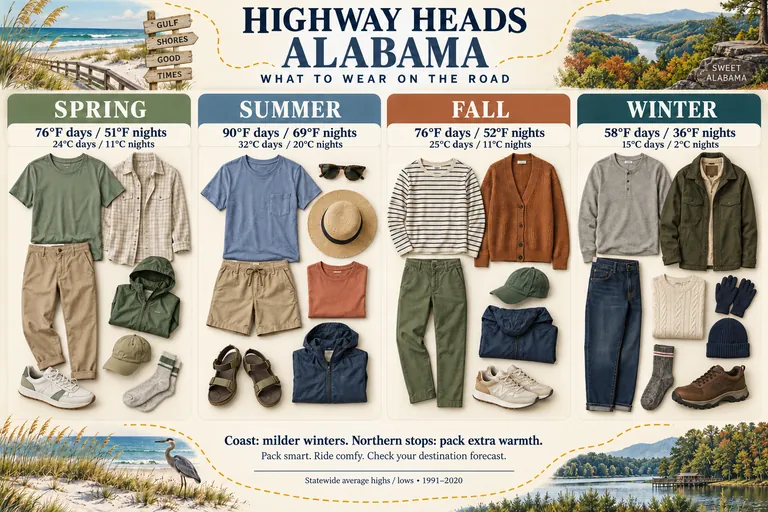
Spring 76°/51°F (24°/11°C)
Spring brings warming days, rain, and occasional chilly mornings.
- Wear
- Pair a breathable tee or relaxed shirt with lightweight chinos, joggers, or an easy midi skirt. Add an open overshirt for cool stops.
- Shoes
- Broken-in walking sneakers; water-resistant shoes when rain is forecast.
- Pack
- light cardigan or overshirt
- packable rain jacket
- sun hat
- spare socks
Summer 90°/69°F (32°/20°C)
Summer is hot and humid, with showers possible.
- Wear
- Choose a loose, breathable tee or shirt with quick-drying shorts, lightweight pants, or an airy dress. Carry a thin layer for chilly indoor stops.
- Shoes
- Breathable walking sneakers; secure sandals for casual paved stops.
- Pack
- sun hat
- sunglasses
- light indoor layer
- light rain shell
- spare tee
Fall 76°/52°F (25°/11°C)
Fall starts warm and becomes cooler as the season progresses.
- Wear
- Pair a tee with lightweight pants or a casual skirt, then add a cardigan or overshirt as evenings cool. Swap to a sweater later in the season.
- Shoes
- Comfortable walking sneakers; water-resistant shoes for rainy days.
- Pack
- cardigan or overshirt
- light rain shell
- sun hat
- warmer late-season layer
Winter 58°/36°F (15°/2°C)
Winter is often mild, but freezing nights and cold spells occur.
- Wear
- Wear a tee or long-sleeve top with pants and a sweater. Add a medium-weight jacket on colder days and a rain shell for wet stops.
- Shoes
- Closed-toe walking shoes; water-resistant shoes when showers are forecast.
- Pack
- sweater
- medium-weight jacket
- rain shell
- warm socks
- light gloves for cold spells
Adjust for your route. The Gulf Coast is milder in winter than northern Alabama; add a warmer coat for northern stops during cold spells.
Climate background: NOAA State Climate Summary
Alaska
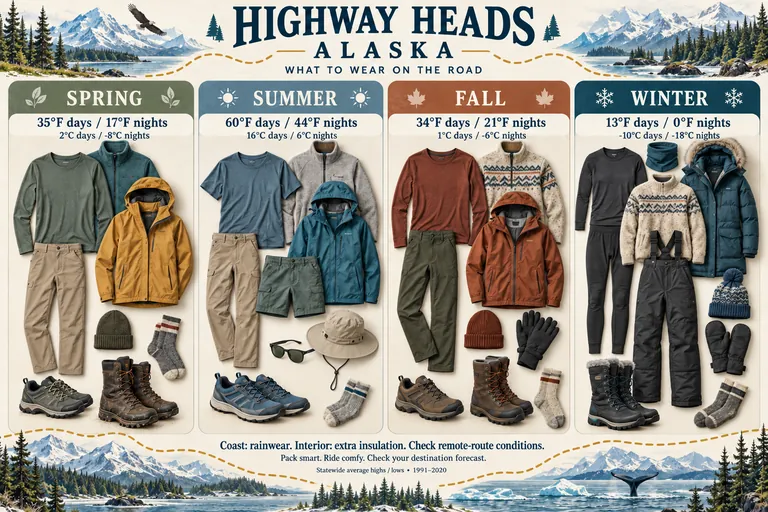
Spring 35°/17°F (2°/-8°C)
Spring can feel like winter early on, with snowmelt and muddy stops later.
- Wear
- Start with a long-sleeve tee, stretch pants, and a fleece or sweater. Add a rain shell when the wind or showers pick up.
- Shoes
- Water-resistant walking shoes with grip; boots for muddy stops.
- Pack
- fleece or sweater
- rain shell
- light beanie
- spare dry socks
Summer 60°/44°F (16°/6°C)
Summer ranges from cool coastal weather to warm interior afternoons.
- Wear
- Wear a tee with lightweight pants or shorts, then carry a fleece and wind-resistant shell. Keep the warm layer handy even on sunny days.
- Shoes
- Walking sneakers for town; trail shoes for rougher stops.
- Pack
- fleece
- wind and rain shell
- sun hat
- sunglasses
- spare socks
Fall 34°/21°F (1°/-6°C)
Fall brings cooling temperatures, rain, and an early return of snow in some areas.
- Wear
- Build around a long-sleeve tee, comfortable pants, and a sweater or fleece. Add a wind-resistant jacket for breezy overlooks.
- Shoes
- Walking shoes with grip; water-resistant boots for wet or muddy routes.
- Pack
- sweater or fleece
- wind and rain shell
- beanie
- light gloves
- spare socks
Winter 13°/0°F (-10°/-18°C)
Winter brings prolonged cold; interior and northern areas can be extremely cold.
- Wear
- Use thermal top and bottoms, an insulating fleece or sweater, and a wind-resistant insulated parka. Add insulated pants for extended outdoor stops.
- Shoes
- Waterproof insulated winter boots with wool or synthetic socks.
- Pack
- thermal base layers
- insulated parka
- insulated pants
- beanie
- mittens
- neck gaiter
- dry spare socks
Adjust for your route. Southeast Alaska needs dependable rainwear; interior routes need a wider range of layers. Arctic and remote winter travel require route-specific preparation.
Climate background: NOAA State Climate Summary
Arizona
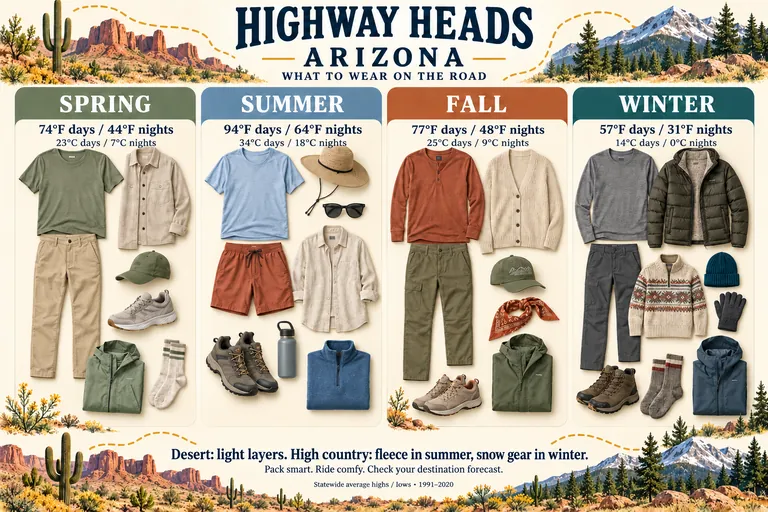
Spring 74°/44°F (23°/7°C)
Spring is warm in the southern desert and cooler in high country.
- Wear
- Pair a breathable tee or relaxed shirt with lightweight chinos, joggers, or an easy midi skirt. Add an open overshirt for cool stops.
- Shoes
- Broken-in walking sneakers; water-resistant shoes when rain is forecast.
- Pack
- light cardigan or overshirt
- packable rain jacket
- sun hat
- spare socks
Summer 94°/64°F (34°/18°C)
Summer brings intense desert heat and seasonal monsoon showers.
- Wear
- Try a loose tee or breathable sun shirt with lightweight shorts or airy pants. Add a light overshirt after sunset.
- Shoes
- Breathable closed-toe walking shoes for dusty stops; hiking shoes for uneven trails.
- Pack
- sun hat
- sunglasses
- light sun shirt
- light evening layer
- spare socks
Fall 77°/48°F (25°/9°C)
Fall stays warm in low deserts while high elevations cool quickly.
- Wear
- Pair a tee with lightweight pants or a casual skirt, then add a cardigan or overshirt as evenings cool. Swap to a sweater later in the season.
- Shoes
- Comfortable walking sneakers; water-resistant shoes for rainy days.
- Pack
- cardigan or overshirt
- light rain shell
- sun hat
- warmer late-season layer
Winter 57°/31°F (14°/0°C)
Winter can be mild in desert cities and snowy at higher elevations.
- Wear
- Wear a tee or long-sleeve top with pants and a sweater. Add a medium-weight jacket on colder days and a rain shell for wet stops.
- Shoes
- Closed-toe walking shoes; water-resistant shoes when showers are forecast.
- Pack
- sweater
- medium-weight jacket
- rain shell
- warm socks
- light gloves for cold spells
Adjust for your route. Phoenix and Flagstaff need different bags: add fleece in high country in summer, and a winter coat, thermals, and snow boots in winter.
Climate background: NOAA State Climate Summary
Arkansas
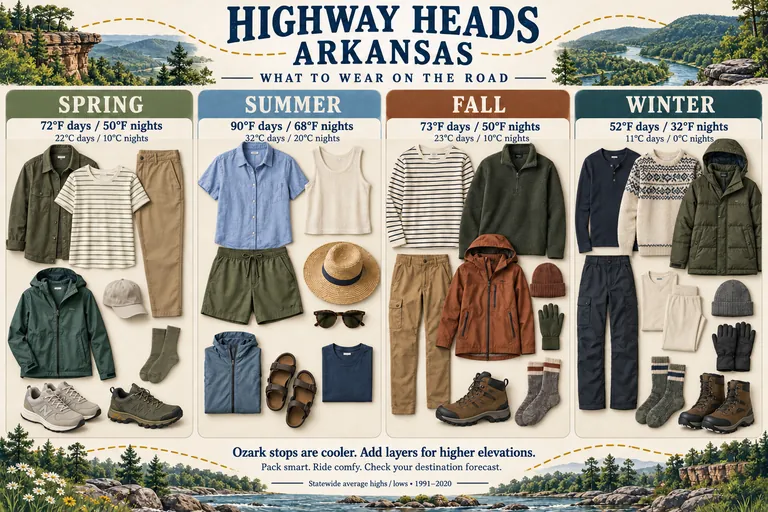
Spring 72°/50°F (22°/10°C)
Spring has warming days and frequent wet-weather possibilities.
- Wear
- Pair a breathable tee or relaxed shirt with lightweight chinos, joggers, or an easy midi skirt. Add an open overshirt for cool stops.
- Shoes
- Broken-in walking sneakers; water-resistant shoes when rain is forecast.
- Pack
- light cardigan or overshirt
- packable rain jacket
- sun hat
- spare socks
Summer 90°/68°F (32°/20°C)
Summer is hot and humid, including in many lake and river destinations.
- Wear
- Choose a loose, breathable tee or shirt with quick-drying shorts, lightweight pants, or an airy dress. Carry a thin layer for chilly indoor stops.
- Shoes
- Breathable walking sneakers; secure sandals for casual paved stops.
- Pack
- sun hat
- sunglasses
- light indoor layer
- light rain shell
- spare tee
Fall 73°/50°F (23°/10°C)
Fall shifts from warm afternoons to chilly mornings and evenings.
- Wear
- Build around a long-sleeve tee, comfortable pants, and a sweater or fleece. Add a wind-resistant jacket for breezy overlooks.
- Shoes
- Walking shoes with grip; water-resistant boots for wet or muddy routes.
- Pack
- sweater or fleece
- wind and rain shell
- beanie
- light gloves
- spare socks
Winter 52°/32°F (11°/0°C)
Winter is cool to cold, with freezing weather and occasional snow or ice.
- Wear
- Layer a moisture-wicking long-sleeve top under a sweater or fleece and an insulated coat. Wear long pants; add thermal bottoms when the forecast calls for them.
- Shoes
- Waterproof insulated boots for snowy stops, with warm wool or synthetic socks.
- Pack
- thermal base layers
- insulated coat
- beanie
- gloves or mittens
- warm spare socks
Adjust for your route. The Ozarks and Boston Mountains are cooler than lower areas. Use a lighter jacket on mild winter days and warmer layers for mountain stops.
Climate background: NOAA State Climate Summary
California
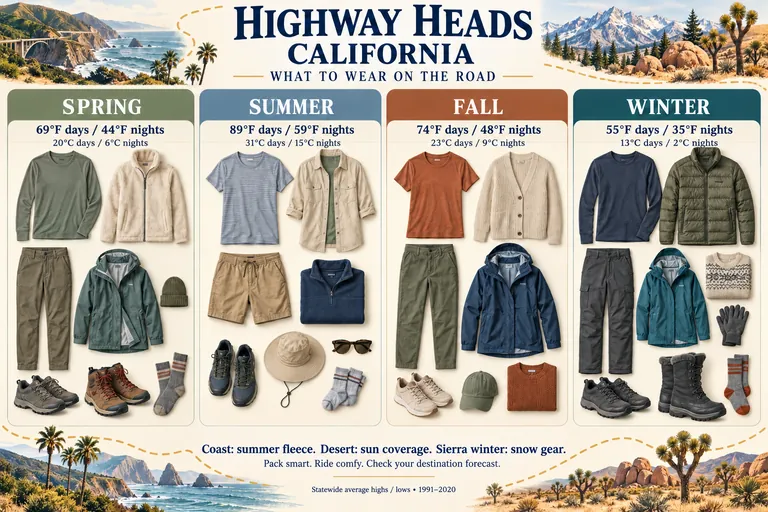
Spring 69°/44°F (20°/6°C)
Spring varies from cool coastal days to warm inland afternoons, with mountain snow possible.
- Wear
- Start with a long-sleeve tee, stretch pants, and a fleece or sweater. Add a rain shell when the wind or showers pick up.
- Shoes
- Water-resistant walking shoes with grip; boots for muddy stops.
- Pack
- fleece or sweater
- rain shell
- light beanie
- spare dry socks
Summer 89°/59°F (31°/15°C)
Summer is generally dry, with hot inland areas and cooler coastal stops.
- Wear
- Try a loose tee or breathable sun shirt with lightweight shorts or airy pants. Add a light overshirt after sunset.
- Shoes
- Breathable closed-toe walking shoes for dusty stops; hiking shoes for uneven trails.
- Pack
- sun hat
- sunglasses
- light sun shirt
- light evening layer
- spare socks
Fall 74°/48°F (23°/9°C)
Fall can remain warm inland while coastal evenings and mountains turn chilly.
- Wear
- Pair a tee with lightweight pants or a casual skirt, then add a cardigan or overshirt as evenings cool. Swap to a sweater later in the season.
- Shoes
- Comfortable walking sneakers; water-resistant shoes for rainy days.
- Pack
- cardigan or overshirt
- light rain shell
- sun hat
- warmer late-season layer
Winter 55°/35°F (13°/2°C)
Winter brings more rain in many lowlands and snow in the mountains.
- Wear
- Wear a tee or long-sleeve top with pants and a sweater. Add a medium-weight jacket on colder days and a rain shell for wet stops.
- Shoes
- Closed-toe walking shoes; water-resistant shoes when showers are forecast.
- Pack
- sweater
- medium-weight jacket
- rain shell
- warm socks
- light gloves for cold spells
Adjust for your route. Carry fleece for the coast even in summer. Desert stops need heat-ready clothing; Sierra winter stops need thermals, an insulated coat, and snow boots.
Climate background: NOAA State Climate Summary
Colorado
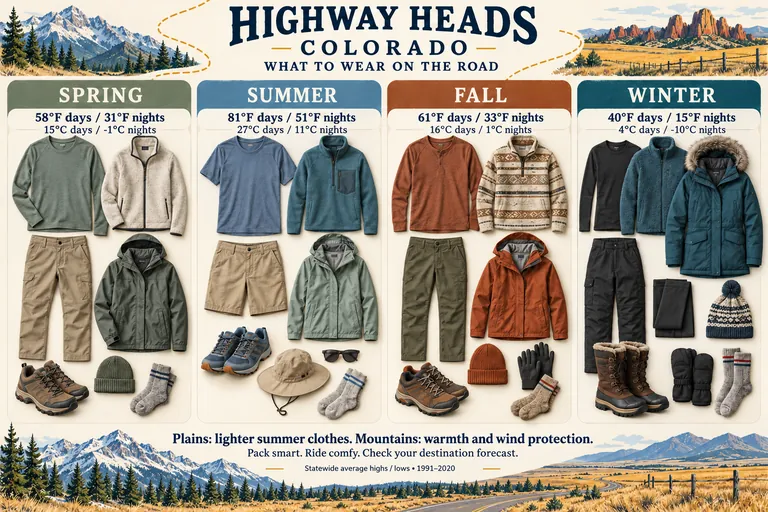
Spring 58°/31°F (15°/-1°C)
Spring can swing between mild sunshine and snow, especially at elevation.
- Wear
- Start with a long-sleeve tee, stretch pants, and a fleece or sweater. Add a rain shell when the wind or showers pick up.
- Shoes
- Water-resistant walking shoes with grip; boots for muddy stops.
- Pack
- fleece or sweater
- rain shell
- light beanie
- spare dry socks
Summer 81°/51°F (27°/11°C)
Summer afternoons can be warm below the peaks, while high-country evenings are cold.
- Wear
- Wear a tee with lightweight pants or shorts, then carry a fleece and wind-resistant shell. Keep the warm layer handy even on sunny days.
- Shoes
- Walking sneakers for town; trail shoes for rougher stops.
- Pack
- fleece
- wind and rain shell
- sun hat
- sunglasses
- spare socks
Fall 61°/33°F (16°/1°C)
Fall brings chilly mornings and possible early snow at elevation.
- Wear
- Build around a long-sleeve tee, comfortable pants, and a sweater or fleece. Add a wind-resistant jacket for breezy overlooks.
- Shoes
- Walking shoes with grip; water-resistant boots for wet or muddy routes.
- Pack
- sweater or fleece
- wind and rain shell
- beanie
- light gloves
- spare socks
Winter 40°/15°F (4°/-10°C)
Winter brings cold and snow, with especially demanding conditions in the mountains.
- Wear
- Layer a moisture-wicking long-sleeve top under a sweater or fleece and an insulated coat. Wear long pants; add thermal bottoms when the forecast calls for them.
- Shoes
- Waterproof insulated boots for snowy stops, with warm wool or synthetic socks.
- Pack
- thermal base layers
- insulated coat
- beanie
- gloves or mittens
- warm spare socks
Adjust for your route. Denver and eastern plains can need shorts in summer; mountain stops still need fleece and a shell. Add heavier insulation for exposed winter destinations.
Climate background: NOAA State Climate Summary
Connecticut
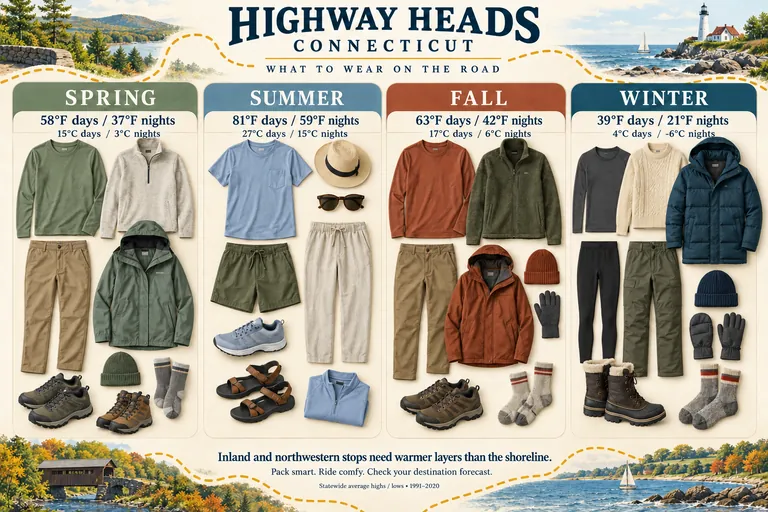
Spring 58°/37°F (15°/3°C)
Spring gradually warms, with rain and cool mornings.
- Wear
- Start with a long-sleeve tee, stretch pants, and a fleece or sweater. Add a rain shell when the wind or showers pick up.
- Shoes
- Water-resistant walking shoes with grip; boots for muddy stops.
- Pack
- fleece or sweater
- rain shell
- light beanie
- spare dry socks
Summer 81°/59°F (27°/15°C)
Summer is warm and often humid, with cooler coastal breezes.
- Wear
- Choose a loose, breathable tee or shirt with quick-drying shorts, lightweight pants, or an airy dress. Carry a thin layer for chilly indoor stops.
- Shoes
- Breathable walking sneakers; secure sandals for casual paved stops.
- Pack
- sun hat
- sunglasses
- light indoor layer
- light rain shell
- spare tee
Fall 63°/42°F (17°/6°C)
Fall moves from mild early days to cold late-season mornings.
- Wear
- Build around a long-sleeve tee, comfortable pants, and a sweater or fleece. Add a wind-resistant jacket for breezy overlooks.
- Shoes
- Walking shoes with grip; water-resistant boots for wet or muddy routes.
- Pack
- sweater or fleece
- wind and rain shell
- beanie
- light gloves
- spare socks
Winter 39°/21°F (4°/-6°C)
Winter is cold, with snow, rain, and mixed precipitation possible.
- Wear
- Layer a moisture-wicking long-sleeve top under a sweater or fleece and an insulated coat. Wear long pants; add thermal bottoms when the forecast calls for them.
- Shoes
- Waterproof insulated boots for snowy stops, with warm wool or synthetic socks.
- Pack
- thermal base layers
- insulated coat
- beanie
- gloves or mittens
- warm spare socks
Adjust for your route. Inland and northwestern stops tend to be colder than the shoreline. Bring an extra insulating layer for those routes.
Climate background: NOAA State Climate Summary
Delaware
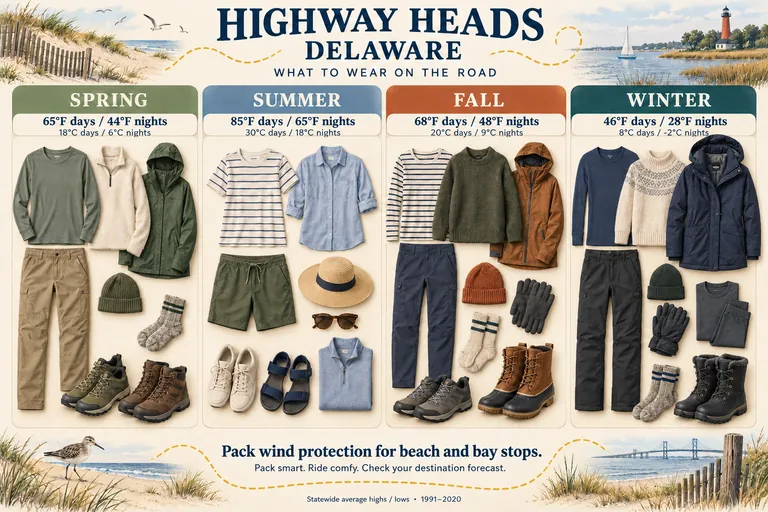
Spring 65°/44°F (18°/6°C)
Spring has changing temperatures and frequent chances for rain.
- Wear
- Start with a long-sleeve tee, stretch pants, and a fleece or sweater. Add a rain shell when the wind or showers pick up.
- Shoes
- Water-resistant walking shoes with grip; boots for muddy stops.
- Pack
- fleece or sweater
- rain shell
- light beanie
- spare dry socks
Summer 85°/65°F (30°/18°C)
Summer is warm, with humidity and coastal breezes.
- Wear
- Choose a loose, breathable tee or shirt with quick-drying shorts, lightweight pants, or an airy dress. Carry a thin layer for chilly indoor stops.
- Shoes
- Breathable walking sneakers; secure sandals for casual paved stops.
- Pack
- sun hat
- sunglasses
- light indoor layer
- light rain shell
- spare tee
Fall 68°/48°F (20°/9°C)
Fall brings cooling days and breezy beach stops.
- Wear
- Build around a long-sleeve tee, comfortable pants, and a sweater or fleece. Add a wind-resistant jacket for breezy overlooks.
- Shoes
- Walking shoes with grip; water-resistant boots for wet or muddy routes.
- Pack
- sweater or fleece
- wind and rain shell
- beanie
- light gloves
- spare socks
Winter 46°/28°F (8°/-2°C)
Winter is cold, with wind, rain, and occasional snow.
- Wear
- Layer a moisture-wicking long-sleeve top under a sweater or fleece and an insulated coat. Wear long pants; add thermal bottoms when the forecast calls for them.
- Shoes
- Waterproof insulated boots for snowy stops, with warm wool or synthetic socks.
- Pack
- thermal base layers
- insulated coat
- beanie
- gloves or mittens
- warm spare socks
Adjust for your route. For beach and bay stops, carry a wind-resistant shell. Coastal moderation does not remove the need for a winter coat.
Climate background: NOAA State Climate Summary
Florida
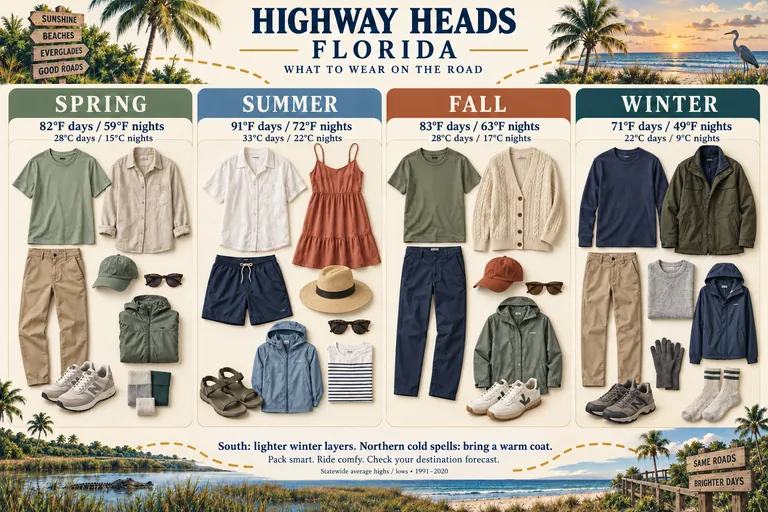
Spring 82°/59°F (28°/15°C)
Spring is generally warm, with cooler starts more likely in the north.
- Wear
- Pair a breathable tee or relaxed shirt with lightweight chinos, joggers, or an easy midi skirt. Add an open overshirt for cool stops.
- Shoes
- Broken-in walking sneakers; water-resistant shoes when rain is forecast.
- Pack
- light cardigan or overshirt
- packable rain jacket
- sun hat
- spare socks
Summer 91°/72°F (33°/22°C)
Summer is hot and humid, with frequent afternoon or evening thunderstorms.
- Wear
- Choose a loose, breathable tee or shirt with quick-drying shorts, lightweight pants, or an airy dress. Carry a thin layer for chilly indoor stops.
- Shoes
- Breathable walking sneakers; secure sandals for casual paved stops.
- Pack
- sun hat
- sunglasses
- light indoor layer
- light rain shell
- spare tee
Fall 83°/63°F (28°/17°C)
Fall often stays warm, with wetter weather and cooler spells possible.
- Wear
- Pair a tee with lightweight pants or a casual skirt, then add a cardigan or overshirt as evenings cool. Swap to a sweater later in the season.
- Shoes
- Comfortable walking sneakers; water-resistant shoes for rainy days.
- Pack
- cardigan or overshirt
- light rain shell
- sun hat
- warmer late-season layer
Winter 71°/49°F (22°/9°C)
Winter is generally mild; northern Florida has colder spells than the south.
- Wear
- Wear a tee or long-sleeve top with pants and a sweater. Add a medium-weight jacket on colder days and a rain shell for wet stops.
- Shoes
- Closed-toe walking shoes; water-resistant shoes when showers are forecast.
- Pack
- sweater
- medium-weight jacket
- rain shell
- warm socks
- light gloves for cold spells
Adjust for your route. South Florida and the Keys often suit light outfits in winter; the Panhandle and inland north may need a proper warm coat during cold spells.
Climate background: NOAA State Climate Summary
Georgia
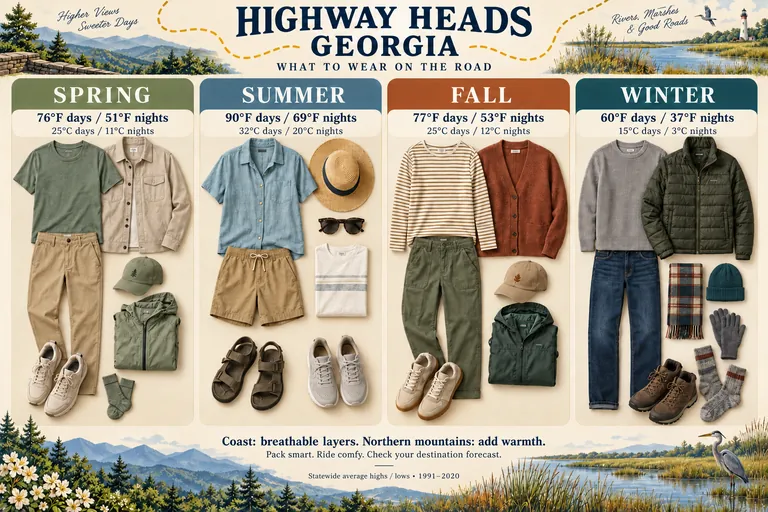
Spring 76°/51°F (25°/11°C)
Spring has warming afternoons, rain, and cooler mountain mornings.
- Wear
- Pair a breathable tee or relaxed shirt with lightweight chinos, joggers, or an easy midi skirt. Add an open overshirt for cool stops.
- Shoes
- Broken-in walking sneakers; water-resistant shoes when rain is forecast.
- Pack
- light cardigan or overshirt
- packable rain jacket
- sun hat
- spare socks
Summer 90°/69°F (32°/20°C)
Summer is hot and humid, especially in lowland and coastal areas.
- Wear
- Choose a loose, breathable tee or shirt with quick-drying shorts, lightweight pants, or an airy dress. Carry a thin layer for chilly indoor stops.
- Shoes
- Breathable walking sneakers; secure sandals for casual paved stops.
- Pack
- sun hat
- sunglasses
- light indoor layer
- light rain shell
- spare tee
Fall 77°/53°F (25°/12°C)
Fall starts warm and becomes cooler, particularly in the mountains.
- Wear
- Pair a tee with lightweight pants or a casual skirt, then add a cardigan or overshirt as evenings cool. Swap to a sweater later in the season.
- Shoes
- Comfortable walking sneakers; water-resistant shoes for rainy days.
- Pack
- cardigan or overshirt
- light rain shell
- sun hat
- warmer late-season layer
Winter 60°/37°F (15°/3°C)
Winter is usually cool to mild, with freezing conditions possible inland.
- Wear
- Wear a tee or long-sleeve top with pants and a sweater. Add a medium-weight jacket on colder days and a rain shell for wet stops.
- Shoes
- Closed-toe walking shoes; water-resistant shoes when showers are forecast.
- Pack
- sweater
- medium-weight jacket
- rain shell
- warm socks
- light gloves for cold spells
Adjust for your route. North Georgia mountains need warmer layers than coastal stops. Pack an insulated jacket for winter mountain visits.
Climate background: NOAA State Climate Summary
Hawaii
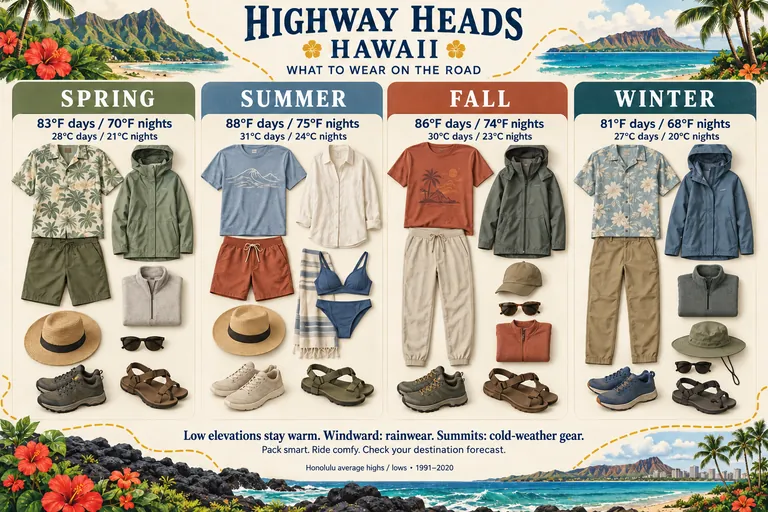
Spring 83°/70°F (28°/21°C)
Spring is warm at low elevations, with showers varying by location.
- Wear
- Choose a breathable tee or aloha-style shirt with lightweight shorts, pants, or an easy dress. Carry a light rain shell and an evening layer.
- Shoes
- Walking sneakers or secure sandals for paved stops; grippy trail shoes for muddy paths.
- Pack
- light rain shell
- sun hat
- sunglasses
- light evening layer
- swimwear and cover-up if needed
Summer 88°/75°F (31°/24°C)
Summer is warm at low elevations; breezes and showers still call for a light layer.
- Wear
- Wear a breathable shirt or tee with shorts, airy pants, or a relaxed dress. Add a light layer for breezy evenings and indoor stops.
- Shoes
- Walking sneakers or secure sandals; trail shoes for uneven paths.
- Pack
- sun hat
- sunglasses
- light layer
- packable rain shell
- swimwear and cover-up if needed
Fall 86°/74°F (30°/23°C)
Fall stays warm near sea level, with wetter conditions possible toward winter.
- Wear
- Wear a breathable shirt or tee with shorts, airy pants, or a relaxed dress. Add a light layer for breezy evenings and indoor stops.
- Shoes
- Walking sneakers or secure sandals; trail shoes for uneven paths.
- Pack
- sun hat
- sunglasses
- light layer
- packable rain shell
- swimwear and cover-up if needed
Winter 81°/68°F (27°/20°C)
Winter stays warm at low elevations, with more wet-weather potential.
- Wear
- Choose a breathable tee or aloha-style shirt with lightweight shorts, pants, or an easy dress. Carry a light rain shell and an evening layer.
- Shoes
- Walking sneakers or secure sandals for paved stops; grippy trail shoes for muddy paths.
- Pack
- light rain shell
- sun hat
- sunglasses
- light evening layer
- swimwear and cover-up if needed
Adjust for your route. Windward areas are generally wetter. High summit visits are a separate cold-weather trip: bring warm insulation, long pants, gloves, and closed shoes as local guidance requires.
Climate background: NOAA State Climate Summary
Idaho
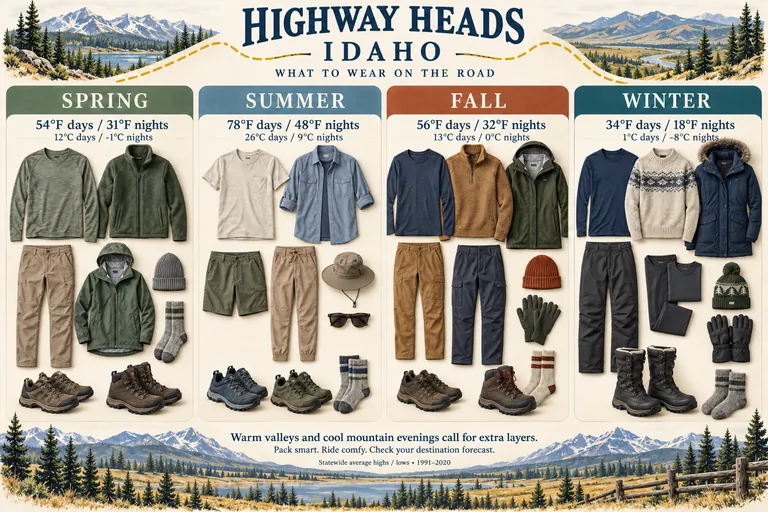
Spring 54°/31°F (12°/-1°C)
Spring brings cool mornings, variable warmth, and lingering mountain snow.
- Wear
- Start with a long-sleeve tee, stretch pants, and a fleece or sweater. Add a rain shell when the wind or showers pick up.
- Shoes
- Water-resistant walking shoes with grip; boots for muddy stops.
- Pack
- fleece or sweater
- rain shell
- light beanie
- spare dry socks
Summer 78°/48°F (26°/9°C)
Summer can be hot in lower valleys, with cooler mountain evenings.
- Wear
- Try a loose tee or breathable sun shirt with lightweight shorts or airy pants. Add a light overshirt after sunset.
- Shoes
- Breathable closed-toe walking shoes for dusty stops; hiking shoes for uneven trails.
- Pack
- sun hat
- sunglasses
- light sun shirt
- light evening layer
- spare socks
Fall 56°/32°F (13°/0°C)
Fall brings sharp overnight cooling and possible early mountain snow.
- Wear
- Build around a long-sleeve tee, comfortable pants, and a sweater or fleece. Add a wind-resistant jacket for breezy overlooks.
- Shoes
- Walking shoes with grip; water-resistant boots for wet or muddy routes.
- Pack
- sweater or fleece
- wind and rain shell
- beanie
- light gloves
- spare socks
Winter 34°/18°F (1°/-8°C)
Winter is cold, with snow particularly important on mountain routes.
- Wear
- Layer a moisture-wicking long-sleeve top under a sweater or fleece and an insulated coat. Wear long pants; add thermal bottoms when the forecast calls for them.
- Shoes
- Waterproof insulated boots for snowy stops, with warm wool or synthetic socks.
- Pack
- thermal base layers
- insulated coat
- beanie
- gloves or mittens
- warm spare socks
Adjust for your route. Boise-area summer outfits may be too light for central or northern mountain evenings. Add fleece and a shell before heading uphill.
Climate background: NOAA State Climate Summary
Illinois
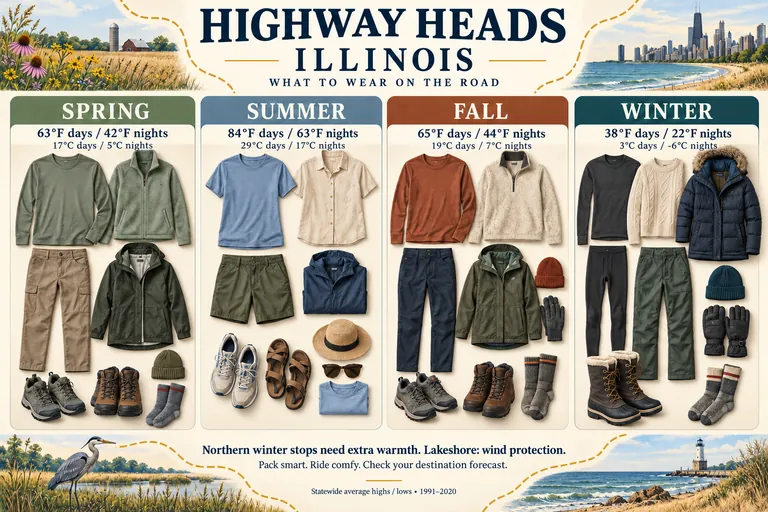
Spring 63°/42°F (17°/5°C)
Spring has cool starts, warming afternoons, and rain.
- Wear
- Start with a long-sleeve tee, stretch pants, and a fleece or sweater. Add a rain shell when the wind or showers pick up.
- Shoes
- Water-resistant walking shoes with grip; boots for muddy stops.
- Pack
- fleece or sweater
- rain shell
- light beanie
- spare dry socks
Summer 84°/63°F (29°/17°C)
Summer is warm to hot and often humid.
- Wear
- Choose a loose, breathable tee or shirt with quick-drying shorts, lightweight pants, or an airy dress. Carry a thin layer for chilly indoor stops.
- Shoes
- Breathable walking sneakers; secure sandals for casual paved stops.
- Pack
- sun hat
- sunglasses
- light indoor layer
- light rain shell
- spare tee
Fall 65°/44°F (19°/7°C)
Fall cools steadily, with breezy days and chilly evenings.
- Wear
- Build around a long-sleeve tee, comfortable pants, and a sweater or fleece. Add a wind-resistant jacket for breezy overlooks.
- Shoes
- Walking shoes with grip; water-resistant boots for wet or muddy routes.
- Pack
- sweater or fleece
- wind and rain shell
- beanie
- light gloves
- spare socks
Winter 38°/22°F (3°/-6°C)
Winter can be very cold, with wind, snow, and freezing conditions.
- Wear
- Layer a moisture-wicking long-sleeve top under a sweater or fleece and an insulated coat. Wear long pants; add thermal bottoms when the forecast calls for them.
- Shoes
- Waterproof insulated boots for snowy stops, with warm wool or synthetic socks.
- Pack
- thermal base layers
- insulated coat
- beanie
- gloves or mittens
- warm spare socks
Adjust for your route. Northern Illinois generally needs warmer winter layers than the south. Carry a wind-resistant layer for Lake Michigan stops.
Climate background: NOAA State Climate Summary
Indiana
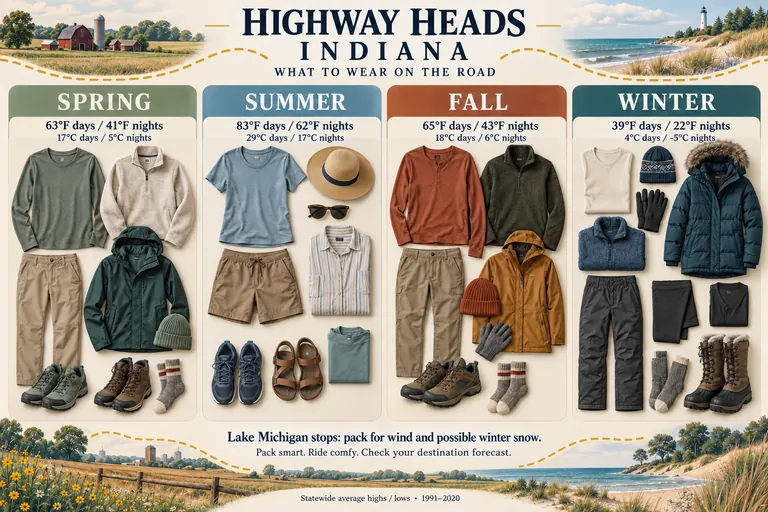
Spring 63°/41°F (17°/5°C)
Spring temperatures fluctuate, with rain and cool mornings.
- Wear
- Start with a long-sleeve tee, stretch pants, and a fleece or sweater. Add a rain shell when the wind or showers pick up.
- Shoes
- Water-resistant walking shoes with grip; boots for muddy stops.
- Pack
- fleece or sweater
- rain shell
- light beanie
- spare dry socks
Summer 83°/62°F (29°/17°C)
Summer is warm to hot and humid.
- Wear
- Choose a loose, breathable tee or shirt with quick-drying shorts, lightweight pants, or an airy dress. Carry a thin layer for chilly indoor stops.
- Shoes
- Breathable walking sneakers; secure sandals for casual paved stops.
- Pack
- sun hat
- sunglasses
- light indoor layer
- light rain shell
- spare tee
Fall 65°/43°F (18°/6°C)
Fall brings cooling afternoons and increasingly cold nights.
- Wear
- Build around a long-sleeve tee, comfortable pants, and a sweater or fleece. Add a wind-resistant jacket for breezy overlooks.
- Shoes
- Walking shoes with grip; water-resistant boots for wet or muddy routes.
- Pack
- sweater or fleece
- wind and rain shell
- beanie
- light gloves
- spare socks
Winter 39°/22°F (4°/-5°C)
Winter brings cold weather, with snow and ice possible.
- Wear
- Layer a moisture-wicking long-sleeve top under a sweater or fleece and an insulated coat. Wear long pants; add thermal bottoms when the forecast calls for them.
- Shoes
- Waterproof insulated boots for snowy stops, with warm wool or synthetic socks.
- Pack
- thermal base layers
- insulated coat
- beanie
- gloves or mittens
- warm spare socks
Adjust for your route. For northwestern Indiana and Lake Michigan stops, pack for wind and possible snow as well as the day's temperature.
Climate background: NOAA State Climate Summary
Iowa
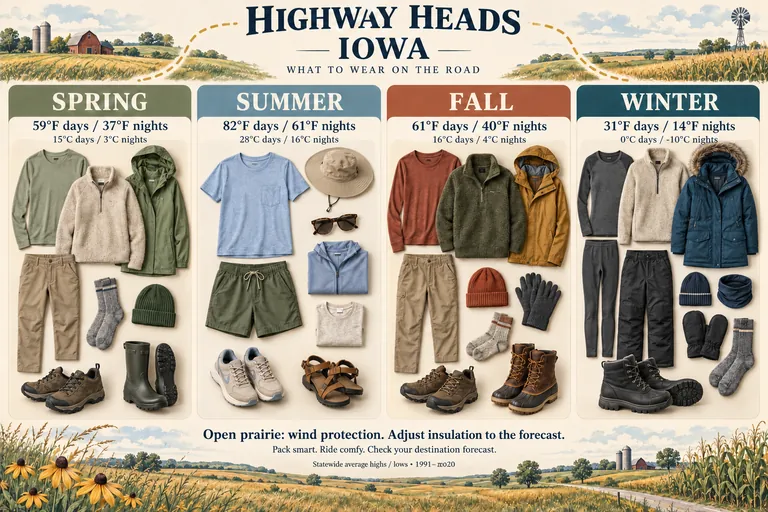
Spring 59°/37°F (15°/3°C)
Spring alternates between chilly days, warm spells, and wet weather.
- Wear
- Start with a long-sleeve tee, stretch pants, and a fleece or sweater. Add a rain shell when the wind or showers pick up.
- Shoes
- Water-resistant walking shoes with grip; boots for muddy stops.
- Pack
- fleece or sweater
- rain shell
- light beanie
- spare dry socks
Summer 82°/61°F (28°/16°C)
Summer can be hot and humid, with cooler breaks.
- Wear
- Choose a loose, breathable tee or shirt with quick-drying shorts, lightweight pants, or an airy dress. Carry a thin layer for chilly indoor stops.
- Shoes
- Breathable walking sneakers; secure sandals for casual paved stops.
- Pack
- sun hat
- sunglasses
- light indoor layer
- light rain shell
- spare tee
Fall 61°/40°F (16°/4°C)
Fall brings cooling temperatures and chilly nights.
- Wear
- Build around a long-sleeve tee, comfortable pants, and a sweater or fleece. Add a wind-resistant jacket for breezy overlooks.
- Shoes
- Walking shoes with grip; water-resistant boots for wet or muddy routes.
- Pack
- sweater or fleece
- wind and rain shell
- beanie
- light gloves
- spare socks
Winter 31°/14°F (0°/-10°C)
Winter can be bitterly cold, with wind and snow.
- Wear
- Use thermal top and bottoms, an insulating fleece or sweater, and a wind-resistant insulated parka. Add insulated pants for extended outdoor stops.
- Shoes
- Waterproof insulated winter boots with wool or synthetic socks.
- Pack
- thermal base layers
- insulated parka
- insulated pants
- beanie
- mittens
- neck gaiter
- dry spare socks
Adjust for your route. Open prairie stops offer little shelter from wind. Scale insulation to the forecast and bring lighter layers for mild days.
Climate background: NOAA State Climate Summary
Kansas
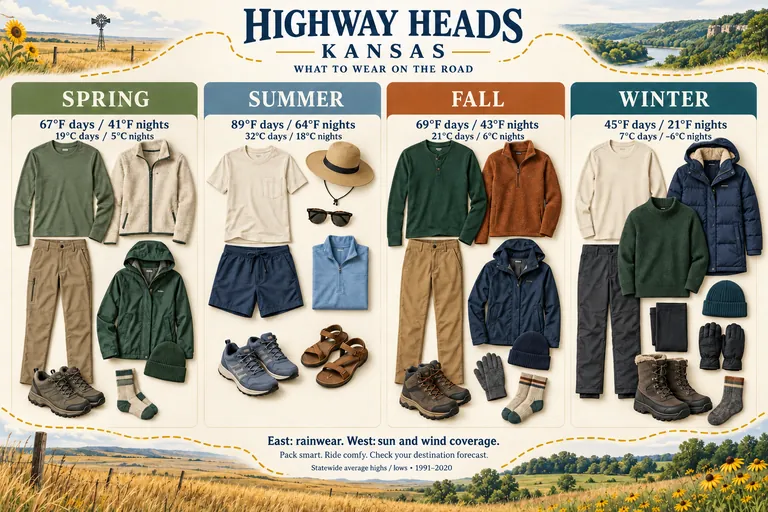
Spring 67°/41°F (19°/5°C)
Spring can shift quickly between warm afternoons and chilly, windy weather.
- Wear
- Start with a long-sleeve tee, stretch pants, and a fleece or sweater. Add a rain shell when the wind or showers pick up.
- Shoes
- Water-resistant walking shoes with grip; boots for muddy stops.
- Pack
- fleece or sweater
- rain shell
- light beanie
- spare dry socks
Summer 89°/64°F (32°/18°C)
Summer is hot; eastern areas are generally more humid than the west.
- Wear
- Choose a loose, breathable tee or shirt with quick-drying shorts, lightweight pants, or an airy dress. Carry a thin layer for chilly indoor stops.
- Shoes
- Breathable walking sneakers; secure sandals for casual paved stops.
- Pack
- sun hat
- sunglasses
- light indoor layer
- light rain shell
- spare tee
Fall 69°/43°F (21°/6°C)
Fall brings comfortable afternoons mixed with cold fronts and chilly starts.
- Wear
- Build around a long-sleeve tee, comfortable pants, and a sweater or fleece. Add a wind-resistant jacket for breezy overlooks.
- Shoes
- Walking shoes with grip; water-resistant boots for wet or muddy routes.
- Pack
- sweater or fleece
- wind and rain shell
- beanie
- light gloves
- spare socks
Winter 45°/21°F (7°/-6°C)
Winter is cold and can be windy, with snow or ice possible.
- Wear
- Layer a moisture-wicking long-sleeve top under a sweater or fleece and an insulated coat. Wear long pants; add thermal bottoms when the forecast calls for them.
- Shoes
- Waterproof insulated boots for snowy stops, with warm wool or synthetic socks.
- Pack
- thermal base layers
- insulated coat
- beanie
- gloves or mittens
- warm spare socks
Adjust for your route. Eastern Kansas calls for more rain-ready packing; western Kansas calls for sun and wind coverage. Breathable pants work well across both.
Climate background: NOAA State Climate Summary
Kentucky
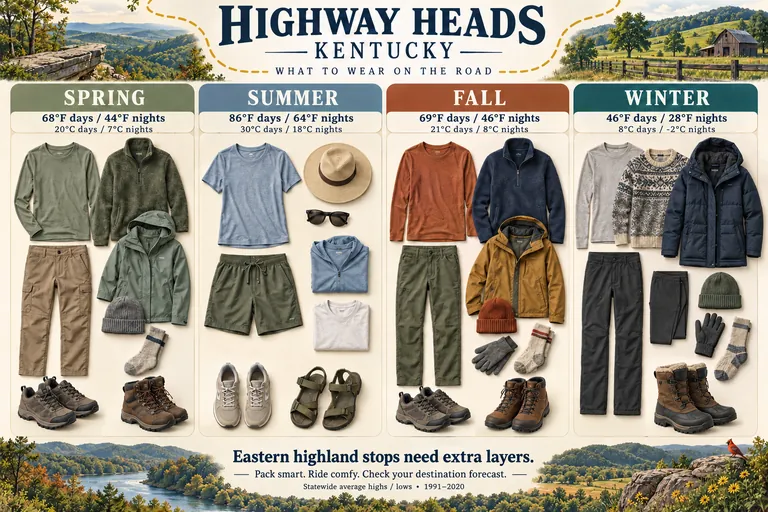
Spring 68°/44°F (20°/7°C)
Spring has changing temperatures and rain, with chilly mornings.
- Wear
- Start with a long-sleeve tee, stretch pants, and a fleece or sweater. Add a rain shell when the wind or showers pick up.
- Shoes
- Water-resistant walking shoes with grip; boots for muddy stops.
- Pack
- fleece or sweater
- rain shell
- light beanie
- spare dry socks
Summer 86°/64°F (30°/18°C)
Summer is warm to hot and humid.
- Wear
- Choose a loose, breathable tee or shirt with quick-drying shorts, lightweight pants, or an airy dress. Carry a thin layer for chilly indoor stops.
- Shoes
- Breathable walking sneakers; secure sandals for casual paved stops.
- Pack
- sun hat
- sunglasses
- light indoor layer
- light rain shell
- spare tee
Fall 69°/46°F (21°/8°C)
Fall brings cooler mornings and pleasant-to-chilly afternoons.
- Wear
- Build around a long-sleeve tee, comfortable pants, and a sweater or fleece. Add a wind-resistant jacket for breezy overlooks.
- Shoes
- Walking shoes with grip; water-resistant boots for wet or muddy routes.
- Pack
- sweater or fleece
- wind and rain shell
- beanie
- light gloves
- spare socks
Winter 46°/28°F (8°/-2°C)
Winter is cool to cold, with occasional very cold spells.
- Wear
- Layer a moisture-wicking long-sleeve top under a sweater or fleece and an insulated coat. Wear long pants; add thermal bottoms when the forecast calls for them.
- Shoes
- Waterproof insulated boots for snowy stops, with warm wool or synthetic socks.
- Pack
- thermal base layers
- insulated coat
- beanie
- gloves or mittens
- warm spare socks
Adjust for your route. Eastern high-elevation stops can be cooler than western lowlands. Add a fleece for overlooks and a warmer coat in winter.
Climate background: NOAA State Climate Summary
Louisiana
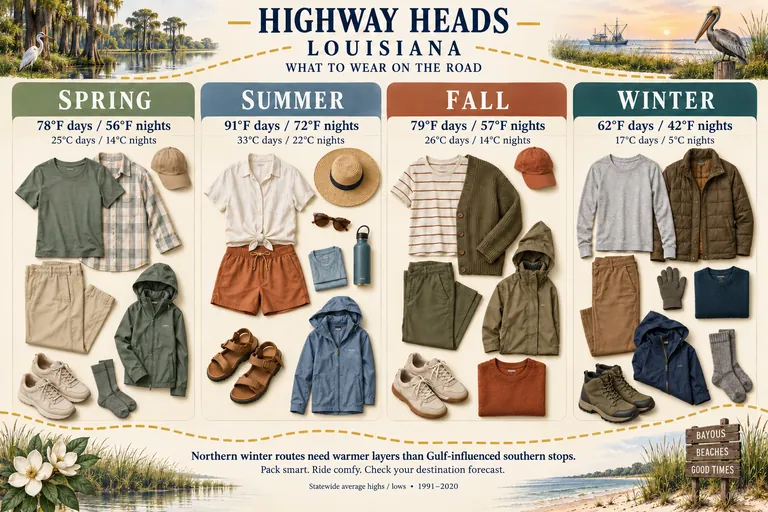
Spring 78°/56°F (25°/14°C)
Spring is often warm, with rain and cooler spells.
- Wear
- Pair a breathable tee or relaxed shirt with lightweight chinos, joggers, or an easy midi skirt. Add an open overshirt for cool stops.
- Shoes
- Broken-in walking sneakers; water-resistant shoes when rain is forecast.
- Pack
- light cardigan or overshirt
- packable rain jacket
- sun hat
- spare socks
Summer 91°/72°F (33°/22°C)
Summer is hot and humid, with rain possible throughout the season.
- Wear
- Choose a loose, breathable tee or shirt with quick-drying shorts, lightweight pants, or an airy dress. Carry a thin layer for chilly indoor stops.
- Shoes
- Breathable walking sneakers; secure sandals for casual paved stops.
- Pack
- sun hat
- sunglasses
- light indoor layer
- light rain shell
- spare tee
Fall 79°/57°F (26°/14°C)
Fall often starts hot before cooler weather arrives.
- Wear
- Pair a tee with lightweight pants or a casual skirt, then add a cardigan or overshirt as evenings cool. Swap to a sweater later in the season.
- Shoes
- Comfortable walking sneakers; water-resistant shoes for rainy days.
- Pack
- cardigan or overshirt
- light rain shell
- sun hat
- warmer late-season layer
Winter 62°/42°F (17°/5°C)
Winter is typically mild, but cold fronts can bring freezing weather.
- Wear
- Wear a tee or long-sleeve top with pants and a sweater. Add a medium-weight jacket on colder days and a rain shell for wet stops.
- Shoes
- Closed-toe walking shoes; water-resistant shoes when showers are forecast.
- Pack
- sweater
- medium-weight jacket
- rain shell
- warm socks
- light gloves for cold spells
Adjust for your route. Northern Louisiana has greater cold-weather variation than the Gulf-influenced south. Carry a warmer jacket for winter northern routes.
Climate background: NOAA State Climate Summary
Maine
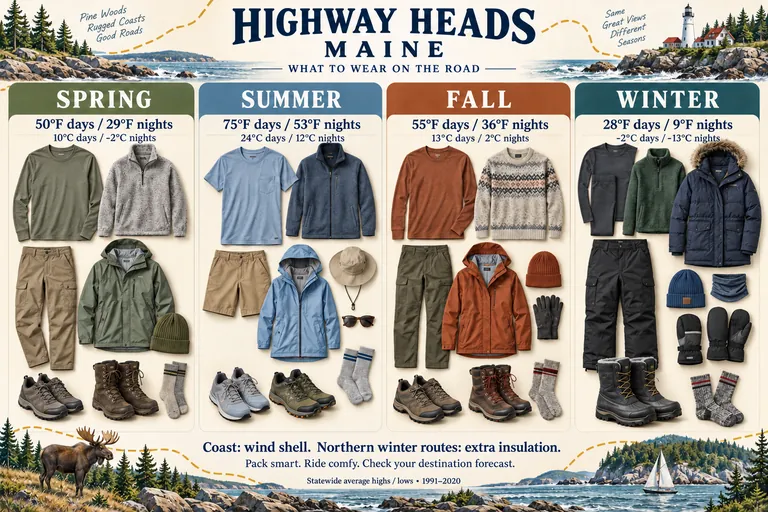
Spring 50°/29°F (10°/-2°C)
Spring is cool, with rain, snowmelt, and muddy stops.
- Wear
- Start with a long-sleeve tee, stretch pants, and a fleece or sweater. Add a rain shell when the wind or showers pick up.
- Shoes
- Water-resistant walking shoes with grip; boots for muddy stops.
- Pack
- fleece or sweater
- rain shell
- light beanie
- spare dry socks
Summer 75°/53°F (24°/12°C)
Summer can bring warm inland afternoons and cool coastal conditions.
- Wear
- Wear a tee with lightweight pants or shorts, then carry a fleece and wind-resistant shell. Keep the warm layer handy even on sunny days.
- Shoes
- Walking sneakers for town; trail shoes for rougher stops.
- Pack
- fleece
- wind and rain shell
- sun hat
- sunglasses
- spare socks
Fall 55°/36°F (13°/2°C)
Fall turns chilly, particularly inland and farther north.
- Wear
- Build around a long-sleeve tee, comfortable pants, and a sweater or fleece. Add a wind-resistant jacket for breezy overlooks.
- Shoes
- Walking shoes with grip; water-resistant boots for wet or muddy routes.
- Pack
- sweater or fleece
- wind and rain shell
- beanie
- light gloves
- spare socks
Winter 28°/9°F (-2°/-13°C)
Winter is cold, especially in northern and interior areas.
- Wear
- Use thermal top and bottoms, an insulating fleece or sweater, and a wind-resistant insulated parka. Add insulated pants for extended outdoor stops.
- Shoes
- Waterproof insulated winter boots with wool or synthetic socks.
- Pack
- thermal base layers
- insulated parka
- insulated pants
- beanie
- mittens
- neck gaiter
- dry spare socks
Adjust for your route. Bring a wind-resistant shell for ocean stops and extra insulation for northern winter travel. Southern summer heat can still call for shorts.
Climate background: NOAA State Climate Summary
Maryland
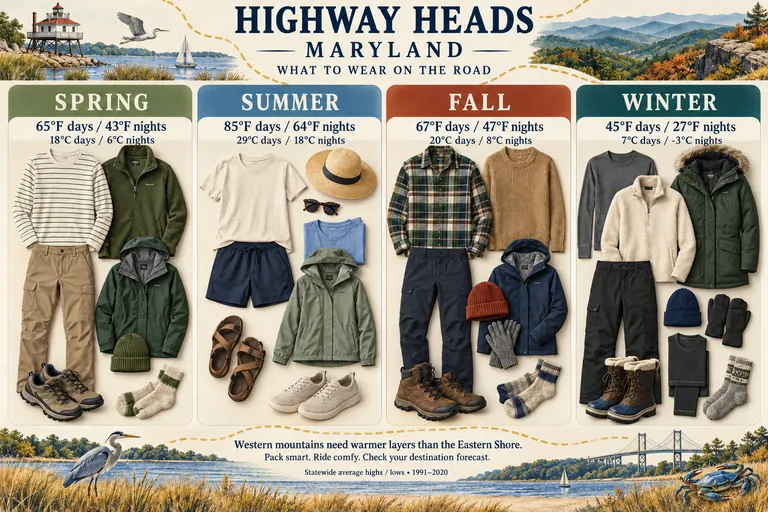
Spring 65°/43°F (18°/6°C)
Spring brings changing temperatures, showers, and cool mornings.
- Wear
- Start with a long-sleeve tee, stretch pants, and a fleece or sweater. Add a rain shell when the wind or showers pick up.
- Shoes
- Water-resistant walking shoes with grip; boots for muddy stops.
- Pack
- fleece or sweater
- rain shell
- light beanie
- spare dry socks
Summer 85°/64°F (29°/18°C)
Summer is warm to hot and humid, with coastal breezes.
- Wear
- Choose a loose, breathable tee or shirt with quick-drying shorts, lightweight pants, or an airy dress. Carry a thin layer for chilly indoor stops.
- Shoes
- Breathable walking sneakers; secure sandals for casual paved stops.
- Pack
- sun hat
- sunglasses
- light indoor layer
- light rain shell
- spare tee
Fall 67°/47°F (20°/8°C)
Fall brings cooling days and chilly mountain mornings.
- Wear
- Build around a long-sleeve tee, comfortable pants, and a sweater or fleece. Add a wind-resistant jacket for breezy overlooks.
- Shoes
- Walking shoes with grip; water-resistant boots for wet or muddy routes.
- Pack
- sweater or fleece
- wind and rain shell
- beanie
- light gloves
- spare socks
Winter 45°/27°F (7°/-3°C)
Winter is cold, with rain, snow, and freezing conditions possible.
- Wear
- Layer a moisture-wicking long-sleeve top under a sweater or fleece and an insulated coat. Wear long pants; add thermal bottoms when the forecast calls for them.
- Shoes
- Waterproof insulated boots for snowy stops, with warm wool or synthetic socks.
- Pack
- thermal base layers
- insulated coat
- beanie
- gloves or mittens
- warm spare socks
Adjust for your route. Western Maryland's Appalachian routes need warmer layers and more snow-ready footwear than the Eastern Shore.
Climate background: NOAA State Climate Summary
Massachusetts
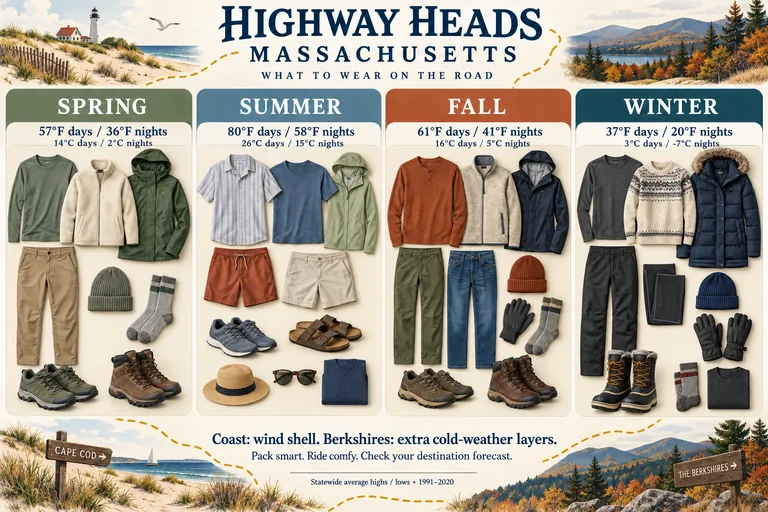
Spring 57°/36°F (14°/2°C)
Spring often starts chilly, with rain and gradual warming.
- Wear
- Start with a long-sleeve tee, stretch pants, and a fleece or sweater. Add a rain shell when the wind or showers pick up.
- Shoes
- Water-resistant walking shoes with grip; boots for muddy stops.
- Pack
- fleece or sweater
- rain shell
- light beanie
- spare dry socks
Summer 80°/58°F (26°/15°C)
Summer is warm and can be humid, with cooler coastal stops.
- Wear
- Choose a loose, breathable tee or shirt with quick-drying shorts, lightweight pants, or an airy dress. Carry a thin layer for chilly indoor stops.
- Shoes
- Breathable walking sneakers; secure sandals for casual paved stops.
- Pack
- sun hat
- sunglasses
- light indoor layer
- light rain shell
- spare tee
Fall 61°/41°F (16°/5°C)
Fall brings crisp mornings and increasingly cold evenings.
- Wear
- Build around a long-sleeve tee, comfortable pants, and a sweater or fleece. Add a wind-resistant jacket for breezy overlooks.
- Shoes
- Walking shoes with grip; water-resistant boots for wet or muddy routes.
- Pack
- sweater or fleece
- wind and rain shell
- beanie
- light gloves
- spare socks
Winter 37°/20°F (3°/-7°C)
Winter is cold, with snow and strong coastal storms possible.
- Wear
- Layer a moisture-wicking long-sleeve top under a sweater or fleece and an insulated coat. Wear long pants; add thermal bottoms when the forecast calls for them.
- Shoes
- Waterproof insulated boots for snowy stops, with warm wool or synthetic socks.
- Pack
- thermal base layers
- insulated coat
- beanie
- gloves or mittens
- warm spare socks
Adjust for your route. Pack a wind shell for Cape Cod and island stops; the Berkshires need extra insulation during colder seasons.
Climate background: NOAA State Climate Summary
Michigan
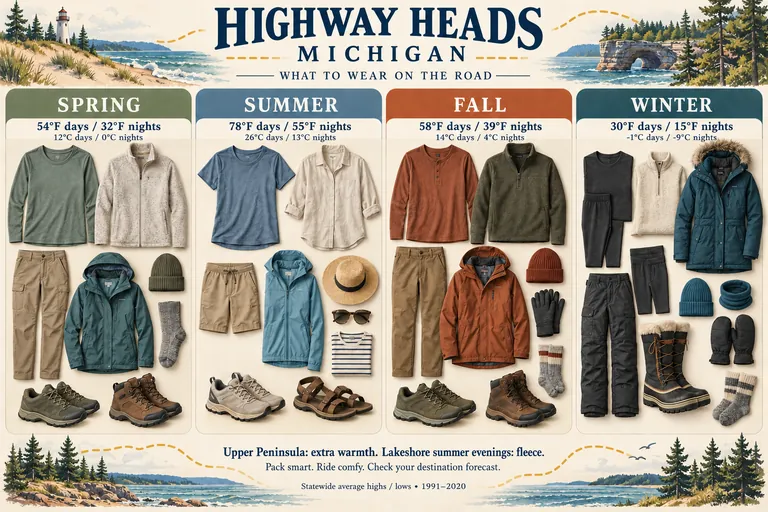
Spring 54°/32°F (12°/0°C)
Spring can be chilly, especially near the Great Lakes and in the Upper Peninsula.
- Wear
- Start with a long-sleeve tee, stretch pants, and a fleece or sweater. Add a rain shell when the wind or showers pick up.
- Shoes
- Water-resistant walking shoes with grip; boots for muddy stops.
- Pack
- fleece or sweater
- rain shell
- light beanie
- spare dry socks
Summer 78°/55°F (26°/13°C)
Summer is warm inland, with cooler lakeshore evenings.
- Wear
- Choose a loose, breathable tee or shirt with quick-drying shorts, lightweight pants, or an airy dress. Carry a thin layer for chilly indoor stops.
- Shoes
- Breathable walking sneakers; secure sandals for casual paved stops.
- Pack
- sun hat
- sunglasses
- light indoor layer
- light rain shell
- spare tee
Fall 58°/39°F (14°/4°C)
Fall brings cool-to-cold conditions, particularly in the north.
- Wear
- Build around a long-sleeve tee, comfortable pants, and a sweater or fleece. Add a wind-resistant jacket for breezy overlooks.
- Shoes
- Walking shoes with grip; water-resistant boots for wet or muddy routes.
- Pack
- sweater or fleece
- wind and rain shell
- beanie
- light gloves
- spare socks
Winter 30°/15°F (-1°/-9°C)
Winter is cold, with snowy conditions important on many routes.
- Wear
- Use thermal top and bottoms, an insulating fleece or sweater, and a wind-resistant insulated parka. Add insulated pants for extended outdoor stops.
- Shoes
- Waterproof insulated winter boots with wool or synthetic socks.
- Pack
- thermal base layers
- insulated parka
- insulated pants
- beanie
- mittens
- neck gaiter
- dry spare socks
Adjust for your route. The Upper Peninsula needs warmer layers than southern Michigan. Lakeshore summer visits still warrant a fleece or wind shell.
Climate background: NOAA State Climate Summary
Minnesota
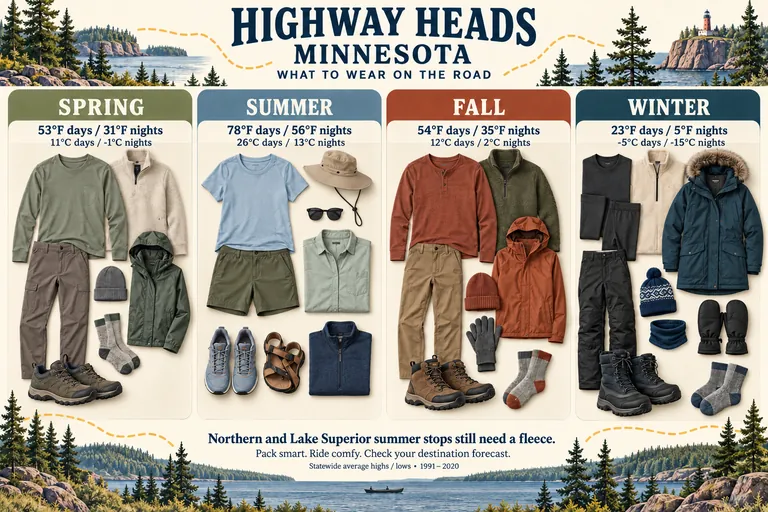
Spring 53°/31°F (11°/-1°C)
Spring has warming spells, chilly weather, and possible lingering snow.
- Wear
- Start with a long-sleeve tee, stretch pants, and a fleece or sweater. Add a rain shell when the wind or showers pick up.
- Shoes
- Water-resistant walking shoes with grip; boots for muddy stops.
- Pack
- fleece or sweater
- rain shell
- light beanie
- spare dry socks
Summer 78°/56°F (26°/13°C)
Summer ranges from warm or hot southern days to cooler northern stops.
- Wear
- Choose a loose, breathable tee or shirt with quick-drying shorts, lightweight pants, or an airy dress. Carry a thin layer for chilly indoor stops.
- Shoes
- Breathable walking sneakers; secure sandals for casual paved stops.
- Pack
- sun hat
- sunglasses
- light indoor layer
- light rain shell
- spare tee
Fall 54°/35°F (12°/2°C)
Fall cools quickly, with cold mornings common later in the season.
- Wear
- Build around a long-sleeve tee, comfortable pants, and a sweater or fleece. Add a wind-resistant jacket for breezy overlooks.
- Shoes
- Walking shoes with grip; water-resistant boots for wet or muddy routes.
- Pack
- sweater or fleece
- wind and rain shell
- beanie
- light gloves
- spare socks
Winter 23°/5°F (-5°/-15°C)
Winter is cold to frigid, particularly in the north.
- Wear
- Use thermal top and bottoms, an insulating fleece or sweater, and a wind-resistant insulated parka. Add insulated pants for extended outdoor stops.
- Shoes
- Waterproof insulated winter boots with wool or synthetic socks.
- Pack
- thermal base layers
- insulated parka
- insulated pants
- beanie
- mittens
- neck gaiter
- dry spare socks
Adjust for your route. Lake Superior and northern routes need extra warmth even in summer. Pack a fleece alongside hot-weather outfits.
Climate background: NOAA State Climate Summary
Mississippi
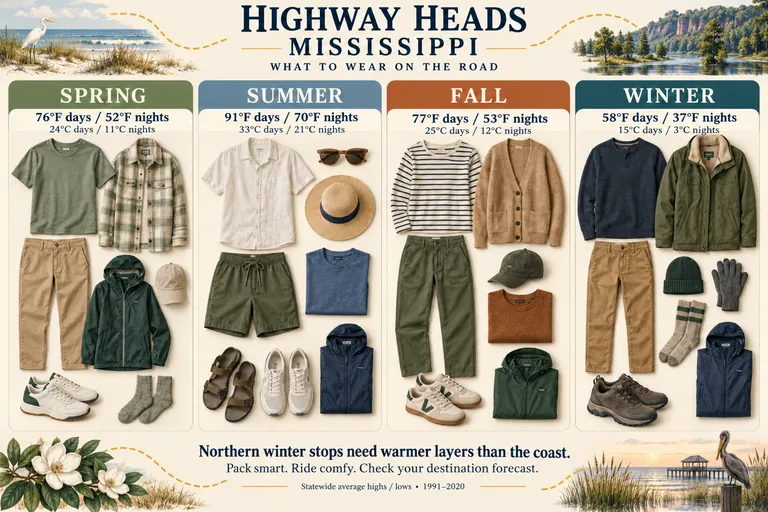
Spring 76°/52°F (24°/11°C)
Spring is warm with rain and occasional cool spells.
- Wear
- Pair a breathable tee or relaxed shirt with lightweight chinos, joggers, or an easy midi skirt. Add an open overshirt for cool stops.
- Shoes
- Broken-in walking sneakers; water-resistant shoes when rain is forecast.
- Pack
- light cardigan or overshirt
- packable rain jacket
- sun hat
- spare socks
Summer 91°/70°F (33°/21°C)
Summer is hot and humid, with rain possible.
- Wear
- Choose a loose, breathable tee or shirt with quick-drying shorts, lightweight pants, or an airy dress. Carry a thin layer for chilly indoor stops.
- Shoes
- Breathable walking sneakers; secure sandals for casual paved stops.
- Pack
- sun hat
- sunglasses
- light indoor layer
- light rain shell
- spare tee
Fall 77°/53°F (25°/12°C)
Fall stays warm early before cooler nights become more common.
- Wear
- Pair a tee with lightweight pants or a casual skirt, then add a cardigan or overshirt as evenings cool. Swap to a sweater later in the season.
- Shoes
- Comfortable walking sneakers; water-resistant shoes for rainy days.
- Pack
- cardigan or overshirt
- light rain shell
- sun hat
- warmer late-season layer
Winter 58°/37°F (15°/3°C)
Winter is generally mild, but freezing weather can occur.
- Wear
- Wear a tee or long-sleeve top with pants and a sweater. Add a medium-weight jacket on colder days and a rain shell for wet stops.
- Shoes
- Closed-toe walking shoes; water-resistant shoes when showers are forecast.
- Pack
- sweater
- medium-weight jacket
- rain shell
- warm socks
- light gloves for cold spells
Adjust for your route. The Gulf Coast is more temperature-moderated than inland northern areas. Bring a warmer jacket for winter northern stops.
Climate background: NOAA State Climate Summary
Missouri
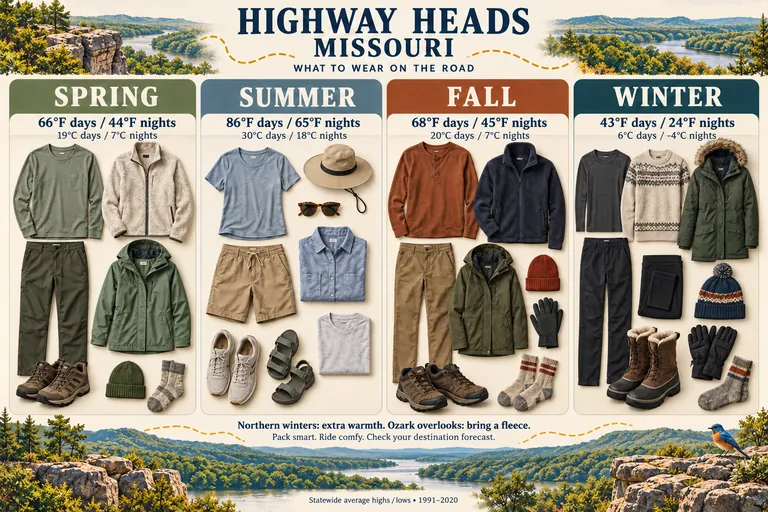
Spring 66°/44°F (19°/7°C)
Spring brings changeable temperatures, rain, and cool mornings.
- Wear
- Start with a long-sleeve tee, stretch pants, and a fleece or sweater. Add a rain shell when the wind or showers pick up.
- Shoes
- Water-resistant walking shoes with grip; boots for muddy stops.
- Pack
- fleece or sweater
- rain shell
- light beanie
- spare dry socks
Summer 86°/65°F (30°/18°C)
Summer is hot and often humid.
- Wear
- Choose a loose, breathable tee or shirt with quick-drying shorts, lightweight pants, or an airy dress. Carry a thin layer for chilly indoor stops.
- Shoes
- Breathable walking sneakers; secure sandals for casual paved stops.
- Pack
- sun hat
- sunglasses
- light indoor layer
- light rain shell
- spare tee
Fall 68°/45°F (20°/7°C)
Fall shifts from warm days to cold mornings and evenings.
- Wear
- Build around a long-sleeve tee, comfortable pants, and a sweater or fleece. Add a wind-resistant jacket for breezy overlooks.
- Shoes
- Walking shoes with grip; water-resistant boots for wet or muddy routes.
- Pack
- sweater or fleece
- wind and rain shell
- beanie
- light gloves
- spare socks
Winter 43°/24°F (6°/-4°C)
Winter can be cold, with snow, ice, and cold fronts.
- Wear
- Layer a moisture-wicking long-sleeve top under a sweater or fleece and an insulated coat. Wear long pants; add thermal bottoms when the forecast calls for them.
- Shoes
- Waterproof insulated boots for snowy stops, with warm wool or synthetic socks.
- Pack
- thermal base layers
- insulated coat
- beanie
- gloves or mittens
- warm spare socks
Adjust for your route. Northern routes generally need more winter warmth than southern routes; carry a fleece for Ozark overlooks and shaded stops.
Climate background: NOAA State Climate Summary
Montana
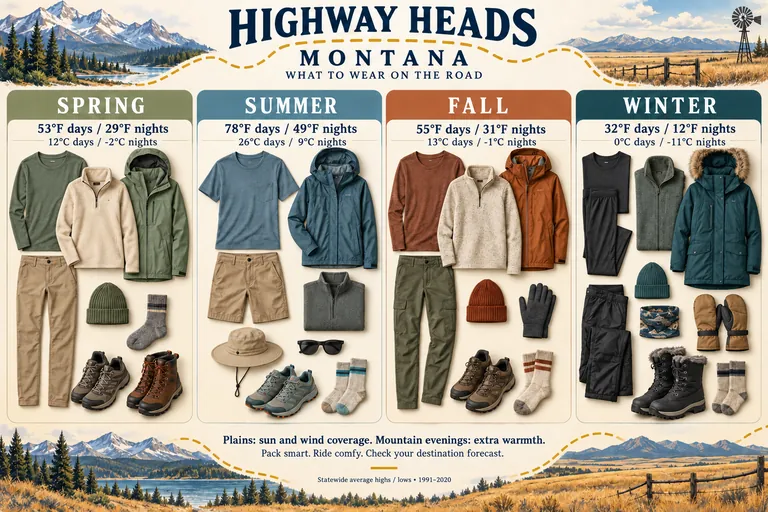
Spring 53°/29°F (12°/-2°C)
Spring can bring mild spells, cold wind, and lingering mountain snow.
- Wear
- Start with a long-sleeve tee, stretch pants, and a fleece or sweater. Add a rain shell when the wind or showers pick up.
- Shoes
- Water-resistant walking shoes with grip; boots for muddy stops.
- Pack
- fleece or sweater
- rain shell
- light beanie
- spare dry socks
Summer 78°/49°F (26°/9°C)
Summer ranges from hot plains afternoons to cool mountain evenings.
- Wear
- Wear a tee with lightweight pants or shorts, then carry a fleece and wind-resistant shell. Keep the warm layer handy even on sunny days.
- Shoes
- Walking sneakers for town; trail shoes for rougher stops.
- Pack
- fleece
- wind and rain shell
- sun hat
- sunglasses
- spare socks
Fall 55°/31°F (13°/-1°C)
Fall brings cold mornings and possible early mountain snow.
- Wear
- Build around a long-sleeve tee, comfortable pants, and a sweater or fleece. Add a wind-resistant jacket for breezy overlooks.
- Shoes
- Walking shoes with grip; water-resistant boots for wet or muddy routes.
- Pack
- sweater or fleece
- wind and rain shell
- beanie
- light gloves
- spare socks
Winter 32°/12°F (0°/-11°C)
Winter is cold, with especially harsh conditions on exposed northern and eastern routes.
- Wear
- Use thermal top and bottoms, an insulating fleece or sweater, and a wind-resistant insulated parka. Add insulated pants for extended outdoor stops.
- Shoes
- Waterproof insulated winter boots with wool or synthetic socks.
- Pack
- thermal base layers
- insulated parka
- insulated pants
- beanie
- mittens
- neck gaiter
- dry spare socks
Adjust for your route. Pack lighter clothes for warm plains days and heavier layers for western mountains. A wind-resistant outer layer matters on open routes.
Climate background: NOAA State Climate Summary
Nebraska
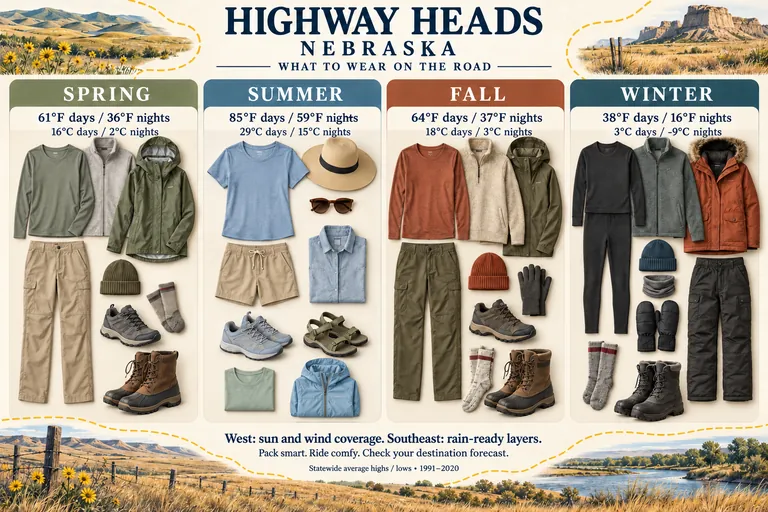
Spring 61°/36°F (16°/2°C)
Spring brings changeable temperatures, rain, and windy stops.
- Wear
- Start with a long-sleeve tee, stretch pants, and a fleece or sweater. Add a rain shell when the wind or showers pick up.
- Shoes
- Water-resistant walking shoes with grip; boots for muddy stops.
- Pack
- fleece or sweater
- rain shell
- light beanie
- spare dry socks
Summer 85°/59°F (29°/15°C)
Summer is hot, with greater humidity generally toward the east.
- Wear
- Choose a loose, breathable tee or shirt with quick-drying shorts, lightweight pants, or an airy dress. Carry a thin layer for chilly indoor stops.
- Shoes
- Breathable walking sneakers; secure sandals for casual paved stops.
- Pack
- sun hat
- sunglasses
- light indoor layer
- light rain shell
- spare tee
Fall 64°/37°F (18°/3°C)
Fall brings cooling days and cold overnight temperatures.
- Wear
- Build around a long-sleeve tee, comfortable pants, and a sweater or fleece. Add a wind-resistant jacket for breezy overlooks.
- Shoes
- Walking shoes with grip; water-resistant boots for wet or muddy routes.
- Pack
- sweater or fleece
- wind and rain shell
- beanie
- light gloves
- spare socks
Winter 38°/16°F (3°/-9°C)
Winter can be very cold, with wind and snow.
- Wear
- Use thermal top and bottoms, an insulating fleece or sweater, and a wind-resistant insulated parka. Add insulated pants for extended outdoor stops.
- Shoes
- Waterproof insulated winter boots with wool or synthetic socks.
- Pack
- thermal base layers
- insulated parka
- insulated pants
- beanie
- mittens
- neck gaiter
- dry spare socks
Adjust for your route. The Panhandle is drier than the southeast. Pack sun and wind coverage in the west and rainwear for wetter eastern stops.
Climate background: NOAA State Climate Summary
Nevada
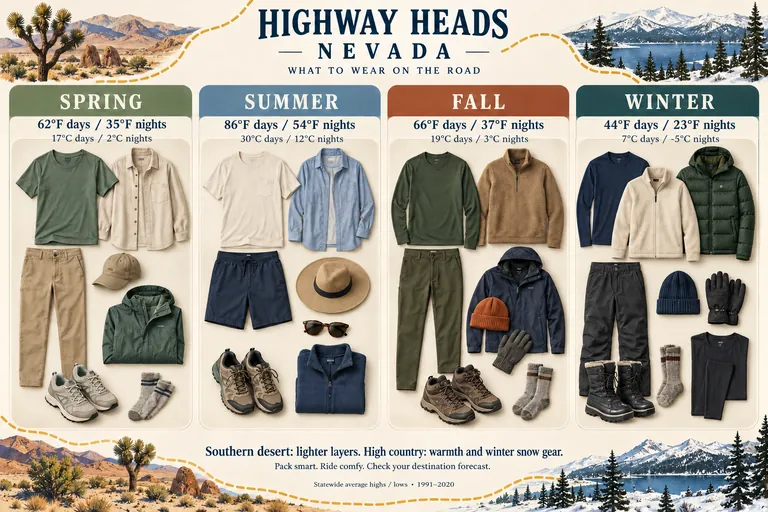
Spring 62°/35°F (17°/2°C)
Spring warms southern deserts while northern and mountain areas remain cooler.
- Wear
- Pair a breathable tee or relaxed shirt with lightweight chinos, joggers, or an easy midi skirt. Add an open overshirt for cool stops.
- Shoes
- Broken-in walking sneakers; water-resistant shoes when rain is forecast.
- Pack
- light cardigan or overshirt
- packable rain jacket
- sun hat
- spare socks
Summer 86°/54°F (30°/12°C)
Summer brings intense low-desert heat and cooler high-elevation nights.
- Wear
- Try a loose tee or breathable sun shirt with lightweight shorts or airy pants. Add a light overshirt after sunset.
- Shoes
- Breathable closed-toe walking shoes for dusty stops; hiking shoes for uneven trails.
- Pack
- sun hat
- sunglasses
- light sun shirt
- light evening layer
- spare socks
Fall 66°/37°F (19°/3°C)
Fall ranges from warm southern afternoons to cold high-country mornings.
- Wear
- Build around a long-sleeve tee, comfortable pants, and a sweater or fleece. Add a wind-resistant jacket for breezy overlooks.
- Shoes
- Walking shoes with grip; water-resistant boots for wet or muddy routes.
- Pack
- sweater or fleece
- wind and rain shell
- beanie
- light gloves
- spare socks
Winter 44°/23°F (7°/-5°C)
Winter can be mild by day in southern deserts and snowy in the mountains.
- Wear
- Layer a moisture-wicking long-sleeve top under a sweater or fleece and an insulated coat. Wear long pants; add thermal bottoms when the forecast calls for them.
- Shoes
- Waterproof insulated boots for snowy stops, with warm wool or synthetic socks.
- Pack
- thermal base layers
- insulated coat
- beanie
- gloves or mittens
- warm spare socks
Adjust for your route. Las Vegas summer outfits need a fleece added for high country. Reno and Tahoe-area winter stops need insulated layers and snow boots.
Climate background: NOAA State Climate Summary
New Hampshire
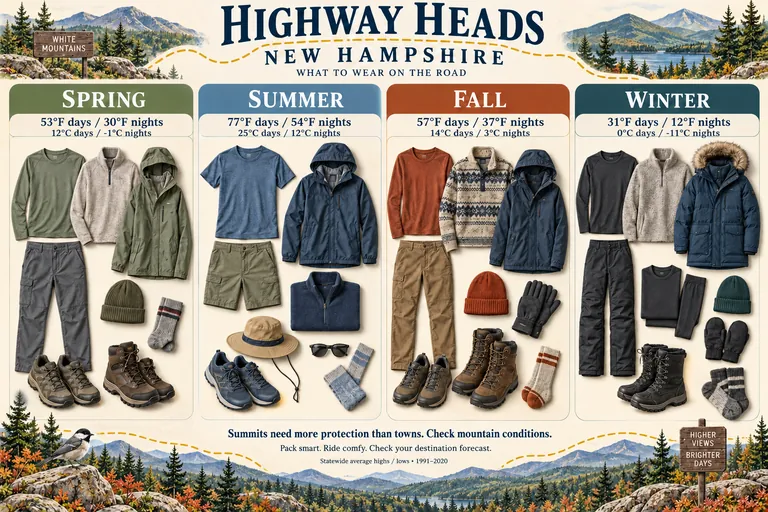
Spring 53°/30°F (12°/-1°C)
Spring brings cool days, wet stops, and lingering mountain snow.
- Wear
- Start with a long-sleeve tee, stretch pants, and a fleece or sweater. Add a rain shell when the wind or showers pick up.
- Shoes
- Water-resistant walking shoes with grip; boots for muddy stops.
- Pack
- fleece or sweater
- rain shell
- light beanie
- spare dry socks
Summer 77°/54°F (25°/12°C)
Summer is warm in lower areas and cooler in the mountains.
- Wear
- Wear a tee with lightweight pants or shorts, then carry a fleece and wind-resistant shell. Keep the warm layer handy even on sunny days.
- Shoes
- Walking sneakers for town; trail shoes for rougher stops.
- Pack
- fleece
- wind and rain shell
- sun hat
- sunglasses
- spare socks
Fall 57°/37°F (14°/3°C)
Fall brings chilly mornings and cold conditions at elevation.
- Wear
- Build around a long-sleeve tee, comfortable pants, and a sweater or fleece. Add a wind-resistant jacket for breezy overlooks.
- Shoes
- Walking shoes with grip; water-resistant boots for wet or muddy routes.
- Pack
- sweater or fleece
- wind and rain shell
- beanie
- light gloves
- spare socks
Winter 31°/12°F (0°/-11°C)
Winter is cold and snowy, especially in northern and elevated areas.
- Wear
- Layer a moisture-wicking long-sleeve top under a sweater or fleece and an insulated coat. Wear long pants; add thermal bottoms when the forecast calls for them.
- Shoes
- Waterproof insulated boots for snowy stops, with warm wool or synthetic socks.
- Pack
- thermal base layers
- insulated coat
- beanie
- gloves or mittens
- warm spare socks
Adjust for your route. White Mountain summits need more protection than town stops in every season. Check summit conditions and carry insulation and a wind shell.
Climate background: NOAA State Climate Summary
New Jersey
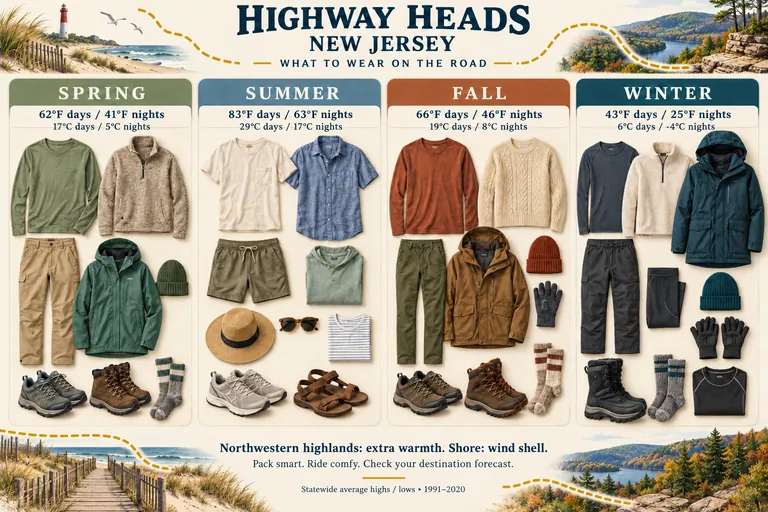
Spring 62°/41°F (17°/5°C)
Spring is changeable, with cool starts and rainy spells.
- Wear
- Start with a long-sleeve tee, stretch pants, and a fleece or sweater. Add a rain shell when the wind or showers pick up.
- Shoes
- Water-resistant walking shoes with grip; boots for muddy stops.
- Pack
- fleece or sweater
- rain shell
- light beanie
- spare dry socks
Summer 83°/63°F (29°/17°C)
Summer is warm and humid, with breezes along the shore.
- Wear
- Choose a loose, breathable tee or shirt with quick-drying shorts, lightweight pants, or an airy dress. Carry a thin layer for chilly indoor stops.
- Shoes
- Breathable walking sneakers; secure sandals for casual paved stops.
- Pack
- sun hat
- sunglasses
- light indoor layer
- light rain shell
- spare tee
Fall 66°/46°F (19°/8°C)
Fall brings cooling days and chilly evenings.
- Wear
- Build around a long-sleeve tee, comfortable pants, and a sweater or fleece. Add a wind-resistant jacket for breezy overlooks.
- Shoes
- Walking shoes with grip; water-resistant boots for wet or muddy routes.
- Pack
- sweater or fleece
- wind and rain shell
- beanie
- light gloves
- spare socks
Winter 43°/25°F (6°/-4°C)
Winter is cold, with occasional snow and coastal storms.
- Wear
- Layer a moisture-wicking long-sleeve top under a sweater or fleece and an insulated coat. Wear long pants; add thermal bottoms when the forecast calls for them.
- Shoes
- Waterproof insulated boots for snowy stops, with warm wool or synthetic socks.
- Pack
- thermal base layers
- insulated coat
- beanie
- gloves or mittens
- warm spare socks
Adjust for your route. Northwestern highlands are colder than the southeast. Add a wind-resistant shell for shoreline visits.
Climate background: NOAA State Climate Summary
New Mexico
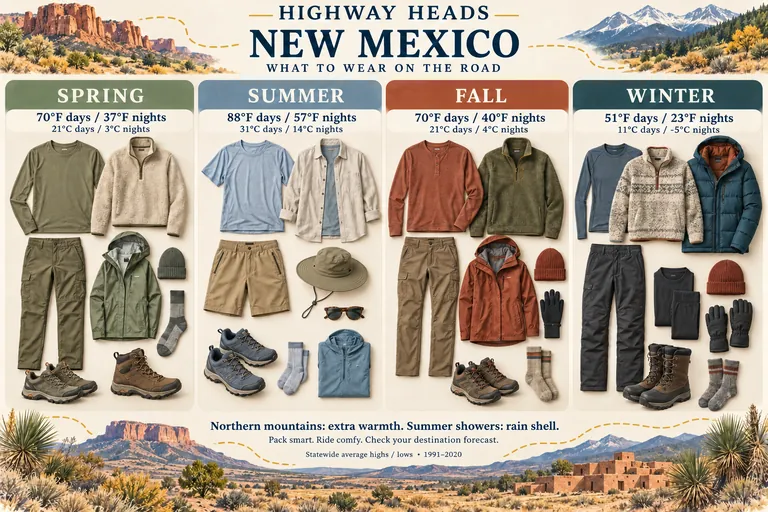
Spring 70°/37°F (21°/3°C)
Spring can be sunny and mild, with chilly mornings at elevation.
- Wear
- Start with a long-sleeve tee, stretch pants, and a fleece or sweater. Add a rain shell when the wind or showers pick up.
- Shoes
- Water-resistant walking shoes with grip; boots for muddy stops.
- Pack
- fleece or sweater
- rain shell
- light beanie
- spare dry socks
Summer 88°/57°F (31°/14°C)
Summer brings hot lower-elevation days and seasonal monsoon showers.
- Wear
- Try a loose tee or breathable sun shirt with lightweight shorts or airy pants. Add a light overshirt after sunset.
- Shoes
- Breathable closed-toe walking shoes for dusty stops; hiking shoes for uneven trails.
- Pack
- sun hat
- sunglasses
- light sun shirt
- light evening layer
- spare socks
Fall 70°/40°F (21°/4°C)
Fall has warm afternoons in some areas and cold high-country nights.
- Wear
- Build around a long-sleeve tee, comfortable pants, and a sweater or fleece. Add a wind-resistant jacket for breezy overlooks.
- Shoes
- Walking shoes with grip; water-resistant boots for wet or muddy routes.
- Pack
- sweater or fleece
- wind and rain shell
- beanie
- light gloves
- spare socks
Winter 51°/23°F (11°/-5°C)
Winter is cold in northern and higher areas, with milder southern lowlands.
- Wear
- Layer a moisture-wicking long-sleeve top under a sweater or fleece and an insulated coat. Wear long pants; add thermal bottoms when the forecast calls for them.
- Shoes
- Waterproof insulated boots for snowy stops, with warm wool or synthetic socks.
- Pack
- thermal base layers
- insulated coat
- beanie
- gloves or mittens
- warm spare socks
Adjust for your route. Santa Fe and northern mountain routes need warmer layers than southern lowlands. Pack a rain shell for summer showers and snow boots for snowy winter stops.
Climate background: NOAA State Climate Summary
New York
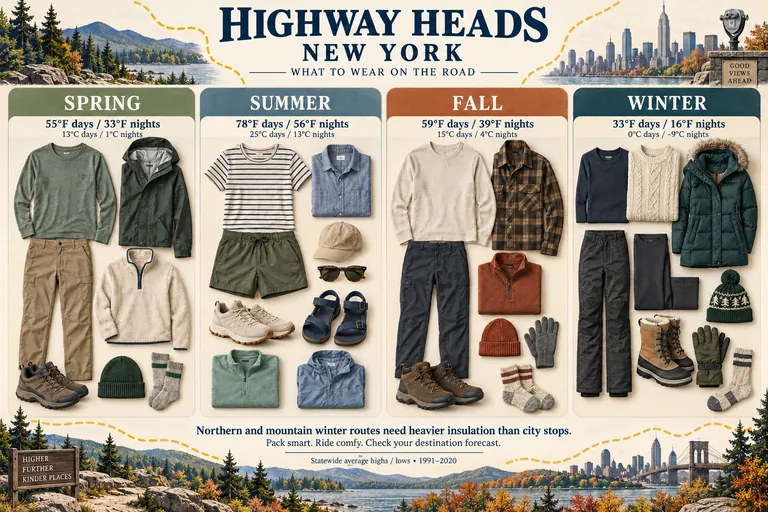
Spring 55°/33°F (13°/1°C)
Spring warms unevenly, with chilly northern and mountain stops.
- Wear
- Start with a long-sleeve tee, stretch pants, and a fleece or sweater. Add a rain shell when the wind or showers pick up.
- Shoes
- Water-resistant walking shoes with grip; boots for muddy stops.
- Pack
- fleece or sweater
- rain shell
- light beanie
- spare dry socks
Summer 78°/56°F (25°/13°C)
Summer is warm and often humid, with cooler higher-elevation evenings.
- Wear
- Choose a loose, breathable tee or shirt with quick-drying shorts, lightweight pants, or an airy dress. Carry a thin layer for chilly indoor stops.
- Shoes
- Breathable walking sneakers; secure sandals for casual paved stops.
- Pack
- sun hat
- sunglasses
- light indoor layer
- light rain shell
- spare tee
Fall 59°/39°F (15°/4°C)
Fall brings cooling temperatures and cold late-season mornings.
- Wear
- Build around a long-sleeve tee, comfortable pants, and a sweater or fleece. Add a wind-resistant jacket for breezy overlooks.
- Shoes
- Walking shoes with grip; water-resistant boots for wet or muddy routes.
- Pack
- sweater or fleece
- wind and rain shell
- beanie
- light gloves
- spare socks
Winter 33°/16°F (0°/-9°C)
Winter is cold, with snow and ice important on many upstate routes.
- Wear
- Layer a moisture-wicking long-sleeve top under a sweater or fleece and an insulated coat. Wear long pants; add thermal bottoms when the forecast calls for them.
- Shoes
- Waterproof insulated boots for snowy stops, with warm wool or synthetic socks.
- Pack
- thermal base layers
- insulated coat
- beanie
- gloves or mittens
- warm spare socks
Adjust for your route. Adirondack and northern routes need heavier winter insulation than New York City. Carry a fleece for summer mountain evenings.
Climate background: NOAA State Climate Summary
North Carolina
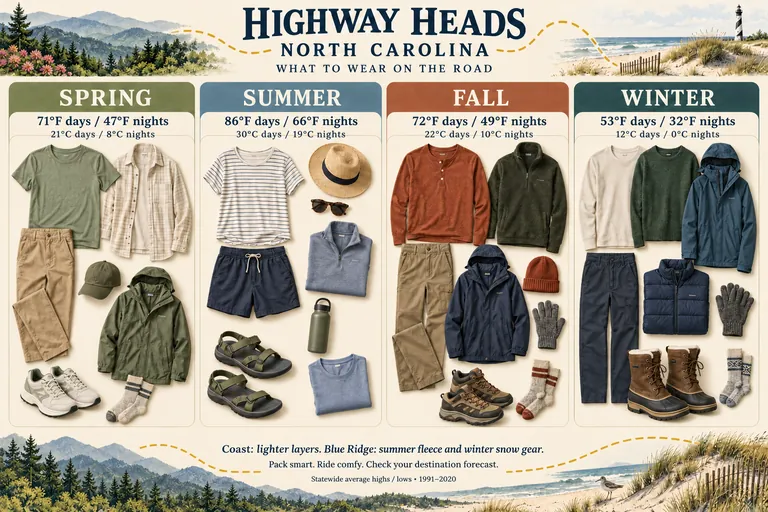
Spring 71°/47°F (21°/8°C)
Spring warms coastal and lowland areas while mountain mornings stay cool.
- Wear
- Pair a breathable tee or relaxed shirt with lightweight chinos, joggers, or an easy midi skirt. Add an open overshirt for cool stops.
- Shoes
- Broken-in walking sneakers; water-resistant shoes when rain is forecast.
- Pack
- light cardigan or overshirt
- packable rain jacket
- sun hat
- spare socks
Summer 86°/66°F (30°/19°C)
Summer is hot and humid in lower areas and cooler at elevation.
- Wear
- Choose a loose, breathable tee or shirt with quick-drying shorts, lightweight pants, or an airy dress. Carry a thin layer for chilly indoor stops.
- Shoes
- Breathable walking sneakers; secure sandals for casual paved stops.
- Pack
- sun hat
- sunglasses
- light indoor layer
- light rain shell
- spare tee
Fall 72°/49°F (22°/10°C)
Fall brings warm early days and increasingly chilly mountain conditions.
- Wear
- Build around a long-sleeve tee, comfortable pants, and a sweater or fleece. Add a wind-resistant jacket for breezy overlooks.
- Shoes
- Walking shoes with grip; water-resistant boots for wet or muddy routes.
- Pack
- sweater or fleece
- wind and rain shell
- beanie
- light gloves
- spare socks
Winter 53°/32°F (12°/0°C)
Winter is milder near the coast and colder, sometimes snowy, in the mountains.
- Wear
- Wear a tee or long-sleeve top with pants and a sweater. Add a medium-weight jacket on colder days and a rain shell for wet stops.
- Shoes
- Closed-toe walking shoes; water-resistant shoes when showers are forecast.
- Pack
- sweater
- medium-weight jacket
- rain shell
- warm socks
- light gloves for cold spells
Adjust for your route. Add a fleece for Blue Ridge summer stops; pack thermals, an insulated coat, and snow-ready boots for winter mountain routes.
Climate background: NOAA State Climate Summary
North Dakota
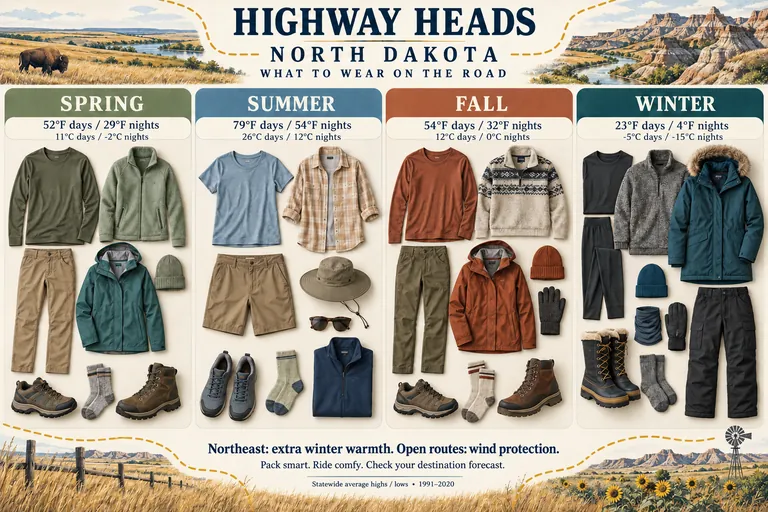
Spring 52°/29°F (11°/-2°C)
Spring can remain cold early, with warming afternoons and large temperature swings.
- Wear
- Start with a long-sleeve tee, stretch pants, and a fleece or sweater. Add a rain shell when the wind or showers pick up.
- Shoes
- Water-resistant walking shoes with grip; boots for muddy stops.
- Pack
- fleece or sweater
- rain shell
- light beanie
- spare dry socks
Summer 79°/54°F (26°/12°C)
Summer brings warm to hot afternoons, cooler nights, and possible storms.
- Wear
- Try a loose tee or breathable sun shirt with lightweight shorts or airy pants. Add a light overshirt after sunset.
- Shoes
- Breathable closed-toe walking shoes for dusty stops; hiking shoes for uneven trails.
- Pack
- sun hat
- sunglasses
- light sun shirt
- light evening layer
- spare socks
Fall 54°/32°F (12°/0°C)
Fall cools quickly, with wind and increasingly cold mornings.
- Wear
- Build around a long-sleeve tee, comfortable pants, and a sweater or fleece. Add a wind-resistant jacket for breezy overlooks.
- Shoes
- Walking shoes with grip; water-resistant boots for wet or muddy routes.
- Pack
- sweater or fleece
- wind and rain shell
- beanie
- light gloves
- spare socks
Winter 23°/4°F (-5°/-15°C)
Winter can be bitterly cold, with exposed wind and snow.
- Wear
- Use thermal top and bottoms, an insulating fleece or sweater, and a wind-resistant insulated parka. Add insulated pants for extended outdoor stops.
- Shoes
- Waterproof insulated winter boots with wool or synthetic socks.
- Pack
- thermal base layers
- insulated parka
- insulated pants
- beanie
- mittens
- neck gaiter
- dry spare socks
Adjust for your route. The northeast is generally colder than the southwest. Carry rainwear for wetter eastern routes and wind protection statewide.
Climate background: NOAA State Climate Summary
Ohio
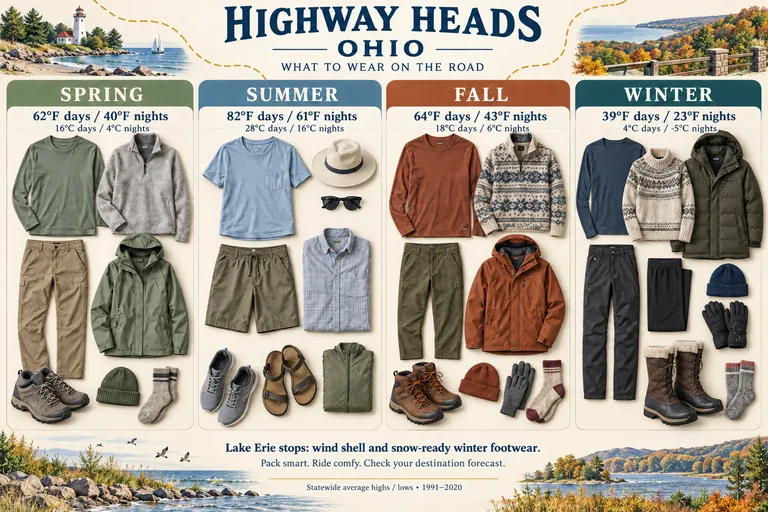
Spring 62°/40°F (16°/4°C)
Spring has changing temperatures, rain, and chilly starts.
- Wear
- Start with a long-sleeve tee, stretch pants, and a fleece or sweater. Add a rain shell when the wind or showers pick up.
- Shoes
- Water-resistant walking shoes with grip; boots for muddy stops.
- Pack
- fleece or sweater
- rain shell
- light beanie
- spare dry socks
Summer 82°/61°F (28°/16°C)
Summer is warm and often humid.
- Wear
- Choose a loose, breathable tee or shirt with quick-drying shorts, lightweight pants, or an airy dress. Carry a thin layer for chilly indoor stops.
- Shoes
- Breathable walking sneakers; secure sandals for casual paved stops.
- Pack
- sun hat
- sunglasses
- light indoor layer
- light rain shell
- spare tee
Fall 64°/43°F (18°/6°C)
Fall brings cooler days and cold late-season mornings.
- Wear
- Build around a long-sleeve tee, comfortable pants, and a sweater or fleece. Add a wind-resistant jacket for breezy overlooks.
- Shoes
- Walking shoes with grip; water-resistant boots for wet or muddy routes.
- Pack
- sweater or fleece
- wind and rain shell
- beanie
- light gloves
- spare socks
Winter 39°/23°F (4°/-5°C)
Winter is cold, with snow and ice possible.
- Wear
- Layer a moisture-wicking long-sleeve top under a sweater or fleece and an insulated coat. Wear long pants; add thermal bottoms when the forecast calls for them.
- Shoes
- Waterproof insulated boots for snowy stops, with warm wool or synthetic socks.
- Pack
- thermal base layers
- insulated coat
- beanie
- gloves or mittens
- warm spare socks
Adjust for your route. Lake Erie moderates nearby temperatures but can bring snowy conditions. Keep warm boots and a wind-resistant layer ready for lakeshore routes.
Climate background: NOAA State Climate Summary
Oklahoma
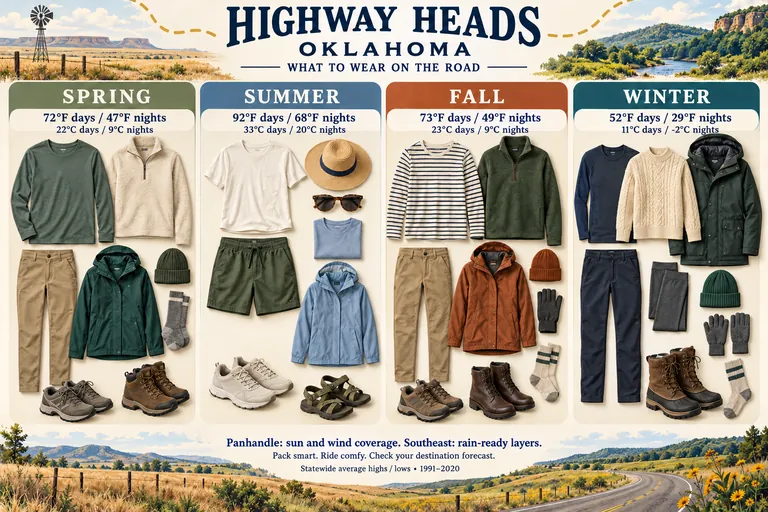
Spring 72°/47°F (22°/9°C)
Spring mixes warm days, cold fronts, and wet weather.
- Wear
- Start with a long-sleeve tee, stretch pants, and a fleece or sweater. Add a rain shell when the wind or showers pick up.
- Shoes
- Water-resistant walking shoes with grip; boots for muddy stops.
- Pack
- fleece or sweater
- rain shell
- light beanie
- spare dry socks
Summer 92°/68°F (33°/20°C)
Summer is hot, with drier conditions toward the west.
- Wear
- Choose a loose, breathable tee or shirt with quick-drying shorts, lightweight pants, or an airy dress. Carry a thin layer for chilly indoor stops.
- Shoes
- Breathable walking sneakers; secure sandals for casual paved stops.
- Pack
- sun hat
- sunglasses
- light indoor layer
- light rain shell
- spare tee
Fall 73°/49°F (23°/9°C)
Fall brings warm afternoons mixed with chilly mornings.
- Wear
- Build around a long-sleeve tee, comfortable pants, and a sweater or fleece. Add a wind-resistant jacket for breezy overlooks.
- Shoes
- Walking shoes with grip; water-resistant boots for wet or muddy routes.
- Pack
- sweater or fleece
- wind and rain shell
- beanie
- light gloves
- spare socks
Winter 52°/29°F (11°/-2°C)
Winter is cool to cold, with freezing weather and ice possible.
- Wear
- Layer a moisture-wicking long-sleeve top under a sweater or fleece and an insulated coat. Wear long pants; add thermal bottoms when the forecast calls for them.
- Shoes
- Waterproof insulated boots for snowy stops, with warm wool or synthetic socks.
- Pack
- thermal base layers
- insulated coat
- beanie
- gloves or mittens
- warm spare socks
Adjust for your route. The Panhandle needs sun and wind coverage; southeastern routes generally need more rain-ready packing. Adjust winter insulation to the local forecast.
Climate background: NOAA State Climate Summary
Oregon
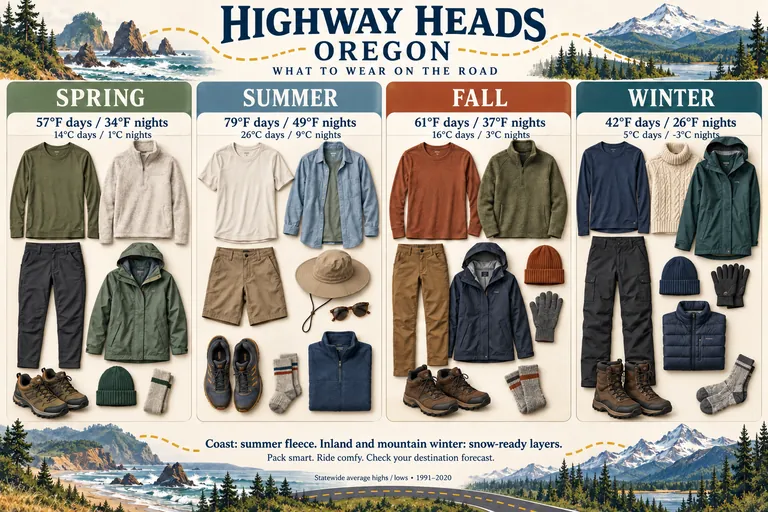
Spring 57°/34°F (14°/1°C)
Spring is often wet west of the Cascades and cooler at elevation.
- Wear
- Start with a long-sleeve tee, stretch pants, and a fleece or sweater. Add a rain shell when the wind or showers pick up.
- Shoes
- Water-resistant walking shoes with grip; boots for muddy stops.
- Pack
- fleece or sweater
- rain shell
- light beanie
- spare dry socks
Summer 79°/49°F (26°/9°C)
Summer is generally drier, with hot inland days and cool coastal stops.
- Wear
- Try a loose tee or breathable sun shirt with lightweight shorts or airy pants. Add a light overshirt after sunset.
- Shoes
- Breathable closed-toe walking shoes for dusty stops; hiking shoes for uneven trails.
- Pack
- sun hat
- sunglasses
- light sun shirt
- light evening layer
- spare socks
Fall 61°/37°F (16°/3°C)
Fall brings cooling nights and a return of wetter western weather.
- Wear
- Build around a long-sleeve tee, comfortable pants, and a sweater or fleece. Add a wind-resistant jacket for breezy overlooks.
- Shoes
- Walking shoes with grip; water-resistant boots for wet or muddy routes.
- Pack
- sweater or fleece
- wind and rain shell
- beanie
- light gloves
- spare socks
Winter 42°/26°F (5°/-3°C)
Winter is often wet in western lowlands and cold or snowy inland and uphill.
- Wear
- Wear a tee or long-sleeve top with pants and a sweater. Add a medium-weight jacket on colder days and a rain shell for wet stops.
- Shoes
- Closed-toe walking shoes; water-resistant shoes when showers are forecast.
- Pack
- sweater
- medium-weight jacket
- rain shell
- warm socks
- light gloves for cold spells
Adjust for your route. Carry fleece for the coast in summer. Eastern Oregon and Cascade winter routes need insulated layers, thermals, and snow-ready boots.
Climate background: NOAA State Climate Summary
Pennsylvania
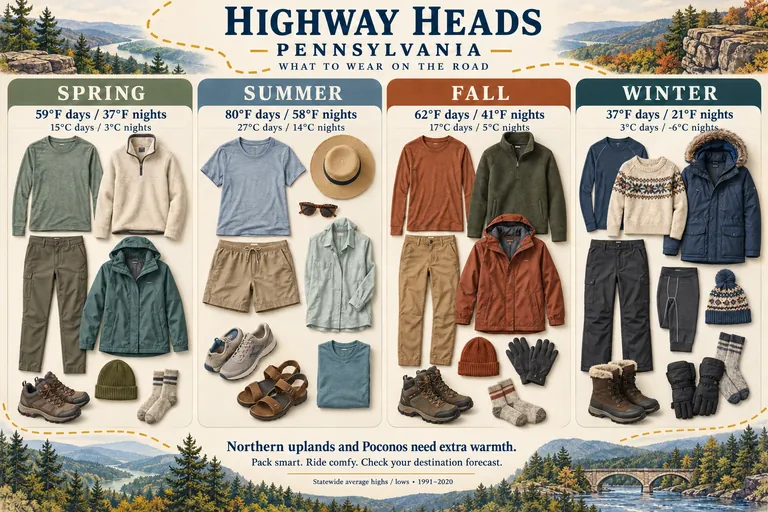
Spring 59°/37°F (15°/3°C)
Spring has changing temperatures, showers, and cooler mountain mornings.
- Wear
- Start with a long-sleeve tee, stretch pants, and a fleece or sweater. Add a rain shell when the wind or showers pick up.
- Shoes
- Water-resistant walking shoes with grip; boots for muddy stops.
- Pack
- fleece or sweater
- rain shell
- light beanie
- spare dry socks
Summer 80°/58°F (27°/14°C)
Summer is warm and often humid.
- Wear
- Choose a loose, breathable tee or shirt with quick-drying shorts, lightweight pants, or an airy dress. Carry a thin layer for chilly indoor stops.
- Shoes
- Breathable walking sneakers; secure sandals for casual paved stops.
- Pack
- sun hat
- sunglasses
- light indoor layer
- light rain shell
- spare tee
Fall 62°/41°F (17°/5°C)
Fall brings crisp days and cold late-season mornings.
- Wear
- Build around a long-sleeve tee, comfortable pants, and a sweater or fleece. Add a wind-resistant jacket for breezy overlooks.
- Shoes
- Walking shoes with grip; water-resistant boots for wet or muddy routes.
- Pack
- sweater or fleece
- wind and rain shell
- beanie
- light gloves
- spare socks
Winter 37°/21°F (3°/-6°C)
Winter is cold, with snow, ice, and wind possible.
- Wear
- Layer a moisture-wicking long-sleeve top under a sweater or fleece and an insulated coat. Wear long pants; add thermal bottoms when the forecast calls for them.
- Shoes
- Waterproof insulated boots for snowy stops, with warm wool or synthetic socks.
- Pack
- thermal base layers
- insulated coat
- beanie
- gloves or mittens
- warm spare socks
Adjust for your route. Northern uplands and the Poconos need warmer layers than southeastern city stops. Pack snow-ready footwear for winter highland routes.
Climate background: NOAA State Climate Summary
Rhode Island
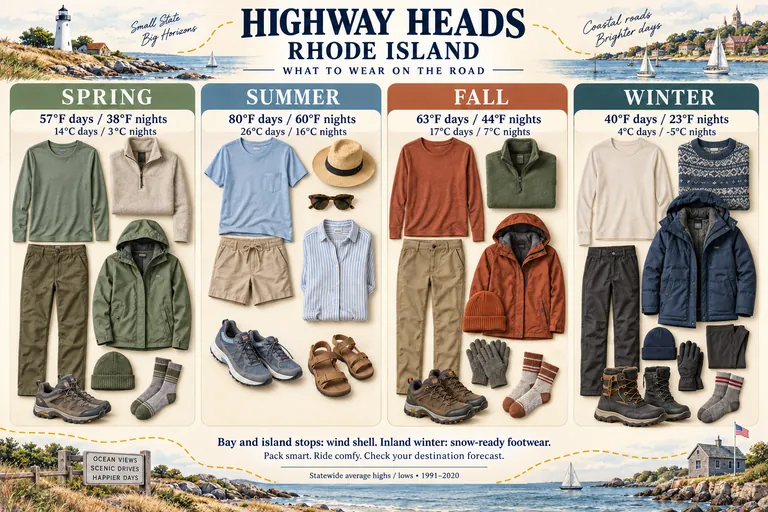
Spring 57°/38°F (14°/3°C)
Spring is cool and changeable, especially at breezy coastal stops.
- Wear
- Start with a long-sleeve tee, stretch pants, and a fleece or sweater. Add a rain shell when the wind or showers pick up.
- Shoes
- Water-resistant walking shoes with grip; boots for muddy stops.
- Pack
- fleece or sweater
- rain shell
- light beanie
- spare dry socks
Summer 80°/60°F (26°/16°C)
Summer is warm, with cooler ocean breezes.
- Wear
- Choose a loose, breathable tee or shirt with quick-drying shorts, lightweight pants, or an airy dress. Carry a thin layer for chilly indoor stops.
- Shoes
- Breathable walking sneakers; secure sandals for casual paved stops.
- Pack
- sun hat
- sunglasses
- light indoor layer
- light rain shell
- spare tee
Fall 63°/44°F (17°/7°C)
Fall brings cooling days and chilly waterfront evenings.
- Wear
- Build around a long-sleeve tee, comfortable pants, and a sweater or fleece. Add a wind-resistant jacket for breezy overlooks.
- Shoes
- Walking shoes with grip; water-resistant boots for wet or muddy routes.
- Pack
- sweater or fleece
- wind and rain shell
- beanie
- light gloves
- spare socks
Winter 40°/23°F (4°/-5°C)
Winter is cold, with coastal wind, rain, and snow possible.
- Wear
- Layer a moisture-wicking long-sleeve top under a sweater or fleece and an insulated coat. Wear long pants; add thermal bottoms when the forecast calls for them.
- Shoes
- Waterproof insulated boots for snowy stops, with warm wool or synthetic socks.
- Pack
- thermal base layers
- insulated coat
- beanie
- gloves or mittens
- warm spare socks
Adjust for your route. Carry a wind-resistant shell for Narragansett Bay and island stops. Inland western areas can need more snow-ready packing.
Climate background: NOAA State Climate Summary
South Carolina
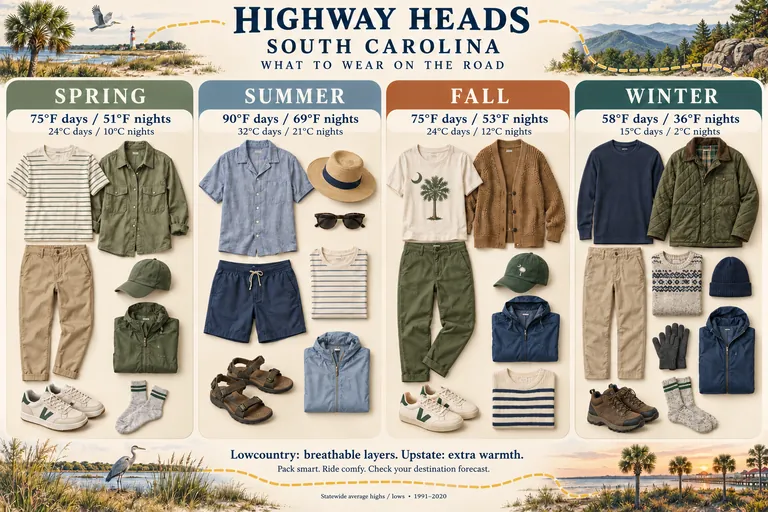
Spring 75°/51°F (24°/10°C)
Spring is generally warm, with cooler conditions in the Upstate.
- Wear
- Pair a breathable tee or relaxed shirt with lightweight chinos, joggers, or an easy midi skirt. Add an open overshirt for cool stops.
- Shoes
- Broken-in walking sneakers; water-resistant shoes when rain is forecast.
- Pack
- light cardigan or overshirt
- packable rain jacket
- sun hat
- spare socks
Summer 90°/69°F (32°/21°C)
Summer is hot and humid, particularly in lowland areas.
- Wear
- Choose a loose, breathable tee or shirt with quick-drying shorts, lightweight pants, or an airy dress. Carry a thin layer for chilly indoor stops.
- Shoes
- Breathable walking sneakers; secure sandals for casual paved stops.
- Pack
- sun hat
- sunglasses
- light indoor layer
- light rain shell
- spare tee
Fall 75°/53°F (24°/12°C)
Fall often stays warm early before cooler nights arrive.
- Wear
- Pair a tee with lightweight pants or a casual skirt, then add a cardigan or overshirt as evenings cool. Swap to a sweater later in the season.
- Shoes
- Comfortable walking sneakers; water-resistant shoes for rainy days.
- Pack
- cardigan or overshirt
- light rain shell
- sun hat
- warmer late-season layer
Winter 58°/36°F (15°/2°C)
Winter is generally mild near the coast and colder in the Upstate.
- Wear
- Wear a tee or long-sleeve top with pants and a sweater. Add a medium-weight jacket on colder days and a rain shell for wet stops.
- Shoes
- Closed-toe walking shoes; water-resistant shoes when showers are forecast.
- Pack
- sweater
- medium-weight jacket
- rain shell
- warm socks
- light gloves for cold spells
Adjust for your route. Mountain and Upstate stops need extra warmth; Lowcountry outfits need breathable fabrics and a layer for coastal wind.
Climate background: NOAA State Climate Summary
South Dakota
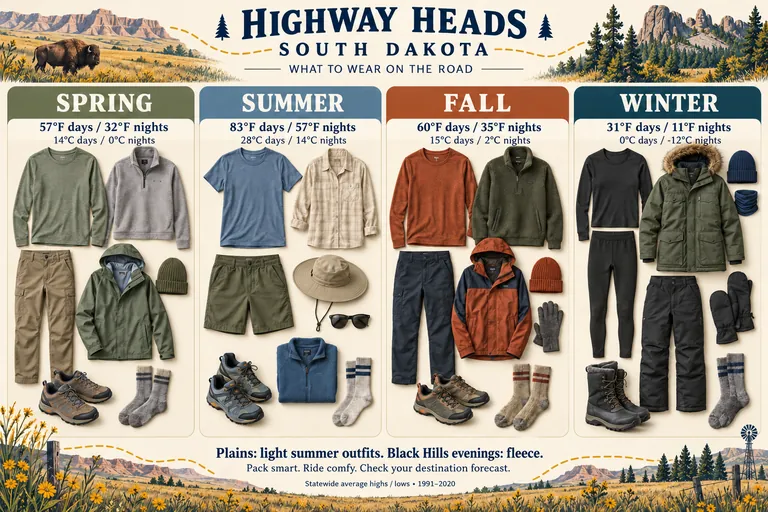
Spring 57°/32°F (14°/0°C)
Spring brings changeable temperatures, cold wind, and warming afternoons.
- Wear
- Start with a long-sleeve tee, stretch pants, and a fleece or sweater. Add a rain shell when the wind or showers pick up.
- Shoes
- Water-resistant walking shoes with grip; boots for muddy stops.
- Pack
- fleece or sweater
- rain shell
- light beanie
- spare dry socks
Summer 83°/57°F (28°/14°C)
Summer can be hot on the plains and cooler in the Black Hills.
- Wear
- Try a loose tee or breathable sun shirt with lightweight shorts or airy pants. Add a light overshirt after sunset.
- Shoes
- Breathable closed-toe walking shoes for dusty stops; hiking shoes for uneven trails.
- Pack
- sun hat
- sunglasses
- light sun shirt
- light evening layer
- spare socks
Fall 60°/35°F (15°/2°C)
Fall brings chilly mornings and colder late-season conditions.
- Wear
- Build around a long-sleeve tee, comfortable pants, and a sweater or fleece. Add a wind-resistant jacket for breezy overlooks.
- Shoes
- Walking shoes with grip; water-resistant boots for wet or muddy routes.
- Pack
- sweater or fleece
- wind and rain shell
- beanie
- light gloves
- spare socks
Winter 31°/11°F (0°/-12°C)
Winter can be very cold, with exposed wind and snow.
- Wear
- Use thermal top and bottoms, an insulating fleece or sweater, and a wind-resistant insulated parka. Add insulated pants for extended outdoor stops.
- Shoes
- Waterproof insulated winter boots with wool or synthetic socks.
- Pack
- thermal base layers
- insulated parka
- insulated pants
- beanie
- mittens
- neck gaiter
- dry spare socks
Adjust for your route. Pack a fleece for Black Hills summer evenings and breathable light outfits for hot plains days. Eastern routes may feel more humid.
Climate background: NOAA State Climate Summary
Tennessee
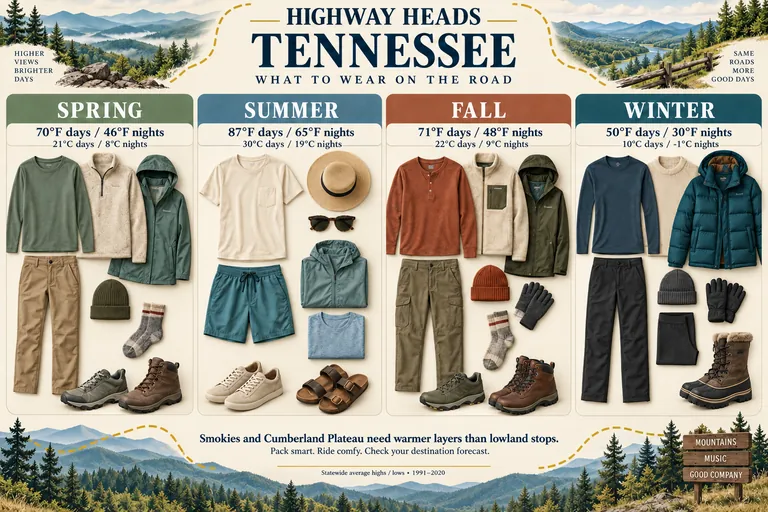
Spring 70°/46°F (21°/8°C)
Spring has warming days, rain, and cool mountain mornings.
- Wear
- Start with a long-sleeve tee, stretch pants, and a fleece or sweater. Add a rain shell when the wind or showers pick up.
- Shoes
- Water-resistant walking shoes with grip; boots for muddy stops.
- Pack
- fleece or sweater
- rain shell
- light beanie
- spare dry socks
Summer 87°/65°F (30°/19°C)
Summer is warm to hot and humid, with cooler conditions at elevation.
- Wear
- Choose a loose, breathable tee or shirt with quick-drying shorts, lightweight pants, or an airy dress. Carry a thin layer for chilly indoor stops.
- Shoes
- Breathable walking sneakers; secure sandals for casual paved stops.
- Pack
- sun hat
- sunglasses
- light indoor layer
- light rain shell
- spare tee
Fall 71°/48°F (22°/9°C)
Fall brings warm early afternoons and increasingly cold mountain stops.
- Wear
- Build around a long-sleeve tee, comfortable pants, and a sweater or fleece. Add a wind-resistant jacket for breezy overlooks.
- Shoes
- Walking shoes with grip; water-resistant boots for wet or muddy routes.
- Pack
- sweater or fleece
- wind and rain shell
- beanie
- light gloves
- spare socks
Winter 50°/30°F (10°/-1°C)
Winter is cool to cold, with freezing weather and mountain snow possible.
- Wear
- Layer a moisture-wicking long-sleeve top under a sweater or fleece and an insulated coat. Wear long pants; add thermal bottoms when the forecast calls for them.
- Shoes
- Waterproof insulated boots for snowy stops, with warm wool or synthetic socks.
- Pack
- thermal base layers
- insulated coat
- beanie
- gloves or mittens
- warm spare socks
Adjust for your route. The Smokies and Cumberland Plateau need warmer layers than Memphis-area stops. Use lighter winter layers on mild lowland days.
Climate background: NOAA State Climate Summary
Texas
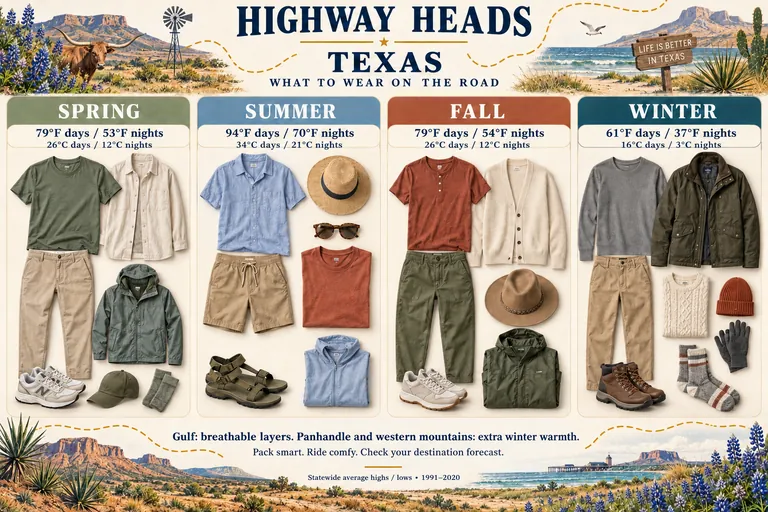
Spring 79°/53°F (26°/12°C)
Spring ranges from warm southern days to cooler Panhandle mornings.
- Wear
- Pair a breathable tee or relaxed shirt with lightweight chinos, joggers, or an easy midi skirt. Add an open overshirt for cool stops.
- Shoes
- Broken-in walking sneakers; water-resistant shoes when rain is forecast.
- Pack
- light cardigan or overshirt
- packable rain jacket
- sun hat
- spare socks
Summer 94°/70°F (34°/21°C)
Summer is hot statewide, with humid eastern areas and drier western areas.
- Wear
- Choose a loose, breathable tee or shirt with quick-drying shorts, lightweight pants, or an airy dress. Carry a thin layer for chilly indoor stops.
- Shoes
- Breathable walking sneakers; secure sandals for casual paved stops.
- Pack
- sun hat
- sunglasses
- light indoor layer
- light rain shell
- spare tee
Fall 79°/54°F (26°/12°C)
Fall often stays hot early before colder fronts arrive.
- Wear
- Pair a tee with lightweight pants or a casual skirt, then add a cardigan or overshirt as evenings cool. Swap to a sweater later in the season.
- Shoes
- Comfortable walking sneakers; water-resistant shoes for rainy days.
- Pack
- cardigan or overshirt
- light rain shell
- sun hat
- warmer late-season layer
Winter 61°/37°F (16°/3°C)
Winter is mild to cool in many areas, but strong freezes can occur.
- Wear
- Wear a tee or long-sleeve top with pants and a sweater. Add a medium-weight jacket on colder days and a rain shell for wet stops.
- Shoes
- Closed-toe walking shoes; water-resistant shoes when showers are forecast.
- Pack
- sweater
- medium-weight jacket
- rain shell
- warm socks
- light gloves for cold spells
Adjust for your route. West Texas mountains and the Panhandle need extra insulation, including thermals and an insulated coat for cold winter routes. Gulf stops need rain-ready layers.
Climate background: NOAA State Climate Summary
Utah
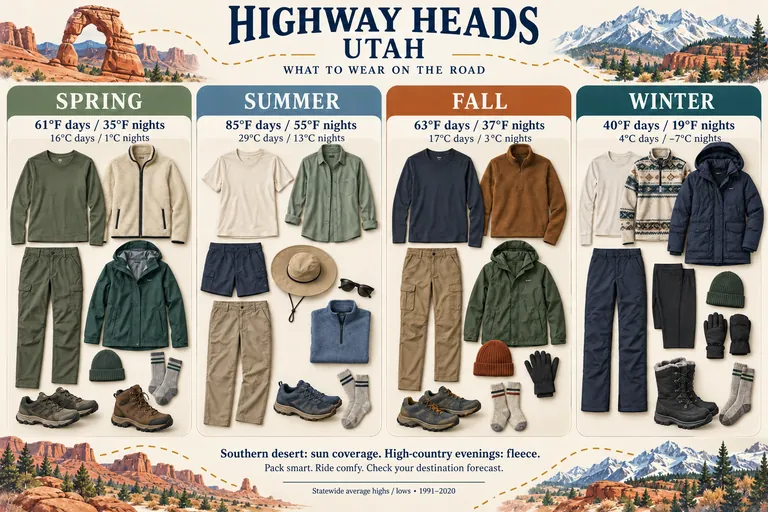
Spring 61°/35°F (16°/1°C)
Spring brings mild lower-elevation days and lingering mountain cold or snow.
- Wear
- Start with a long-sleeve tee, stretch pants, and a fleece or sweater. Add a rain shell when the wind or showers pick up.
- Shoes
- Water-resistant walking shoes with grip; boots for muddy stops.
- Pack
- fleece or sweater
- rain shell
- light beanie
- spare dry socks
Summer 85°/55°F (29°/13°C)
Summer is hot in southern lowlands, with cooler mountain evenings.
- Wear
- Try a loose tee or breathable sun shirt with lightweight shorts or airy pants. Add a light overshirt after sunset.
- Shoes
- Breathable closed-toe walking shoes for dusty stops; hiking shoes for uneven trails.
- Pack
- sun hat
- sunglasses
- light sun shirt
- light evening layer
- spare socks
Fall 63°/37°F (17°/3°C)
Fall has warm desert afternoons and cold high-country mornings.
- Wear
- Build around a long-sleeve tee, comfortable pants, and a sweater or fleece. Add a wind-resistant jacket for breezy overlooks.
- Shoes
- Walking shoes with grip; water-resistant boots for wet or muddy routes.
- Pack
- sweater or fleece
- wind and rain shell
- beanie
- light gloves
- spare socks
Winter 40°/19°F (4°/-7°C)
Winter is cold and snowy in mountains and many northern routes.
- Wear
- Layer a moisture-wicking long-sleeve top under a sweater or fleece and an insulated coat. Wear long pants; add thermal bottoms when the forecast calls for them.
- Shoes
- Waterproof insulated boots for snowy stops, with warm wool or synthetic socks.
- Pack
- thermal base layers
- insulated coat
- beanie
- gloves or mittens
- warm spare socks
Adjust for your route. Pack fleece for high-country summer stops. Southern desert outfits can be lighter, but early starts still call for layers.
Climate background: NOAA State Climate Summary
Vermont
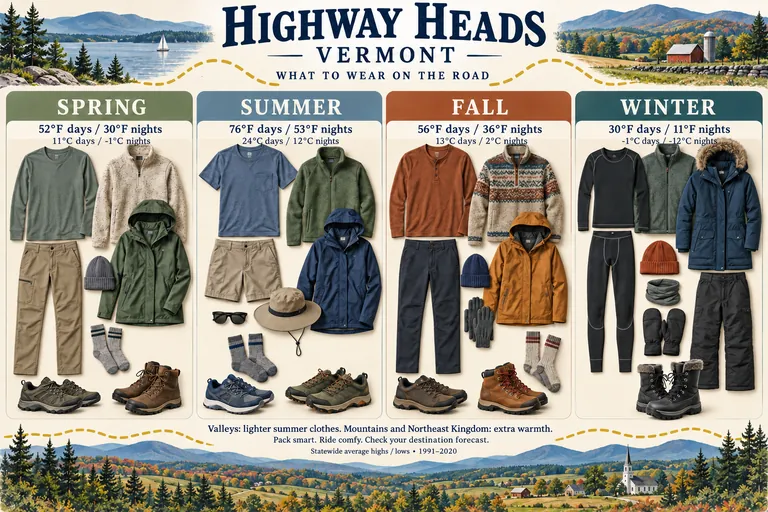
Spring 52°/30°F (11°/-1°C)
Spring brings cool weather, snowmelt, and muddy stops.
- Wear
- Start with a long-sleeve tee, stretch pants, and a fleece or sweater. Add a rain shell when the wind or showers pick up.
- Shoes
- Water-resistant walking shoes with grip; boots for muddy stops.
- Pack
- fleece or sweater
- rain shell
- light beanie
- spare dry socks
Summer 76°/53°F (24°/12°C)
Summer is often comfortable, with warmer valley afternoons and cooler mountains.
- Wear
- Wear a tee with lightweight pants or shorts, then carry a fleece and wind-resistant shell. Keep the warm layer handy even on sunny days.
- Shoes
- Walking sneakers for town; trail shoes for rougher stops.
- Pack
- fleece
- wind and rain shell
- sun hat
- sunglasses
- spare socks
Fall 56°/36°F (13°/2°C)
Fall becomes chilly, with cold evenings and possible late-season snow.
- Wear
- Build around a long-sleeve tee, comfortable pants, and a sweater or fleece. Add a wind-resistant jacket for breezy overlooks.
- Shoes
- Walking shoes with grip; water-resistant boots for wet or muddy routes.
- Pack
- sweater or fleece
- wind and rain shell
- beanie
- light gloves
- spare socks
Winter 30°/11°F (-1°/-12°C)
Winter is cold, with snow and especially chilly higher-elevation stops.
- Wear
- Use thermal top and bottoms, an insulating fleece or sweater, and a wind-resistant insulated parka. Add insulated pants for extended outdoor stops.
- Shoes
- Waterproof insulated winter boots with wool or synthetic socks.
- Pack
- thermal base layers
- insulated parka
- insulated pants
- beanie
- mittens
- neck gaiter
- dry spare socks
Adjust for your route. Lake Champlain moderates western areas; the Northeast Kingdom and mountains need extra insulation. Keep shorts available for hot summer days.
Climate background: NOAA State Climate Summary
Virginia
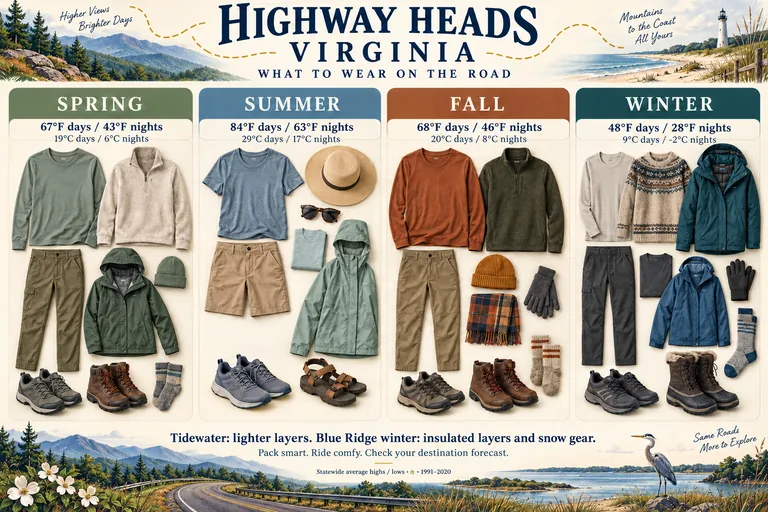
Spring 67°/43°F (19°/6°C)
Spring has warming days, rain, and cool mountain mornings.
- Wear
- Start with a long-sleeve tee, stretch pants, and a fleece or sweater. Add a rain shell when the wind or showers pick up.
- Shoes
- Water-resistant walking shoes with grip; boots for muddy stops.
- Pack
- fleece or sweater
- rain shell
- light beanie
- spare dry socks
Summer 84°/63°F (29°/17°C)
Summer is hot and humid in lowlands, with cooler higher-elevation stops.
- Wear
- Choose a loose, breathable tee or shirt with quick-drying shorts, lightweight pants, or an airy dress. Carry a thin layer for chilly indoor stops.
- Shoes
- Breathable walking sneakers; secure sandals for casual paved stops.
- Pack
- sun hat
- sunglasses
- light indoor layer
- light rain shell
- spare tee
Fall 68°/46°F (20°/8°C)
Fall shifts from warm afternoons to chilly mornings.
- Wear
- Build around a long-sleeve tee, comfortable pants, and a sweater or fleece. Add a wind-resistant jacket for breezy overlooks.
- Shoes
- Walking shoes with grip; water-resistant boots for wet or muddy routes.
- Pack
- sweater or fleece
- wind and rain shell
- beanie
- light gloves
- spare socks
Winter 48°/28°F (9°/-2°C)
Winter is cool near the coast and colder, sometimes snowy, in the mountains.
- Wear
- Wear a tee or long-sleeve top with pants and a sweater. Add a medium-weight jacket on colder days and a rain shell for wet stops.
- Shoes
- Closed-toe walking shoes; water-resistant shoes when showers are forecast.
- Pack
- sweater
- medium-weight jacket
- rain shell
- warm socks
- light gloves for cold spells
Adjust for your route. Blue Ridge and western mountain routes need warmer layers than Tidewater. Add an insulated coat, thermals, and snow-ready boots for cold winter mountain visits.
Climate background: NOAA State Climate Summary
Washington
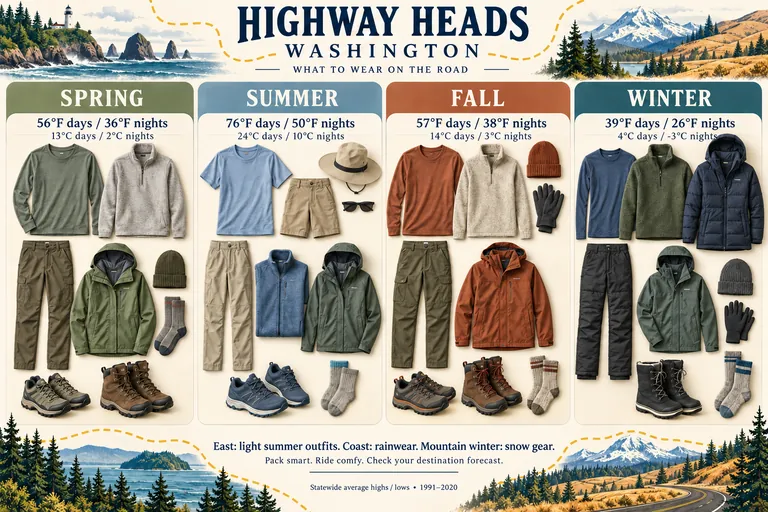
Spring 56°/36°F (13°/2°C)
Spring is often cool and wet in the west, with variable inland conditions.
- Wear
- Start with a long-sleeve tee, stretch pants, and a fleece or sweater. Add a rain shell when the wind or showers pick up.
- Shoes
- Water-resistant walking shoes with grip; boots for muddy stops.
- Pack
- fleece or sweater
- rain shell
- light beanie
- spare dry socks
Summer 76°/50°F (24°/10°C)
Summer is often mild in western lowlands and hotter east of the Cascades.
- Wear
- Wear a tee with lightweight pants or shorts, then carry a fleece and wind-resistant shell. Keep the warm layer handy even on sunny days.
- Shoes
- Walking sneakers for town; trail shoes for rougher stops.
- Pack
- fleece
- wind and rain shell
- sun hat
- sunglasses
- spare socks
Fall 57°/38°F (14°/3°C)
Fall brings cooler temperatures and wetter western weather.
- Wear
- Build around a long-sleeve tee, comfortable pants, and a sweater or fleece. Add a wind-resistant jacket for breezy overlooks.
- Shoes
- Walking shoes with grip; water-resistant boots for wet or muddy routes.
- Pack
- sweater or fleece
- wind and rain shell
- beanie
- light gloves
- spare socks
Winter 39°/26°F (4°/-3°C)
Winter is often wet in western lowlands and colder or snowy inland and uphill.
- Wear
- Wear a tee or long-sleeve top with pants and a sweater. Add a medium-weight jacket on colder days and a rain shell for wet stops.
- Shoes
- Closed-toe walking shoes; water-resistant shoes when showers are forecast.
- Pack
- sweater
- medium-weight jacket
- rain shell
- warm socks
- light gloves for cold spells
Adjust for your route. Eastern Washington summer stops may need shorts and a sun shirt. Cascade and eastern winter routes need thermals, an insulated coat, and snow boots.
Climate background: NOAA State Climate Summary
West Virginia
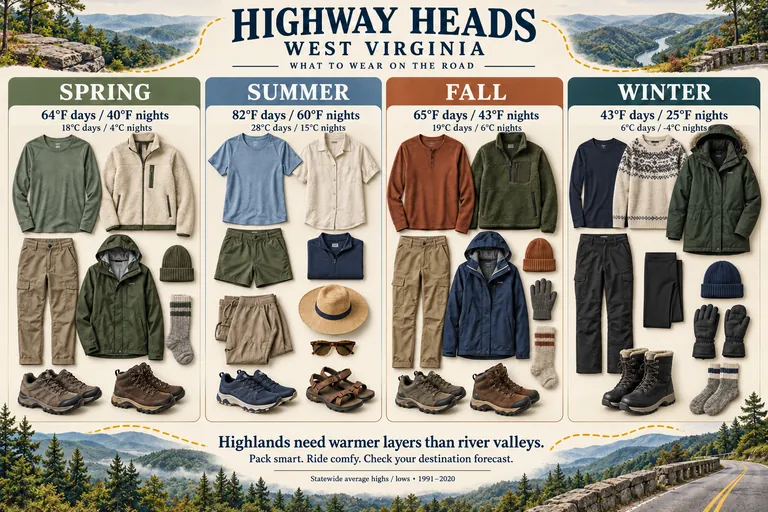
Spring 64°/40°F (18°/4°C)
Spring brings variable temperatures, wet stops, and cool mountain mornings.
- Wear
- Start with a long-sleeve tee, stretch pants, and a fleece or sweater. Add a rain shell when the wind or showers pick up.
- Shoes
- Water-resistant walking shoes with grip; boots for muddy stops.
- Pack
- fleece or sweater
- rain shell
- light beanie
- spare dry socks
Summer 82°/60°F (28°/15°C)
Summer is warm and humid in lower areas, with cooler highlands.
- Wear
- Choose a loose, breathable tee or shirt with quick-drying shorts, lightweight pants, or an airy dress. Carry a thin layer for chilly indoor stops.
- Shoes
- Breathable walking sneakers; secure sandals for casual paved stops.
- Pack
- sun hat
- sunglasses
- light indoor layer
- light rain shell
- spare tee
Fall 65°/43°F (19°/6°C)
Fall brings chilly mornings and cold late-season mountain stops.
- Wear
- Build around a long-sleeve tee, comfortable pants, and a sweater or fleece. Add a wind-resistant jacket for breezy overlooks.
- Shoes
- Walking shoes with grip; water-resistant boots for wet or muddy routes.
- Pack
- sweater or fleece
- wind and rain shell
- beanie
- light gloves
- spare socks
Winter 43°/25°F (6°/-4°C)
Winter is cold, with snow and ice especially important at elevation.
- Wear
- Layer a moisture-wicking long-sleeve top under a sweater or fleece and an insulated coat. Wear long pants; add thermal bottoms when the forecast calls for them.
- Shoes
- Waterproof insulated boots for snowy stops, with warm wool or synthetic socks.
- Pack
- thermal base layers
- insulated coat
- beanie
- gloves or mittens
- warm spare socks
Adjust for your route. Highland routes need more insulation than lower river valleys. Carry a fleece for summer overlooks and waterproof warm boots in winter.
Climate background: NOAA State Climate Summary
Wisconsin
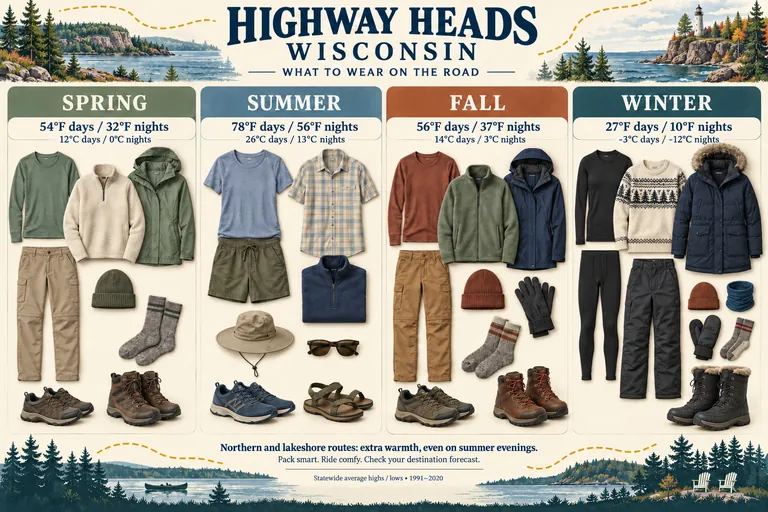
Spring 54°/32°F (12°/0°C)
Spring brings chilly starts and gradually warmer days, with possible lingering snow.
- Wear
- Start with a long-sleeve tee, stretch pants, and a fleece or sweater. Add a rain shell when the wind or showers pick up.
- Shoes
- Water-resistant walking shoes with grip; boots for muddy stops.
- Pack
- fleece or sweater
- rain shell
- light beanie
- spare dry socks
Summer 78°/56°F (26°/13°C)
Summer ranges from warm southern afternoons to cooler northern and lakeshore stops.
- Wear
- Choose a loose, breathable tee or shirt with quick-drying shorts, lightweight pants, or an airy dress. Carry a thin layer for chilly indoor stops.
- Shoes
- Breathable walking sneakers; secure sandals for casual paved stops.
- Pack
- sun hat
- sunglasses
- light indoor layer
- light rain shell
- spare tee
Fall 56°/37°F (14°/3°C)
Fall turns cool and then cold, especially in the north.
- Wear
- Build around a long-sleeve tee, comfortable pants, and a sweater or fleece. Add a wind-resistant jacket for breezy overlooks.
- Shoes
- Walking shoes with grip; water-resistant boots for wet or muddy routes.
- Pack
- sweater or fleece
- wind and rain shell
- beanie
- light gloves
- spare socks
Winter 27°/10°F (-3°/-12°C)
Winter is cold to frigid, with snow and wind.
- Wear
- Use thermal top and bottoms, an insulating fleece or sweater, and a wind-resistant insulated parka. Add insulated pants for extended outdoor stops.
- Shoes
- Waterproof insulated winter boots with wool or synthetic socks.
- Pack
- thermal base layers
- insulated parka
- insulated pants
- beanie
- mittens
- neck gaiter
- dry spare socks
Adjust for your route. Northern Wisconsin and Lake Superior routes need extra warmth. Add fleece for lakeshore summer stops even when inland afternoons are hot.
Climate background: NOAA State Climate Summary
Wyoming
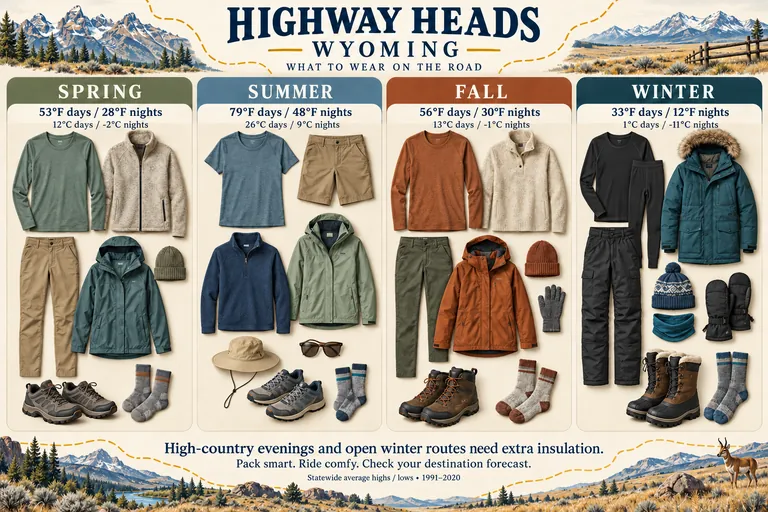
Spring 53°/28°F (12°/-2°C)
Spring can bring cold wind, warming spells, and lingering mountain snow.
- Wear
- Start with a long-sleeve tee, stretch pants, and a fleece or sweater. Add a rain shell when the wind or showers pick up.
- Shoes
- Water-resistant walking shoes with grip; boots for muddy stops.
- Pack
- fleece or sweater
- rain shell
- light beanie
- spare dry socks
Summer 79°/48°F (26°/9°C)
Summer is mild to warm by day, with cool nights and colder high country.
- Wear
- Wear a tee with lightweight pants or shorts, then carry a fleece and wind-resistant shell. Keep the warm layer handy even on sunny days.
- Shoes
- Walking sneakers for town; trail shoes for rougher stops.
- Pack
- fleece
- wind and rain shell
- sun hat
- sunglasses
- spare socks
Fall 56°/30°F (13°/-1°C)
Fall brings cold mornings and possible early mountain snow.
- Wear
- Build around a long-sleeve tee, comfortable pants, and a sweater or fleece. Add a wind-resistant jacket for breezy overlooks.
- Shoes
- Walking shoes with grip; water-resistant boots for wet or muddy routes.
- Pack
- sweater or fleece
- wind and rain shell
- beanie
- light gloves
- spare socks
Winter 33°/12°F (1°/-11°C)
Winter is cold, with wind and snow important on exposed routes.
- Wear
- Use thermal top and bottoms, an insulating fleece or sweater, and a wind-resistant insulated parka. Add insulated pants for extended outdoor stops.
- Shoes
- Waterproof insulated winter boots with wool or synthetic socks.
- Pack
- thermal base layers
- insulated parka
- insulated pants
- beanie
- mittens
- neck gaiter
- dry spare socks
Adjust for your route. Lower eastern areas may suit lighter summer outfits; high-country stops need insulation and a shell. Keep warm layers within reach on long open-road stretches.
Climate background: NOAA State Climate Summary
NOAA NCEI Climate at a Glance, statewide averages (Hawaii: Honolulu airport) · Averages for 1991-2020. Climate descriptions are concise editorial summaries informed by NOAA State Climate Summaries 2022. Clothing, style, and packing recommendations are original editorial interpretations; NOAA does not prescribe or endorse these outfits.